Deli Group Ninghai Intelligent Logistics Center
⭐Key Features
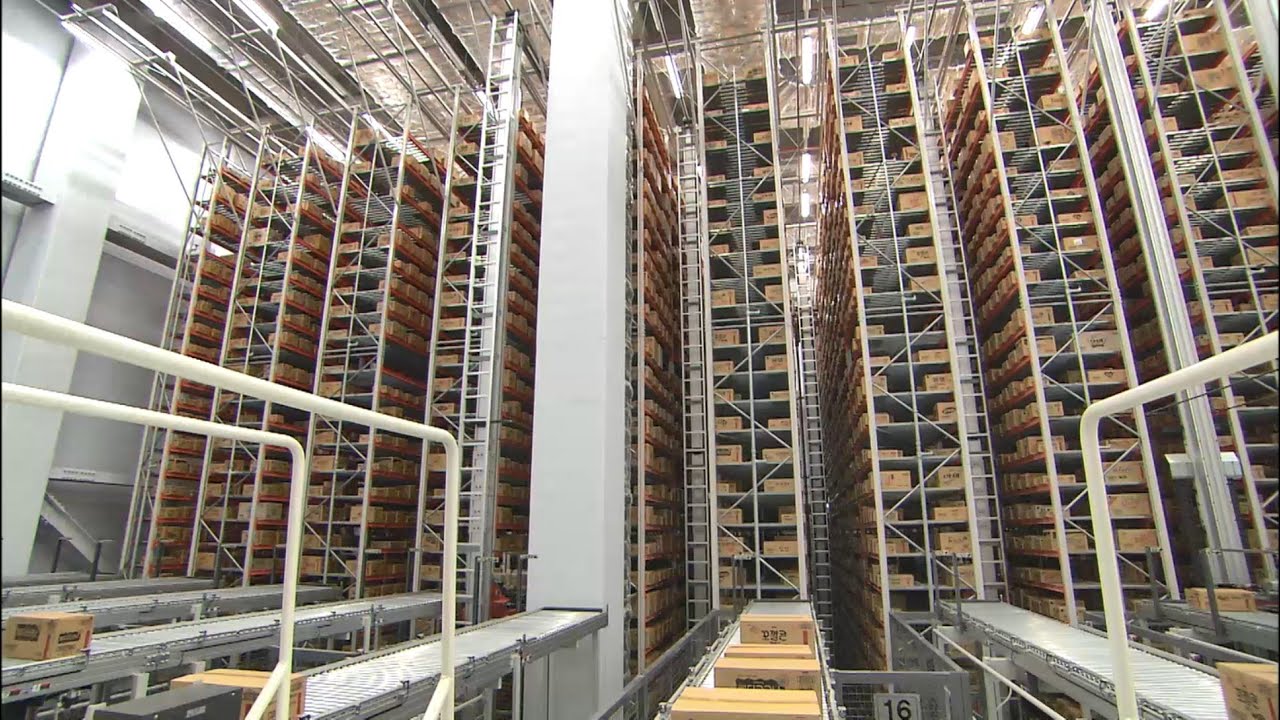
- •Multi-sectional AS/RS complex storing 130,000 pallets
- •Integrated system of 4 Unit Load AS/RS, Mini Load AS/RS, and Shuttle Rack for cases
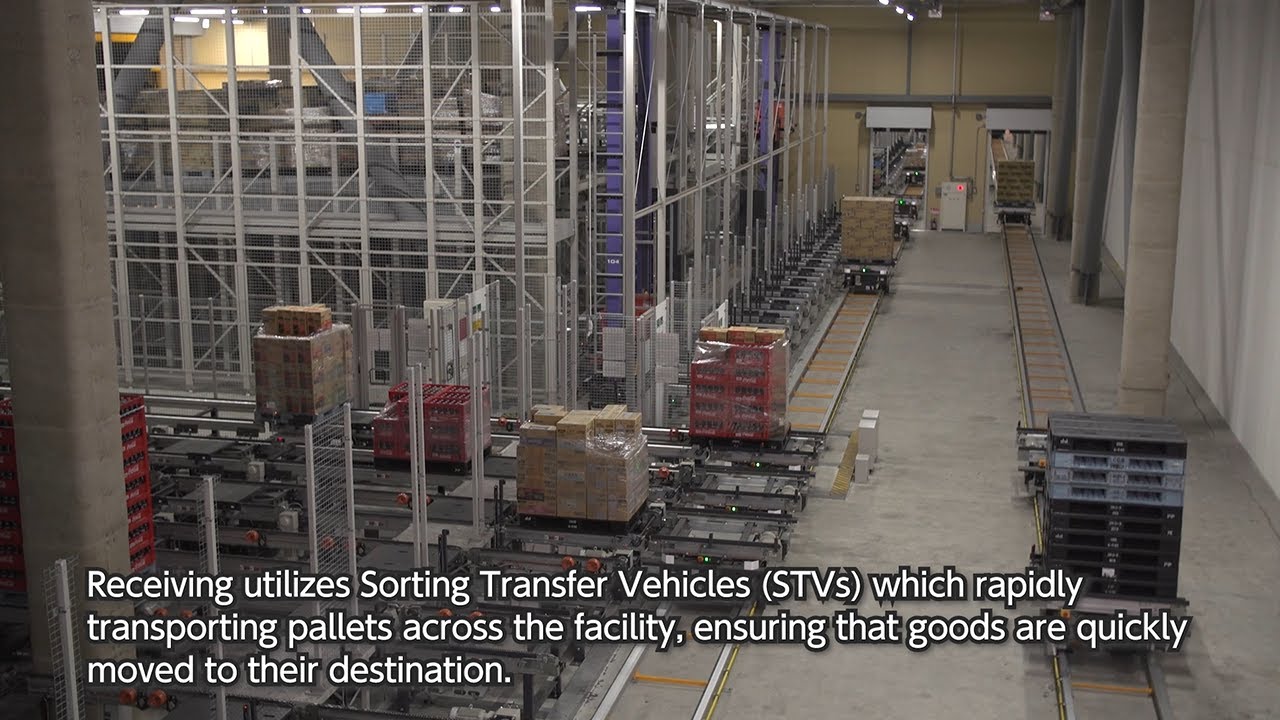
- •Deploys STVs, AGVs/AMRs, and palletizing/picking robots
- •High-speed sorting system for case consolidation
- •Rack-side picking windows on a Unit Load AS/RS for fast-moving items
- •Designed to handle up to 400,000 cases at peak capacity
Results & Benefits
- Processes 200,000 cases picked daily on average
- Higher order throughput achieved in a smaller footprint
- Operates with a smaller workforce, reducing labor costs
- Eliminated burgeoning costs from outsourced distribution and warehouse rentals
- On-site capacity to store up to 2.8 million cases
Challenges & Solutions
Outsourced distribution led to burgeoning labor costs and warehouse rental fees; conventional expansion (more warehouses, more people) could not keep pace with business growth.
Partnered with Daifuku to establish a new, fully automated intelligent logistics center, consolidating operations and replacing manual processes with an integrated material handling system.
Managing and operating a warehouse of immense scale and complexity (hundreds of thousands of SKUs, 130,000 pallets).
Implemented a comprehensive Daifuku automated solution based on intelligent storage design, using multiple AS/RS types, robots, and automated transport to streamline operations.
Project Overview
Project Overview
The Deli Group, one of China's largest manufacturers of stationery and office supplies, faced significant logistical challenges due to rapid business expansion. Its previous reliance on outsourced distribution operations resulted in skyrocketing labor costs and warehouse rental fees. The company realized that simply renting more warehouses and hiring more people was an unsustainable model that could not keep pace with its growth.
In response, Deli embarked on a major project to regain control and efficiency over its logistics. In 2018, the company opened the Deli Intelligent Logistics Center in Ninghai, China. This massive, 110,000 square meter facility was designed as a centralized, highly automated hub to handle the vast SKU count typical of the office supplies industry and meet the company's escalating distribution demands.
Technical Solution
Multi-System Automated Storage/Retrieval Complex
The storage backbone consists of a large AS/RS complex divided by function:
- Four Unit Load AS/RS: Three act as high-density inventory buffers, while the fourth is equipped with rack-side picking windows for direct case picking of fast-moving items.
- Mini Load AS/RS: Handles smaller load storage requirements.
- Shuttle Rack System: Dedicated to the storage and sequencing of medium-moving items. It is replenished by picking robots retrieving from the buffer AS/RS.
Momentum WES: Next-Generation Warehouse Execution and Control
Vendor: Honeywell Intelligrated
Key Features
The facility integrates multiple, specialized automated storage technologies (Unit Load AS/RS, Mini Load AS/RS, Shuttle Rack) into a cohesive system, each optimized for different product velocity (fast, medium, slow movers).
The solution employs a wide array of automation: AS/RS for vertical storage, STVs and AGVs/AMRs for horizontal transport, and robots for picking, creating a largely hands-off flow from receiving to shipping.
A key design principle was achieving higher throughput and greater storage capacity (130,000 pallets, 2.8 million case capacity) within a consolidated 110,000 sq m footprint, as opposed to the sprawling, inefficient network of rented warehouses it replaced.
Results & Benefits
The center processes an average of 200,000 picked cases per day, with the capacity to handle up to 400,000 at peak, dramatically increasing distribution capability.
The automation enabled the company to process more orders with a significantly smaller workforce, directly addressing the problem of burgeoning labor costs. It also eliminated the need for expensive outsourced warehouse rentals.
The intelligent, automated design allows Deli to meet its rapidly growing logistics needs from a single, efficient hub, providing the scalability that its previous conventional approach lacked.
Challenges & Solutions
Deli's core challenge was the unsustainable cost and lack of control from outsourced logistics, coupled with an inability to scale manually. The strategic solution was a fundamental shift: a major capital investment to build their own, centrally controlled Intelligent Logistics Center, automated by Daifuku. This replaced variable external costs with a fixed, efficient asset.
Operating a distribution center of this scale (130,000 pallets, hundreds of thousands of SKUs) with manual methods would be chaotic and inefficient. Daifuku's solution was an "intelligent storage design" – a comprehensive and integrated material handling system that automates the core workflows (storage, picking, sorting, transport), making the complexity manageable and efficient.
System Integrator
Daifuku was the chosen system integrator for this landmark project. Deli partnered with Daifuku specifically to establish the new Intelligent Logistics Center. Daifuku provided the complete automated material handling solution, including system design, the supply of all major equipment (AS/RS, shuttle systems, robots, AGVs, sorters), and integration services. Deli acknowledged that Daifuku provided the right solution and worked closely with them to ensure the project's success.
Related Technologies (6)
Momentum WES: Next-Generation Warehouse Execution and Control
byHoneywell Intelligrated
Dark Warehouse: Fully Automated Warehouse Operations
byAddverb
Geek+ PopPick: Next-Generation High-Density Goods-to-Person System
byGeek+
Mushiny MIX: T-Series Latent Lifting Robot & iRES Goods-to-Person System
byMushiny
Piolax Canton Georgia Automotive Parts Distribution Center
byDaifuku
Box-IT: Ergonomic Goods-to-Person Workstation
byAddverb
Related Knowledge Articles (6)
Goods-to-Person Systems
Goods-to-Person (G2P) systems revolutionize warehouse operations by bringing inventory directly to stationary picking stations, eliminating worker travel time and maximizing productivity. These automated systems combine storage, retrieval, and presentation technologies to create highly efficient picking environments.
Shuttle Systems
Shuttle systems use autonomous vehicles traveling on rails within racking structures to store and retrieve totes or cartons, providing flexible high-density automated storage with scalable throughput.
AGV Unit Load
AGV unit load vehicles are automated guided vehicles designed to transport individual pallets, containers, or large items along fixed routes, providing reliable, predictable material movement in warehouses and manufacturing facilities.
Robotic Case Picking
Advanced robotic case picking systems that combine industrial robotics with intelligent vision systems to automate the handling of full cases and cartons, delivering exceptional speed, precision, and reliability in high-volume distribution operations.
Multi-Robot Orchestration
Intelligent fleet management systems that coordinate multiple autonomous robots to work together efficiently, optimizing task allocation, traffic management, and resource utilization across complex warehouse environments.
Sorting Robot
Sorting Robots use mobile autonomous robots equipped with intelligent vision systems and manipulation capabilities to sort packages, parcels, and items with exceptional flexibility. These systems combine AMR technology with advanced AI to enable dynamic sortation without fixed infrastructure, adapting to changing operational needs and handling diverse item types with human-like dexterity.