Put Walls: Cost-Effective Order Assembly and Consolidation
Quick Facts
Technology Performance Metrics
⭐Key Features
Benefits
Applications
Detailed Information
Technology Overview
Put walls are a pragmatic and scalable material handling solution designed to address a critical bottleneck in modern fulfillment: the efficient and accurate assembly of customer orders containing items picked from multiple zones. As warehouses adopt zone-based picking to boost productivity, they face the downstream challenge of merging these disparate items. Put walls serve as a dynamic, system-directed consolidation point, bridging the gap between high-speed picking and final packing. They offer a flexible, low-capital alternative to large, fixed automated sortation systems, making them particularly attractive for operations with variable volumes or those in the process of scaling their e-commerce capabilities.
How It Works
Core Principles
The core principle is using a physical buffer wall and software-driven instructions to manually—but systematically—sort batch-picked items from various zones into their respective customer orders, creating an organized queue for packing.
Key Features & Capabilities
The modular and mobile physical design (often on wheels) provides exceptional flexibility, allowing facilities to reconfigure layouts or add capacity as needed. Seamless integration with WES is a critical capability, as the software acts as the "brain," coordinating the complex merge process across multiple zones and directing each put action. The system supports multiple guidance modes (voice, scan, visual), allowing it to adapt to different item types and worker preferences. Its inherent scalability allows operations to meet peak demand by adding more walls and labor, avoiding the high fixed cost and potential underutilization of large automated sorters.
Advantages & Benefits
The primary advantage is excellent cost-effectiveness and scalability. Put walls require minimal hard infrastructure compared to automated sortation, offering a low upfront capital outlay and the ability to scale capacity linearly with demand. They directly enhance fulfillment throughput and accuracy by providing a systematic, error-checked process that is far superior to manual assembly, solving the zone-picking merge challenge. This solution future-proofs operations by serving as a necessary and flexible component in broader e-commerce fulfillment upgrades, allowing productivity gains in picking to be fully realized downstream.
Implementation Considerations
Successful implementation hinges on effective integration with a WES or advanced WMS capable of managing complex order splitting and real-time put wall directives. Designing the upstream zone picking and material transport to ensure a smooth, timely flow of items to the wall is crucial to prevent bottlenecks. Planning the physical layout must account for space for the walls, operator stations on both sides, and material staging. While low-cost, the total cost of ownership should include the WES/licensing, guidance devices, and labor.
Use Cases & Applications
Ideal For
This solution is ideal for growing e-commerce operations, omnichannel retailers, and 3PLs that have implemented or are planning to implement zone picking and need an efficient, scalable way to assemble multi-item orders.
Conclusion
Put walls represent a smart, strategic investment for warehouses seeking to scale their order fulfillment capabilities without the massive capital expenditure of full automation. By leveraging software intelligence and simple, flexible hardware, they transform the complex problem of order consolidation from a chaotic manual task into a streamlined, manageable process. For operations looking to boost throughput, improve accuracy, and maintain agility in a volatile market, implementing a put wall system guided by robust execution software is a proven path to achieving a more resilient and efficient fulfillment operation.
Related Knowledge
Robotic Case Picking
Advanced robotic case picking systems that combine industrial robotics with intelligent vision systems to automate the handling of full cases and cartons, delivering exceptional speed, precision, and reliability in high-volume distribution operations.
Robotic Piece Picking
Advanced robotic systems that use AI and computer vision to automatically select and pick individual items from diverse inventory, revolutionizing warehouse fulfillment operations with human-like dexterity and intelligence.
Voice Picking Systems
Voice picking systems revolutionize warehouse operations by enabling hands-free, eyes-free order fulfillment through speech recognition technology. Workers receive spoken instructions through wireless headsets and confirm actions verbally, dramatically improving productivity, accuracy, and safety while reducing training time.
Vendor
Lucas SystemsRelated Technologies
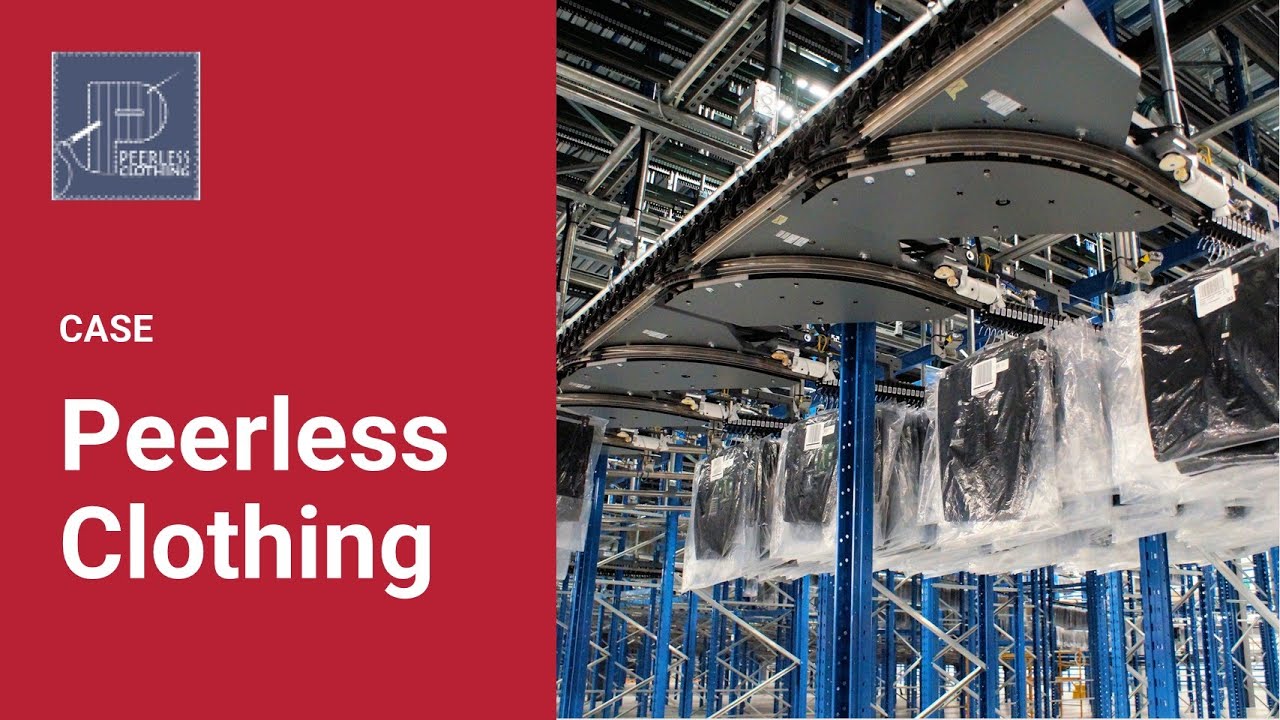
Peerless Clothing USA Apparel Distribution Warehouse
Element Logic

Dark Warehouse: Fully Automated Warehouse Operations
Addverb
Warehouse Slotting Software: WMS-Integrated Location Optimization
Mecalux