Lao Gan Ma Guiyang Guizhou Production Warehouse
⭐Key Features
- •34,164-pallet capacity Unit Load AS/RS with 12 stacker cranes
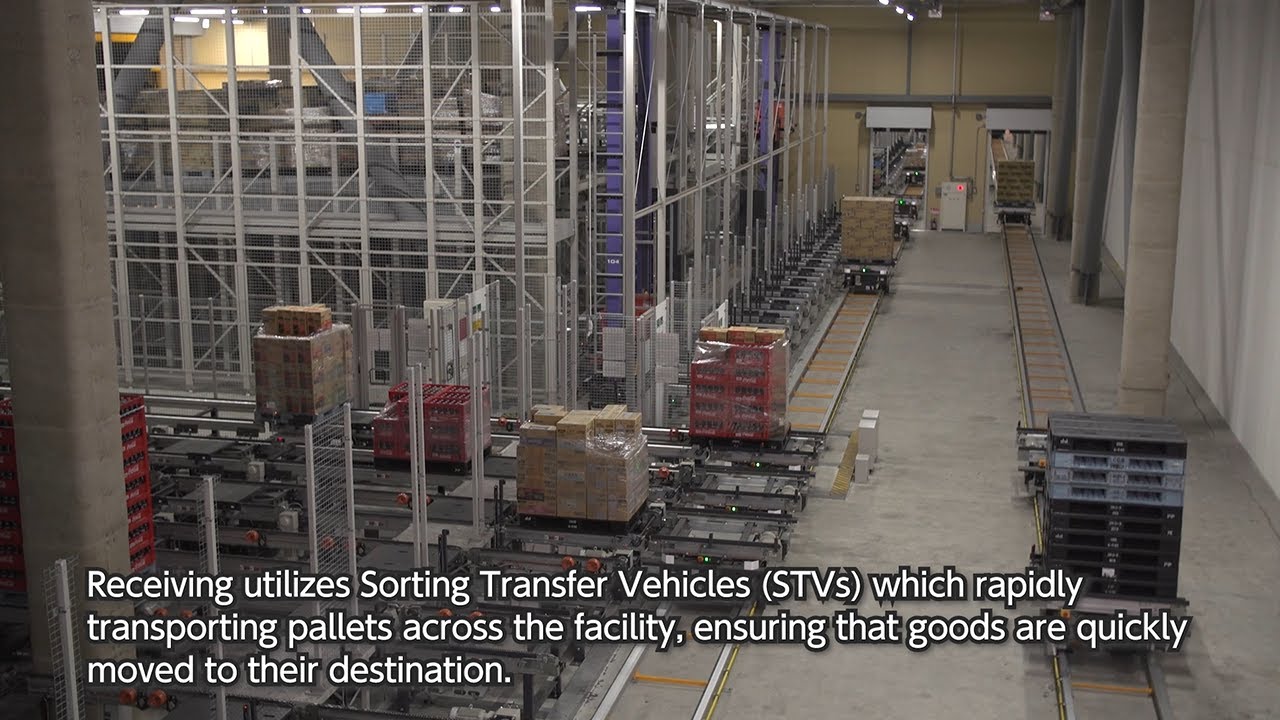
- •9 high-speed Sorting Transfer Vehicles (STVs) with 7 loop units and 2 single shuttles
- •5 palletizing robots building pallets from sorted cases
- •Slide-shoe sorter for case distribution to palletizing lanes
- •Case conveyor system directly linked to 7 production lines across 6 factory buildings
- •WMS integrated with truck scheduling system for dock management
- •Handles pallets up to 1.34 tons
Results & Benefits
- Inbound capacity: 139 pallets per hour
- Outbound capacity: 166 pallets per hour
- Picking outbound capacity: 12 pallets per hour
- Improved production efficiency
- Reduced labor and energy consumption
- Expanded storage capacity
- Digitized factory management
Challenges & Solutions
Meeting soaring demand and supporting 24/7 production and shipping operations with high system stability.
Partnered with experienced integrator Daifuku to implement a fully automated, high-capacity AS/RS and transport system designed for reliability.
Connecting and managing logistics from 7 production lines across 6 separate factory buildings efficiently.
Implemented a centralized automated warehouse with direct case conveyor links from all factories, sorted and palletized by robots, and stored in a single high-density AS/RS.
Project Overview
Project Overview
Lao Gan Ma, the globally renowned Chinese brand famous for its spicy chili condiments, faced the challenge of scaling its logistics to keep pace with soaring consumer demand. In 2020, the company commenced operations at a new, highly automated warehouse at its production base in Guiyang, Guizhou Province.
The project's goal was to build a fully automated facility that would seamlessly connect production, storage, and outbound shipping operations. Key priorities included achieving high system stability for 24/7 operations, boosting overall efficiency, enhancing product traceability, and creating a scalable logistics foundation to support the brand's rapid growth and global expansion.
Technical Solution
Unit Load Automated Storage/Retrieval System (AS/RS)
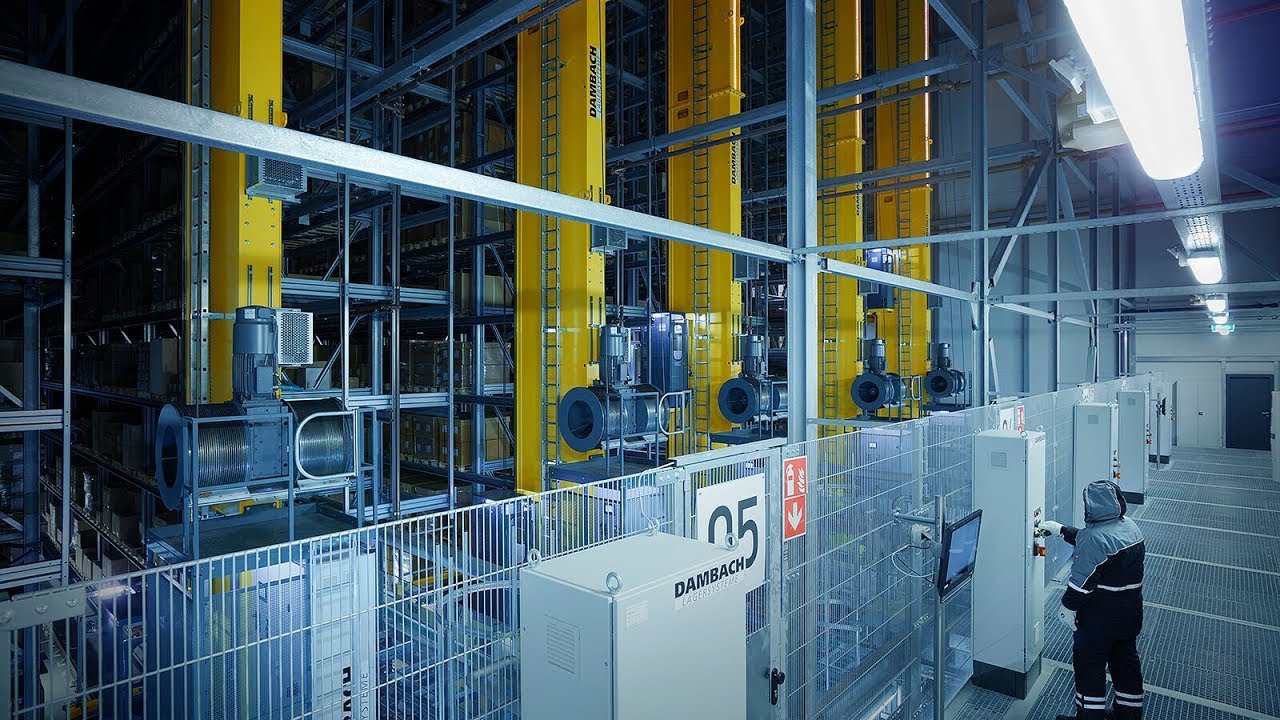
The centerpiece is a large-scale Unit Load AS/RS with a capacity of 34,164 pallet locations. The system is serviced by 12 high-speed stacker cranes that store and retrieve pallets weighing up to 1.34 tons. This high-density storage acts as the central buffer between production and shipping.
Momentum WES: Next-Generation Warehouse Execution and Control
Vendor: Honeywell Intelligrated
Key Features
The 34,164-pallet AS/RS, served by 12 cranes and 9 STVs, provides massive, high-speed storage and retrieval capacity, forming the stable core of the 24/7 logistics operation.
The system elegantly connects disparate production facilities; cases from 6 factories are conveyed, sorted, robotically palletized, and stored automatically, creating a unified, efficient production logistics flow.
The solution combines multiple advanced technologies—AS/RS, STVs, robotic palletizing, slide-shoe sortation—into a single integrated system designed for high throughput, traceability, and energy efficiency.
Results & Benefits
The automation achieved significant throughput metrics: 139 pallets per hour inbound and 166 pallets per hour outbound, with a case-picking outbound capacity of 12 pallets per hour, greatly enhancing the facility's shipping capabilities.
The project delivered broad operational improvements, including increased production efficiency, reduced labor requirements, lower energy consumption, expanded storage capacity, and the digitization of factory management.
The WMS integration with truck scheduling optimizes the loading process, reducing truck wait times and ensuring smooth dock operations, which is critical for high-volume shipping.
Challenges & Solutions
A paramount requirement was ensuring extreme system stability to support non-stop 24/7 production and shipping cycles. Lao Gan Ma addressed this by selecting Daifuku as the system integrator based on its extensive experience and by implementing a robust, high-capacity AS/RS and STV system designed for reliable, continuous operation.
Managing the logistics flow from 7 production lines spread across 6 different factory buildings was a complex challenge. The solution was to build a centralized automated warehouse with a dedicated case conveyor network that physically connects all production points. This hub consolidates output, where it is automatically sorted, palletized by robots, and stored in the central AS/RS, creating a single point of control.
System Integrator
Daifuku was the lead system integrator for this comprehensive project. They were selected for their extensive experience and were responsible for the overall system design, supply, and integration of the AS/RS, STV network, robotic palletizing cells, slide-shoe sorter, conveyor systems, and the WMS. The collaboration focused on creating a balanced system that optimized energy savings, handling capacity, and long-term operational costs.
Related Technologies (6)
Momentum WES: Next-Generation Warehouse Execution and Control
byHoneywell Intelligrated
Piolax Canton Georgia Automotive Parts Distribution Center
byDaifuku
Meyer Corporation USA Cookware Distribution Center
byDaifuku
Intralogistics Innovation Center: Integrated Solutions Showcase
byDaifuku
AI Visual Inspection & Automated Packing Solution for Textiles
bySUNTECH
Industrial Robot Arms in Logistics: Order Fulfillment Applications
byYaskawa
Related Knowledge Articles (3)
AGV Unit Load
AGV unit load vehicles are automated guided vehicles designed to transport individual pallets, containers, or large items along fixed routes, providing reliable, predictable material movement in warehouses and manufacturing facilities.
Manufacturing & Industrial Warehousing
Manufacturing warehousing supports production operations with just-in-time material delivery, requiring tight integration with production systems and flexible automation that adapts to changing manufacturing schedules.
Production Logistics Strategy
Production logistics orchestrates the seamless flow of materials, components, and finished goods within manufacturing operations. From just-in-time delivery to line-side replenishment, master the strategies that keep production lines running efficiently while minimizing inventory and maximizing throughput.
Related Projects
More from Daifuku
Lotte Korea Confectionery Centralized Distribution Center