Cross-Belt Sorter
Cross-Belt Sorters are high-speed automated sorting systems that use individual carrier vehicles with miniature conveyor belts to gently divert packages to their designated destinations. These systems excel at handling diverse package types with exceptional accuracy and throughput, making them ideal for e-commerce, parcel, and distribution operations.
Cross-Belt Sorter System Architecture
System Components
- ▸Loop Track: 100-400m circumference
- ▸Carriers: 100-500+ independent units
- ▸Mini Belts: Perpendicular discharge
- ▸Scanners: Barcode/RFID tracking
Performance
- ▸Throughput: 12,000-40,000 items/hr
- ▸Accuracy: 99.9%+ sort rate
- ▸Speed: Up to 600 ft/min
- ▸Destinations: 200-400 chutes
Package Handling
- ▸Weight: 0.2-75 kg (up to 100 kg)
- ▸Size: Envelopes to large cartons
- ▸Types: Poly bags, boxes, irregulars
- ▸Handling: Gentle belt transfer
Key Applications
- ▸E-commerce: Mixed product sorting
- ▸Parcel: Regional hub operations
- ▸Retail: Omnichannel distribution
- ▸3PL: Multi-client consolidation
Induction Options
- ▸Manual: 1,200-2,000 items/hr/station
- ▸Automated: 3,000-5,000 items/hr/lane
- ▸Hybrid: Flexible combination
- ▸Robotic: Advanced placement
Investment & ROI
- ▸Cost: $2M-$10M+ installed
- ▸Payback: 2-4 years typical
- ▸Labor: Replaces 20-50 sorters
- ▸Operation: 24/7 capability
System Overview and Operating Principles
In the world of modern distribution centers, the cross-belt sorter stands out as one of the most versatile and gentle automated sorting solutions available. Picture a continuous loop of individual carrier vehicles, each equipped with its own miniature conveyor belt, racing around an oval track at speeds up to 600 feet per minute. As packages ride along on these carriers, the system tracks each one precisely, and at exactly the right moment, the carrier's belt activates perpendicular to the direction of travel, smoothly sliding the package into its designated chute. This elegant choreography happens thousands of times per hour with remarkable precision, transforming chaotic incoming flows into organized outbound streams.
What makes cross-belt sorters particularly valuable is their gentle handling characteristics. Unlike systems that rely on pusher arms, deflectors, or gravity to divert packages, cross-belt sorters use powered belts to transfer items smoothly from carrier to destination. This means the system can handle everything from soft poly bags and irregularly shaped items to fragile electronics and heavy boxes, all without the jarring impacts that can damage products or their contents. The weight range typically spans from 0.2 to 75 kilograms, with some heavy-duty systems handling up to 100 kg, while dimensions can accommodate items from small envelopes up to large cartons measuring 800mm x 1200mm. This flexibility makes cross-belt sorters the go-to choice for omnichannel retailers and parcel carriers dealing with unpredictable product mixes.
The system architecture revolves around a continuous loop configuration, though linear and spiral designs exist for specific applications. The loop typically measures anywhere from 100 to 400 meters in circumference, with the exact size determined by the number of sort destinations required and the available floor space. Each carrier vehicle travels independently along the track, guided by rails and powered by a linear motor system or friction drive. The number of carriers can range from 100 to over 500 depending on system size and throughput requirements, with each carrier representing a mobile sorting position. This distributed approach means that even if one carrier experiences issues, the rest of the system continues operating, providing inherent redundancy that traditional sorters lack.
Performance and Throughput Capabilities
Performance capabilities are impressive by any measure. Modern cross-belt sorters routinely achieve sorting rates of 12,000 to 40,000 items per hour, with some high-speed systems pushing beyond 50,000 items per hour. The accuracy rate typically exceeds 99.9%, meaning less than one package per thousand is missorted. This precision comes from sophisticated tracking systems that use barcode scanners, RFID readers, or dimensioning systems to identify each package as it enters the sorter. The warehouse control system (WCS) then calculates the optimal carrier assignment and discharge timing, coordinating hundreds of simultaneous sorting decisions in real-time. The result is a system that can handle peak volumes without the exponential labor increases that manual sorting would require.
Bastian Solutions Corporate Profile: Toyota Advanced Logistics
System Integrator: Bastian Solutions
Economic Considerations and ROI
From an economic perspective, cross-belt sorters represent a significant but often justifiable investment. A typical system for a mid-sized operation might cost $2 million to $5 million, while large installations serving major distribution hubs can exceed $10 million. These figures include the mechanical equipment, controls, installation, and integration with existing warehouse systems. Despite the substantial upfront cost, the return on investment typically materializes within 2 to 4 years for high-volume operations. The math is straightforward: a cross-belt sorter can replace 20 to 50 manual sorters depending on throughput requirements, and it operates continuously without breaks, shift changes, or the variability inherent in human performance. When you factor in labor savings, improved accuracy, reduced damage, and increased throughput capacity, the business case becomes compelling for operations processing more than 10,000 packages daily.
The technology shines particularly bright in e-commerce fulfillment centers, where the diversity of products and order profiles creates sorting challenges that manual methods struggle to address efficiently. An online retailer shipping everything from clothing to electronics to household goods needs a sorting solution that can handle this variety without constant adjustments or high error rates. Cross-belt sorters deliver exactly that capability, processing mixed flows of packages to hundreds of destinations representing different shipping zones, carrier routes, or store locations. The system's ability to sort to 200 to 400 destinations in a single pass eliminates the need for multiple sorting stages, streamlining operations and reducing handling touchpoints.
Parcel carriers have embraced cross-belt technology for their regional sorting facilities, where packages arriving from multiple collection routes must be consolidated and sorted for delivery routes or transfer to other facilities. The speed and accuracy of cross-belt sorters enable these operations to process massive volumes during tight overnight windows, ensuring packages reach their destinations on schedule. Some carriers operate sorters continuously, processing incoming volumes as they arrive throughout the day and night, with the system's reliability making this 24/7 operation feasible. The gentle handling also reduces damage claims, a significant cost factor for parcel carriers dealing with millions of packages annually.
System Integration and Control
Integration with warehouse management and control systems is critical to realizing the full potential of cross-belt sorters. The WMS provides the sorting logic, determining which packages should go to which destinations based on order data, shipping rules, and carrier requirements. The WCS translates these high-level instructions into precise mechanical commands, managing carrier assignments, tracking package positions, and coordinating discharge timing. Modern systems employ predictive algorithms that anticipate package arrivals and pre-position carriers to minimize gaps and maximize throughput. Some advanced installations use machine learning to continuously optimize sorting strategies based on actual performance data, gradually improving efficiency as the system learns from experience.
Dematic DCS3: Flexible High-Rate Cross-Belt Sorter
Vendor: Dematic
Facility Requirements and Infrastructure
The physical footprint and facility requirements deserve careful consideration during planning. Cross-belt sorters need adequate ceiling height, typically 8 to 12 meters, to accommodate the elevated track structure and discharge chutes that gravity-feed packages to ground-level takeaway conveyors or carts. The floor space requirement depends on loop size and destination count, but a typical installation might occupy 1,500 to 4,000 square meters. The floor must be level and capable of supporting the structural loads, though these are generally modest compared to high-bay storage systems. Noise levels are relatively low for automated equipment, but the continuous operation of hundreds of carriers and the sound of packages discharging into chutes creates an ambient noise environment that requires consideration in facility design.
Maintenance and Operational Support
Maintenance requirements are manageable but non-negotiable for maintaining system performance and reliability. Preventive maintenance programs typically include daily visual inspections, weekly lubrication of moving parts, monthly detailed inspections of carriers and track components, and quarterly comprehensive service including alignment checks and wear component replacement. The modular nature of carrier design means that individual units can be removed for service without shutting down the entire system, though operations typically schedule maintenance during lower-volume periods to minimize impact. Most operators maintain a spare parts inventory including replacement carriers, drive components, sensors, and control modules to enable rapid response to any failures. Leading equipment suppliers offer service contracts that include remote monitoring, predictive maintenance alerts, and guaranteed response times, providing peace of mind for operations where sorter downtime directly impacts customer service.
Induction Methods and Package Flow
The induction process, where packages enter the sorter, significantly influences overall system performance. Manual induction involves operators placing packages onto carriers as they pass by, with the system controlling carrier speed and spacing to match human capabilities. This approach offers flexibility and can handle packages that automated systems might reject, but it limits throughput to what humans can sustain, typically 1,200 to 2,000 packages per hour per induction station. Automated induction uses conveyors, singulation systems, and robotic placement to feed packages onto carriers at much higher rates, potentially 3,000 to 5,000 packages per hour per lane. The choice between manual and automated induction depends on package characteristics, volume requirements, labor costs, and capital budget, with many operations using a hybrid approach that combines both methods.
Industry Applications and Use Cases
Looking at specific application scenarios reveals how cross-belt sorters adapt to different operational needs. In fashion retail distribution, the system might sort hanging garments on specialized carriers, with packages containing folded items mixed into the same flow. The sorter directs items to destinations representing individual stores, with each store's allocation spread across multiple chutes to enable efficient loading of delivery vehicles. In pharmaceutical distribution, the gentle handling and high accuracy are critical for protecting valuable medications and ensuring regulatory compliance, with the system often integrated with track-and-trace systems that document every package movement. Third-party logistics providers use cross-belt sorters to consolidate packages from multiple clients, sorting by final destination to optimize transportation costs while maintaining separate accountability for each customer's shipments.
Future Trends and Technology Evolution
The evolution of cross-belt technology continues with several notable trends shaping future capabilities. Energy efficiency improvements include regenerative braking systems that capture energy from decelerating carriers and feed it back into the power system, potentially reducing energy consumption by 20-30%. Modular designs enable easier expansion and reconfiguration, with standardized components that can be added or rearranged as business needs evolve. Advanced sensors including 3D vision systems provide more detailed package information, enabling dynamic adjustment of discharge timing and better handling of irregular items. Some manufacturers are exploring AI-powered optimization that continuously adjusts system parameters based on real-time performance data, automatically fine-tuning operations to maximize throughput and minimize errors.
Implementation Considerations and Decision Criteria
The decision to implement a cross-belt sorter should be based on careful analysis of current and projected volumes, package characteristics, accuracy requirements, and available capital. Operations processing more than 10,000 packages daily with diverse package types and high accuracy requirements typically find cross-belt sorters deliver compelling value. The system's scalability means it can grow with the business, either by increasing operating hours, adding carriers to boost throughput, or expanding the loop to accommodate more destinations. For operations with lower volumes or highly standardized packages, simpler sorting technologies might offer better economics. But for the complex, high-volume sorting challenges that characterize modern e-commerce and parcel operations, cross-belt sorters represent a proven, reliable solution that balances performance, flexibility, and gentle handling in a way few other technologies can match.
Success with cross-belt sorters requires more than just installing equipment. It demands careful planning of package flow, thoughtful integration with upstream and downstream processes, comprehensive operator training, and commitment to ongoing optimization. The most successful implementations treat the sorter as part of a complete system rather than a standalone solution, ensuring that receiving, induction, sortation, and dispatch operations work together seamlessly. When properly implemented and maintained, cross-belt sorters become the reliable heartbeat of distribution operations, processing millions of packages annually with the speed, accuracy, and gentle handling that modern commerce demands.
Related Technologies (6)
Dematic DCS3: Flexible High-Rate Cross-Belt Sorter
Dematic
Cross Belt Sorter (Loop): High-Capacity Sorting System
Falcon Autotech
GENI-Belt Cross-Belt Sorter: Reliable and Scalable Sorting
Fives Group
LS-4000flexbelt Sorter: Dual-Parcel and Large-Parcel Sorting
BEUMER Group
Crossbelt Sorter: High-Availability Multifunctional Sorting
Interroll
Wayzim All-Type Cross Belt Sorter: Automated Sorting for Non-Conforming Items
Wayzim
Related Sortation Topics
Bomb-Bay Sorter
Bomb-Bay Sorters use gravity-fed drop mechanisms where packages travel on carriers with bottom doors that open to release items into chutes below. Ideal for high-speed parcel operations, these systems excel at handling uniform packages with exceptional throughput rates while maintaining gentle handling through controlled gravity discharge.
Pouch/Pocket Sorter
Pouch Sorters use suspended fabric pouches or pockets traveling on an overhead track to sort individual items with exceptional gentleness and flexibility. Ideal for fashion, apparel, and omnichannel retail operations, these systems excel at handling soft goods, hanging garments, and irregularly shaped items while providing dynamic buffering and sequencing capabilities.
Sliding Shoe Sorter
Sliding Shoe Sorters use rows of sliding diverter shoes mounted on a conveyor belt to gently push items onto discharge lanes at precise angles. Known for their gentle handling and ability to sort at high speeds, these systems excel at handling cases, cartons, and totes in distribution and fulfillment operations.
Tilt-Tray Sorter
Tilt-Tray Sorters are high-speed automated sorting systems featuring individual tilting trays mounted on a continuous loop that discharge items by tilting at precise moments. Known for their exceptional speed and reliability, these systems are ideal for handling small to medium-sized items in high-volume parcel, postal, and e-commerce operations.
About This Topic
Related Projects(6)

UK Mail - Purpose-Built Automated Parcel Sortation Hub
Beumer Group
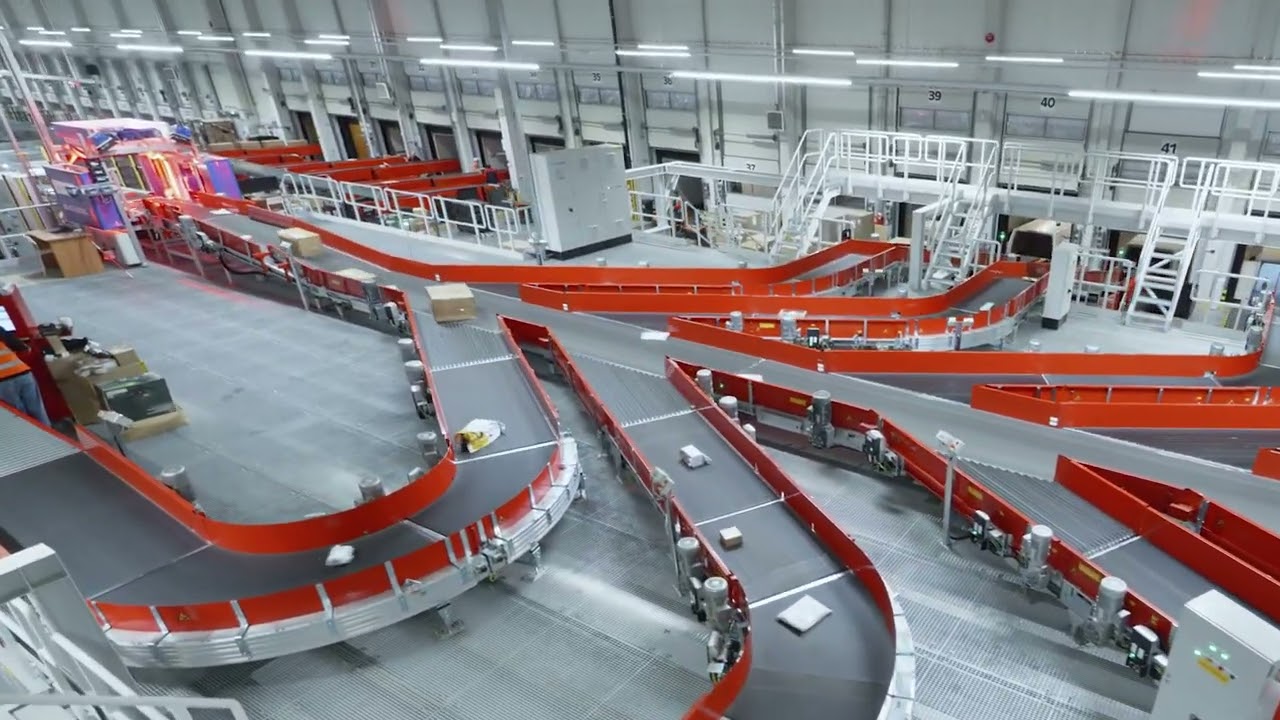
DPD Warszawa - Poland Logistics Center Parcel Sorting Automation
Beumer Group
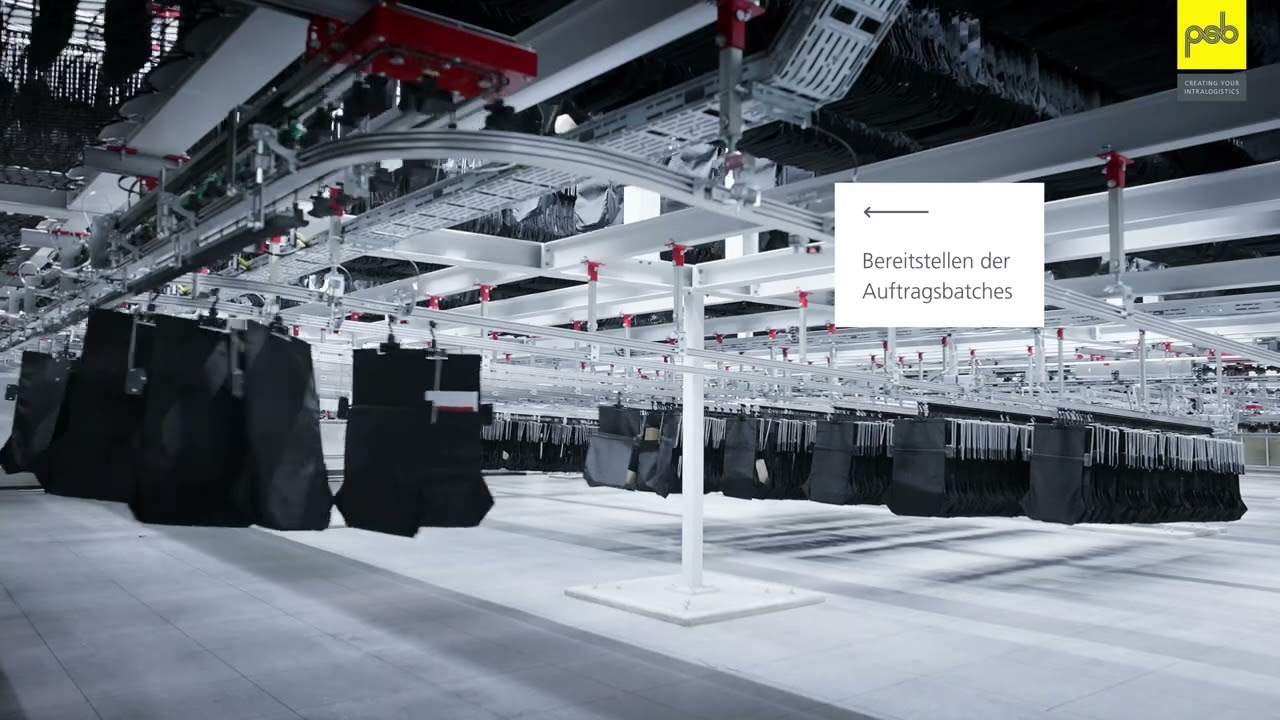
CEWE Stiftung - Oldenburg Production & Distribution Center Automation
psb intralogistics GmbH
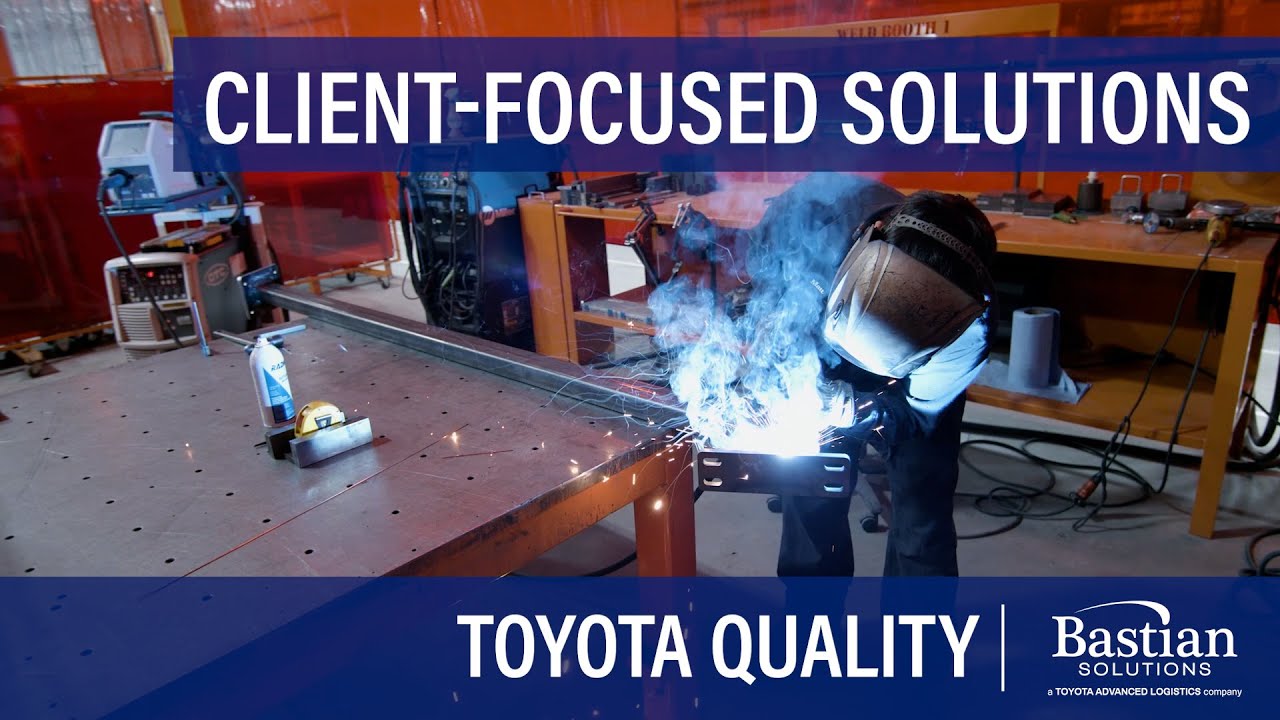
Bastian Solutions Corporate Profile: Toyota Advanced Logistics
Bastian Solutions

L.L.Bean - Freeport Maine Distribution Center Sortation Modernization
Beumer Group
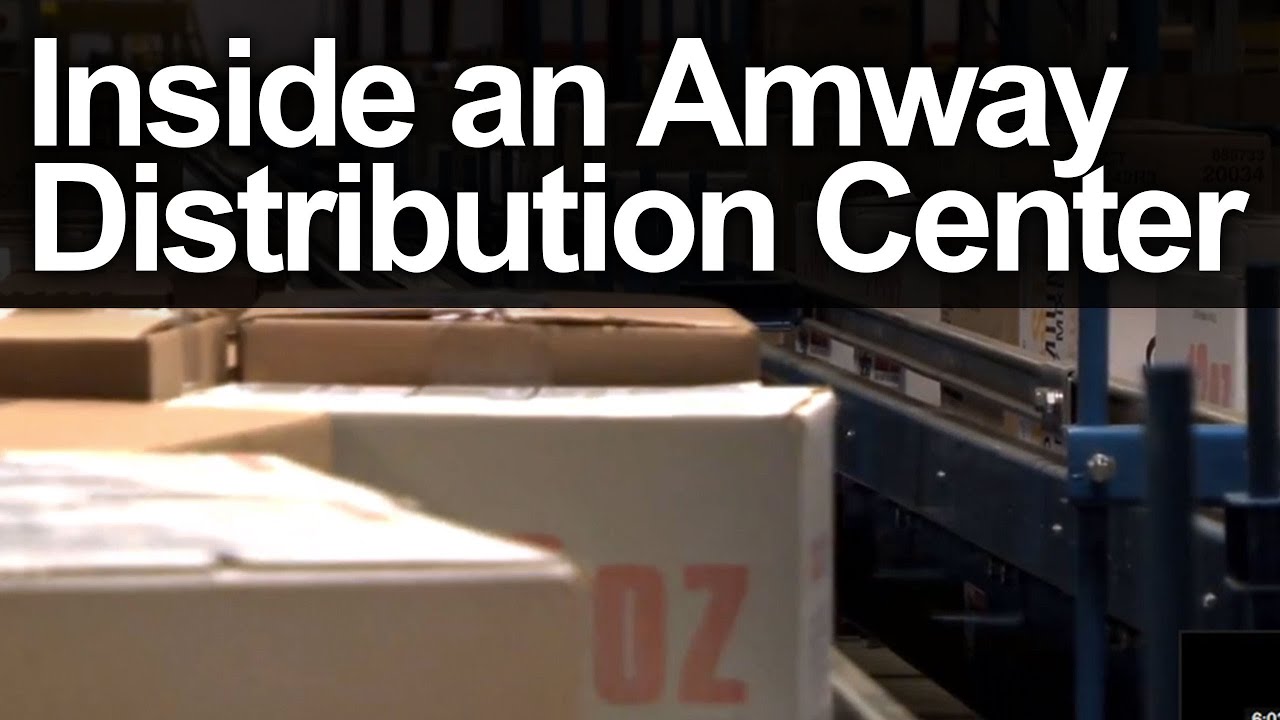
Amway Midwest Regional Service Center, Ada
Bastian Solutions
Related Suppliers(3)

Addverb
Warehouse Automation that delivers value!

Amazon Robotics

AR Racking
Storage Solutions and Industrial Racking