General Merchandise
General merchandise distribution handles diverse product categories from home goods to electronics, requiring versatile automation solutions that accommodate varying sizes, weights, and handling requirements across broad product ranges.
🛍️ General Merchandise Distribution
Operations Profile
- •Wide product variety (50K+ SKUs)
- •Mixed case/pallet operations
- •Store replenishment focus
- •Seasonal merchandise peaks
Key Challenges
- •Variable product sizes/weights
- •Seasonal demand fluctuations
- •Promotional activity spikes
- •Cost pressure (thin margins)
Storage Technologies
- •Selective pallet racking
- •Carton flow racking
- •Mezzanine pick modules
- •Bulk floor storage
Picking Technologies
- •Voice-directed picking
- •Pick-to-light zones
- •RF scanning
- •Batch/zone picking
Sortation & Packing
- •High-speed sorters (by store)
- •Automated palletizing
- •Stretch wrapping systems
- •Label print-and-apply
Software Integration
- •WMS with wave planning
- •Slotting optimization
- •Labor management systems
- •TMS for routing
🌐 Industry Overview
General merchandise encompasses a broad range of product categories including home goods, electronics, toys, sporting goods, hardware, and seasonal items. This diversity is the defining characteristic—warehouses must handle everything from small electronics to large furniture, from fragile glassware to durable tools. Major players include big-box retailers, department stores, and online marketplaces offering wide product selections.
The sector combines characteristics of specialized verticals—some items require careful handling like electronics, others need climate control like certain sporting goods, and bulky items demand different storage and transport solutions. This versatility requirement makes automation selection more complex than single-category operations, but also creates opportunities for flexible systems that can adapt to changing product mixes.
🏭 Warehouse Operations Characteristics
Product diversity creates unique operational challenges. Item dimensions range from small accessories (jewelry, cosmetics) to large furniture and appliances. Weights vary from grams to hundreds of kilograms. Some items are fragile and require careful handling, others are durable. Packaging varies from manufacturer packaging to items requiring warehouse packaging or assembly.
SKU counts typically range from 50,000 to 500,000+ items across multiple categories. Velocity distribution is extreme—a small percentage of SKUs (often 10-20%) account for 80% of volume, while long-tail items turn slowly but are necessary for product selection breadth. Seasonal items (holiday decorations, summer goods, back-to-school) create predictable but dramatic demand spikes.
⚠️ Key Challenges
Product size and weight variation makes standardized automation difficult. Systems optimized for small items can't handle furniture; solutions for heavy items are inefficient for small parcels. Many operations require multiple picking zones with different automation strategies for different product categories. This increases complexity and capital requirements.
Inventory accuracy is challenging across such diverse product types. Cycle counting programs must account for different handling requirements—small items are easily miscounted, large items may be stored in non-standard locations. Damage rates vary significantly by category, requiring category-specific handling procedures and quality controls.
Space utilization is complicated by varying storage density requirements. Small, fast-moving items benefit from high-density automated storage, while large, slow-moving items may require conventional racking. Balancing space allocation across categories as product mix evolves requires flexible storage strategies and regular optimization.
🤖 Suitable Technologies
Storage Solutions: Multi-tier storage systems maximize space for small items while conventional racking handles large products. Goods-to-person systems serve fast-moving small items. Vertical lift modules provide high-density storage for medium-sized products. Pallet racking with narrow aisles stores bulky items. Dynamic slotting algorithms optimize placement across categories.
Transport Systems: Conveyor systems with multiple sortation points route items to appropriate processing areas based on size and destination. AMRs provide flexibility to handle varying product sizes and adapt to changing layouts. Overhead conveyors can transport hanging items or packaged goods. Vertical conveyors enable multi-floor operations separating product categories.
Picking Technologies: Zone picking with different methods per category—goods-to-person for small items, conventional picking for large products. Pick-to-light or voice systems guide pickers through complex product locations. Robotic picking is emerging for certain categories (electronics, toys) but manual picking remains dominant for irregular items. Put walls consolidate multi-category orders.
Software Systems: WMS must handle diverse product attributes (dimensions, weight, fragility, value) and support multiple picking strategies simultaneously. Slotting optimization considers product characteristics and velocity. Order management systems batch orders intelligently, grouping by product category or zone. Integration with merchandising systems for seasonal planning and markdown management.
🎯 Technology Selection Criteria
Versatility is paramount—systems must handle current product mix and adapt to future changes. Avoid over-specialization that limits flexibility. Modular approaches allow different automation strategies for different categories, with shared infrastructure (conveyors, software) providing integration. This is often more cost-effective than trying to force all products through a single automation solution.
Scalability should support both volume growth and category expansion. As businesses add new product lines, automation should accommodate them without major reconfiguration. Consider phased implementation by category—start with highest-volume or most labor-intensive categories and expand to others as ROI is proven.
💡 Implementation Considerations
Category-based phasing reduces risk and complexity. Start with one or two product categories that have clear automation benefits (high volume, standard sizes) and expand to others. This allows learning and refinement before tackling more complex categories. Each category may require different automation strategies—don't force a one-size-fits-all approach.
Product profiling is essential before automation selection. Analyze actual product dimensions, weights, and handling requirements across all categories. Test automation with representative products, not just ideal cases. Some categories may not justify automation—manual handling might be more cost-effective for low-volume, irregular items.
Plan for seasonal transitions and promotional events. General merchandise operations often have dramatic seasonal shifts (holiday decorations, summer goods) requiring flexible capacity. Build in surge capacity or plan for temporary labor during peaks. Consider separate processing for big-and-bulky items that require special handling or shipping methods.
Related Technologies (5)
Dematic DCS3: Flexible High-Rate Cross-Belt Sorter
byDematic
IntelliSort Cross-Belt Sorter: High-Volume Precision Sortation
byHoneywell Intelligrated
Drive-In / Drive-Through Racking Systems: High-Density Storage for Homogeneous Goods
byOthers
Modula Horizontal Carousel (HC): Goods-to-Man Picking Solution
byModula
The FD System: Dynamic Multi-Shuttle Case Handling AS/RS
byDematic
Related Topics
Consumer Goods
Consumer goods distribution serves retail stores and e-commerce channels with fast-moving packaged products, requiring high-throughput automation for case-picking, pallet building, and efficient store replenishment alongside direct-to-consumer fulfillment.
E-commerce Fulfillment
E-commerce fulfillment centers handle high-volume, small-order processing with strict time requirements, requiring flexible automation solutions for efficient order picking and shipping.
Fashion & Apparel
Fashion and apparel fulfillment faces unique challenges with high SKU counts, seasonal volatility, and elevated return rates, requiring flexible automation that handles hanging garments, folded items, and accessories efficiently.
Omnichannel Retail
Omnichannel retail fulfillment integrates online and offline channels, requiring flexible warehouse operations that support store replenishment, e-commerce orders, and buy-online-pickup-in-store (BOPIS) simultaneously.
Retail & E-commerce Segment Comparison
Understanding the differences between retail and e-commerce segments helps in selecting the right warehouse technologies and strategies for your specific business model.
| Aspect | E-commerce Fulfillment | Omnichannel Retail | Fashion & Apparel | General Merchandise | Consumer Goods |
|---|---|---|---|---|---|
| Order Profile | 1-5 items per order, B2C focused | Mixed: Store replenishment + individual orders | High SKU variety, seasonal collections | Wide product range, mixed sizes | High-volume, standardized products |
| SKU Count | 10,000-100,000+ | 20,000-50,000 | 5,000-30,000 per season | 50,000-200,000+ | 1,000-10,000 |
| Order Volume | 50,000-200,000+ orders/day | 10,000-50,000 orders/day | 5,000-20,000 orders/day | 20,000-100,000 orders/day | 1,000-10,000 orders/day |
| Delivery Speed | Same-day to 2-day | Same-day to next-day | 2-5 days standard | 1-3 days | 1-2 days |
| Peak Seasonality | 2-3x during holidays | 2x during holidays | 3-5x during season launches | 1.5-2x during holidays | Relatively stable |
| Return Rate | 15-25% | 20-30% | 30-40% (highest) | 10-20% | 5-10% (lowest) |
| Storage Density | High-density G2P systems | Mixed: Pallets + G2P | Hanging garments + shelving | Multi-level racking | Pallet-based bulk storage |
| Picking Method | Piece picking, G2P | Mixed: Case + piece picking | Piece picking, manual + automated | Case + piece picking | Full pallet + case picking |
| Automation Level | High (60-80%) | Medium-High (40-60%) | Medium (30-50%) | Medium (40-60%) | Medium-High (50-70%) |
| Key Technologies | AutoStore, AMR, sorters | Shuttle systems, AGV, WMS | Hanging sorters, RFID, G2P | AS/RS, conveyors, WCS | Pallet AS/RS, AGV, layer picking |
| Typical Facility Size | 200,000-1M+ sq ft | 300,000-800,000 sq ft | 100,000-500,000 sq ft | 500,000-2M+ sq ft | 200,000-1M+ sq ft |
| Labor Intensity | High (but automating) | High | Very High (manual handling) | Medium-High | Medium |
| Inventory Turns | 8-12x per year | 6-10x per year | 4-6x per year | 6-8x per year | 10-15x per year |
| Primary Challenge | Peak capacity + speed | Channel integration | Trend forecasting + returns | SKU complexity | Cost efficiency |
| Investment Priority | G2P systems, sorters | Flexible automation, OMS | Returns processing, RFID | Storage density, WMS | Pallet automation, throughput |
E-commerce Fulfillment
Omnichannel Retail
Fashion & Apparel
General Merchandise
Consumer Goods
Key Insights
E-commerce Fulfillment excels at high-volume, small-order processing with the fastest delivery requirements. Automation focus is on goods-to-person systems and high-speed sortation to maximize picks per hour and reduce labor costs.
Omnichannel Retail must balance store replenishment (case/pallet level) with individual e-commerce orders, requiring flexible automation that can handle both. Integration between channels is the primary technical challenge.
Fashion & Apparel deals with the highest return rates and most complex inventory management due to size/color variations and seasonal collections. Hanging garment systems and RFID technology are industry-specific requirements.
General Merchandise handles the widest product variety from small items to large appliances, requiring diverse storage and handling solutions. SKU complexity and space optimization are key challenges.
Consumer Goods focuses on high-volume, standardized products with the most stable demand patterns. Automation emphasis is on pallet-level handling and maximizing throughput efficiency with lower labor intensity.
Quick Navigation
Overview
Related Projects(4)

Deli Group Ninghai Intelligent Logistics Center
Daifuku
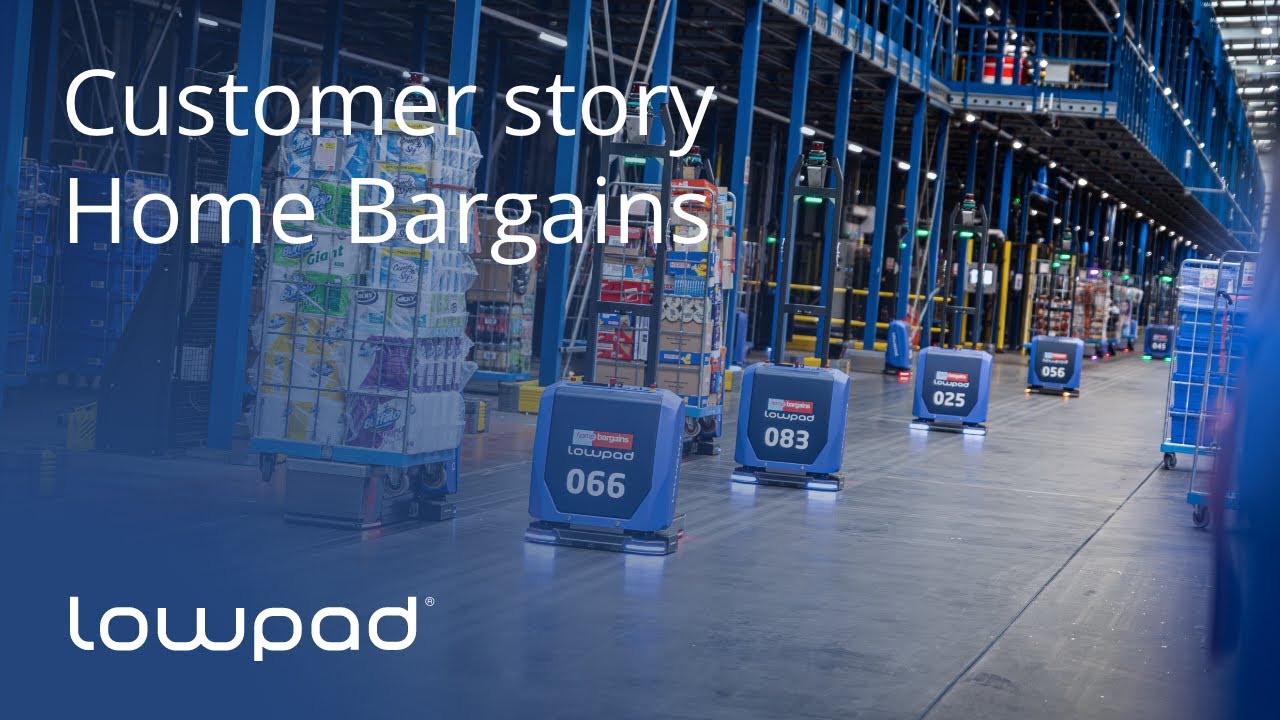
Home Bargains Amesbury Distribution Center
Lowpad
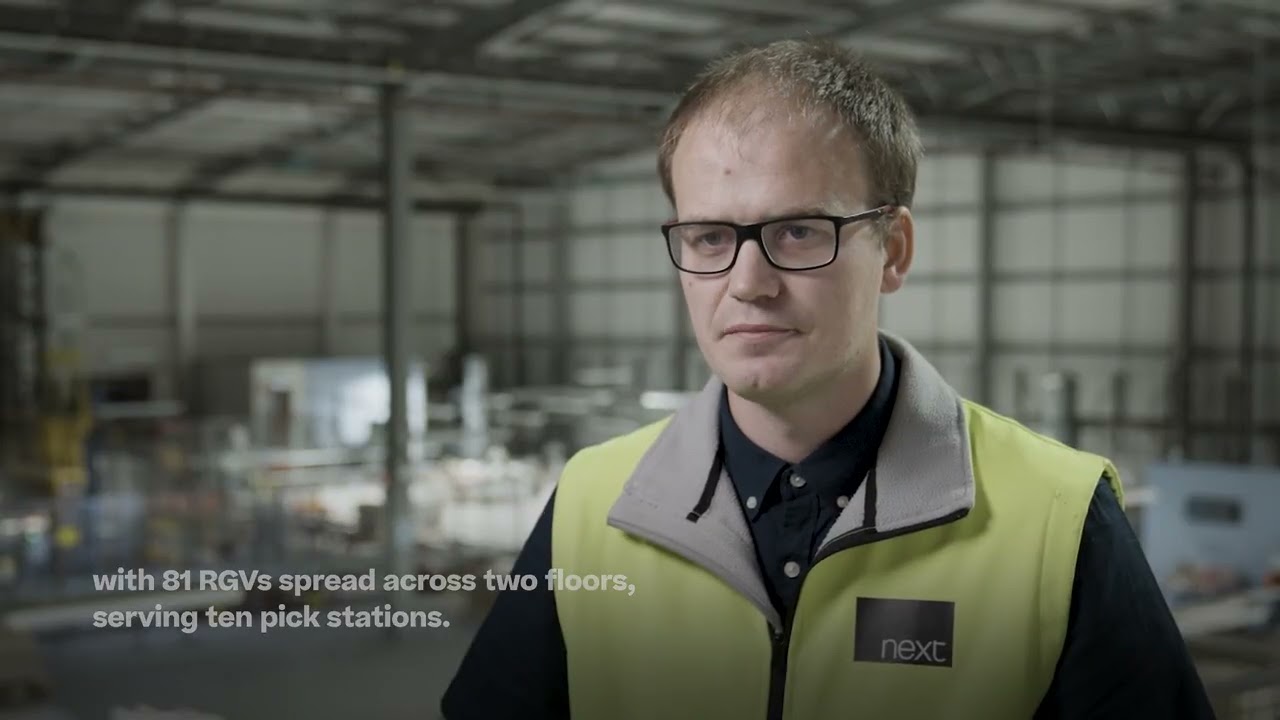
NEXT Doncaster Furniture Distribution Center
Körber
Bruges Belgium FlashPick® Automated Warehouse System
TGW Logistics