Versatile Robotic Palletizer for Rigid Packaging
Quick Facts
Technology Performance Metrics
⭐Key Features
Benefits
Applications
Detailed Information
Technology Overview
This robotic palletizer is designed as a highly flexible and configurable solution for automating the end-of-line process across a wide spectrum of manufacturing and packaging operations. Its core strength lies in its ability to handle virtually any type of rigid packaging container, eliminating the need for multiple specialized palletizers. Developed by NūMove, the system can be tailored to the specific needs of a facility, considering factors like production speed, number of product lines, and pallet specifications. This adaptability makes it a future-proof investment for businesses that deal with diverse product portfolios or anticipate changes in their packaging formats.
How It Works
Core Principles
The system operates on the principle of using an industrial robotic arm equipped with interchangeable or multi-functional end-of-arm tooling (EOAT) to pick and place rigid containers onto pallets. The specific picking method (layer, row, or individual) is determined by the selected tooling and the programmed logic, which is optimized for the product type and desired throughput.
Key Features & Capabilities
Broad Packaging Compatibility: The system's most notable feature is its capability to handle a wide variety of rigid packaging. This includes closed and open-top corrugated cases, plastic or wood trays (whether stretch-wrapped or bare), and various styles of totes. This eliminates compatibility concerns for mixed packaging lines.
Configurable System Architecture: The palletizer is not a one-size-fits-all machine. It can be configured in multiple ways—varying the number of inbound lines, the speed of the robot, the pallet handling mechanism, and the layout—to precisely match the required production rate, product mix, and facility footprint.
Multiple Palletizing Strategies: The system supports different palletizing methodologies through dedicated tools. Layer palletizing is efficient for uniform products, row palletizing offers a balance for certain patterns, and single/double product picking provides maximum flexibility for mixed or slow-moving items.
Advantages & Benefits
The primary advantage is exceptional operational flexibility. A single system can adapt to different products and packaging changes over time, protecting the automation investment. Space and cost efficiency is achieved by consolidating what might require multiple dedicated machines into one configurable cell. High performance is maintained across various container types due to the specialized tooling, ensuring stable and efficient pallet builds regardless of whether the product is a wrapped tray or an open case.
Implementation Considerations
Selecting the optimal configuration and tooling requires a detailed analysis of current and anticipated future products, packaging, throughput rates, and pallet types. The initial setup and programming are more complex than for a single-purpose palletizer due to the range of capabilities. Integration with upstream packaging equipment must ensure containers are presented in a manner compatible with the chosen picking method (e.g., properly formed layers for layer picking).
Use Cases & Applications
Ideal For
This system is ideal for food & beverage manufacturers, consumer packaged goods (CPG) companies, and third-party logistics (3PL) providers that manage a wide array of products packaged in different rigid formats and require an automated solution that can handle this diversity without constant re-engineering.
Conclusion
NūMove's versatile robotic palletizer offers a powerful solution for modern, dynamic production environments where packaging diversity is a reality. By providing a single automated system capable of handling a broad range of rigid containers and offering multiple palletizing strategies, it delivers significant flexibility and reduces the risk of automation obsolescence. While the planning and selection phase is critical to match the system to specific needs, the payoff is a robust, adaptable, and high-performance palletizing cell that can evolve with the business. For operations looking to automate end-of-line tasks without being constrained by packaging type, this technology presents a comprehensive and future-ready option.
Related Knowledge
Robotic Case Picking
Advanced robotic case picking systems that combine industrial robotics with intelligent vision systems to automate the handling of full cases and cartons, delivering exceptional speed, precision, and reliability in high-volume distribution operations.
Robotic Piece Picking
Advanced robotic systems that use AI and computer vision to automatically select and pick individual items from diverse inventory, revolutionizing warehouse fulfillment operations with human-like dexterity and intelligence.
Voice Picking Systems
Voice picking systems revolutionize warehouse operations by enabling hands-free, eyes-free order fulfillment through speech recognition technology. Workers receive spoken instructions through wireless headsets and confirm actions verbally, dramatically improving productivity, accuracy, and safety while reducing training time.
Vendor
OthersRelated Technologies
Mini FlyPick Robot: Compact High-Speed Sorting AMR
Others

Split Tray (Bomb Bay) Sorter Compilation: Versatile High-Speed Sortation
Others
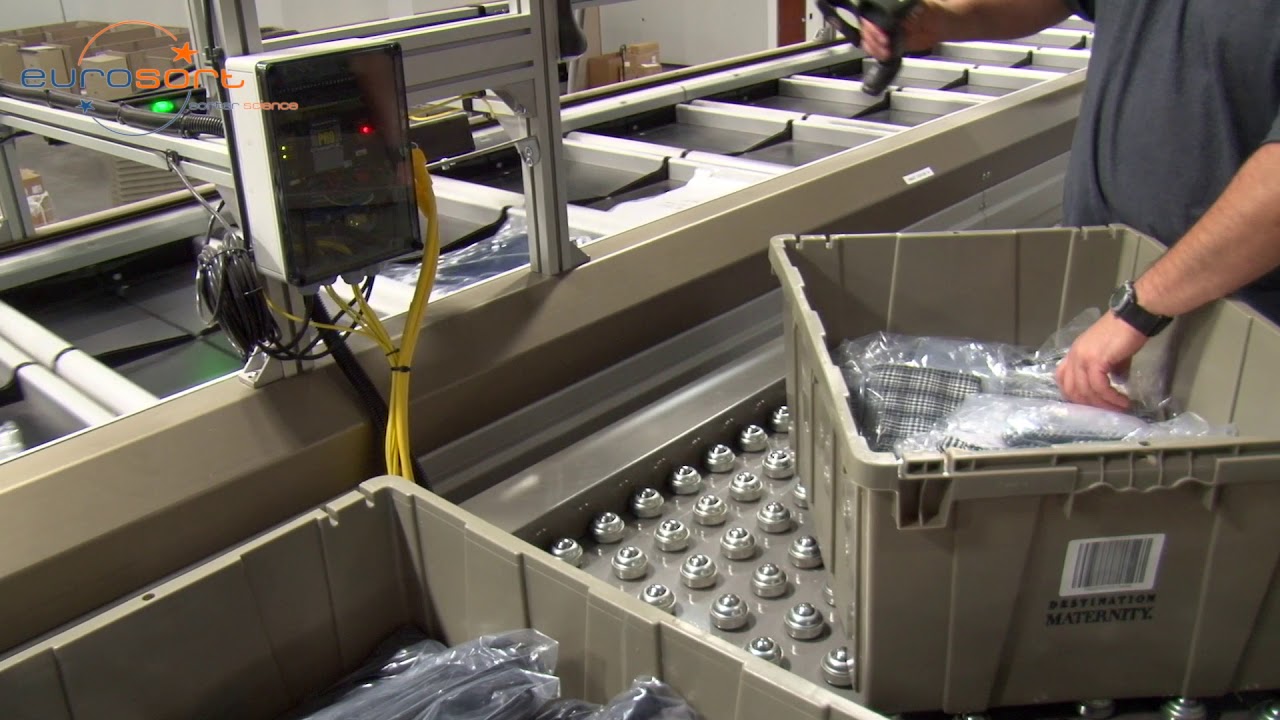
Patented Dual Split Tray (Bomb Bay) Sorter with Batch Induction
Others