TM AI Cobot with AMR: Automated Multi-Station Goods Collection
Quick Facts
Technology Performance Metrics
⭐Key Features
Benefits
Applications
Detailed Information
Technology Overview
The integration of a TM AI Cobot with an Autonomous Mobile Robot (AMR) represents an advanced form of flexible automation for material handling. This system addresses the common logistical task of gathering items, parts, or goods from several fixed points within a facility. Instead of relying on a human operator with a cart or a fixed network of conveyors, this solution combines the mobility of an AMR with the precise manipulation capabilities of a collaborative robot (cobot). The AMR acts as an intelligent, self-navigating transport platform, while the TM AI Cobot mounted on it serves as the "arm" that physically retrieves items from each station. This combination is particularly valuable in environments with dynamic layouts or batch-specific collection routes, such as kitting for production, decentralized picking, or supplying assembly lines.
How It Works
Core Principles
The core principle is Mobile Manipulation for Decentralized Collection. The system breaks down a multi-stop collection task into two automated functions: intelligent navigation between stations (handled by the AMR) and precise picking/placing at each station (handled by the AI-powered cobot). The "AI" component likely refers to vision or sensor-based guidance that allows the cobot to identify and handle goods at varying positions.
Key Features & Capabilities
Combined Mobility and Manipulation is the foundational capability. This integration creates a single automated unit capable of both traveling to diverse locations and performing physical interaction tasks, which neither an AMR nor a stationary cobot can do alone.
AI-Enhanced Cobot Perception allows for flexibility at the point of collection. The cobot's AI and vision capabilities enable it to handle items that may not be presented in perfectly fixed positions, adapting to minor variances at each station without extensive mechanical fixturing.
Autonomous Multi-Point Navigation enables complex routing. The AMR can be programmed or dynamically tasked with efficient routes to visit multiple collection points in sequence, optimizing travel time and adapting to changes in the facility layout.
Advantages & Benefits
The primary benefit is Elimination of Manual Collection Labor. This system automates a repetitive and often time-consuming task of gathering items from various points, freeing human workers for more complex duties and reducing physical strain.
It offers High Flexibility and Reconfigurability. Unlike fixed conveyor systems, the collection route and the stations served can be changed easily through software. This makes the system ideal for low-volume, high-mix or frequently changing production or fulfillment scenarios.
The system can lead to Improved Process Efficiency and Traceability. Automating the collection ensures consistency and timeliness. The digital nature of the task also allows for better tracking of material movement from source stations to final destination.
Implementation Considerations
Station Design for Robotic Interface is crucial. Each collection point must be designed or adapted so that the cobot can reliably and safely access the items. This may involve standardized presentation trays, consistent lighting, or specific geometric layouts.
System Integration and Programming Complexity is higher than for a single robot. Seamless communication between the AMR's navigation system and the cobot's control system is essential. Creating and debugging the combined workflows for different collection tasks requires expertise.
Payload and Workspace Constraints must be evaluated. The combined weight of the cobot and its payload, along with the cobot's reach, will limit the AMR's selection and the design of the collection stations. The AMR must be stable enough to support the cobot's movements.
Conclusion
The TM AI Cobot combined with an AMR is a sophisticated automation solution for dynamic material collection tasks. It is best suited for manufacturing, warehousing, or laboratory environments where items need to be gathered from several decentralized locations on a regular basis. This system shines in applications requiring both mobility and dexterity, offering a flexible alternative to manual carts or inflexible fixed automation. Potential adopters should carefully assess the design of their collection stations, the compatibility and integration effort between the cobot and AMR platforms, and the programming overhead for various collection routines. When successfully implemented, it can significantly boost operational efficiency, reduce labor costs, and enhance the agility of material flow processes.
Related Knowledge
Robotic Case Picking
Advanced robotic case picking systems that combine industrial robotics with intelligent vision systems to automate the handling of full cases and cartons, delivering exceptional speed, precision, and reliability in high-volume distribution operations.
Robotic Piece Picking
Advanced robotic systems that use AI and computer vision to automatically select and pick individual items from diverse inventory, revolutionizing warehouse fulfillment operations with human-like dexterity and intelligence.
Voice Picking Systems
Voice picking systems revolutionize warehouse operations by enabling hands-free, eyes-free order fulfillment through speech recognition technology. Workers receive spoken instructions through wireless headsets and confirm actions verbally, dramatically improving productivity, accuracy, and safety while reducing training time.
Vendor
OthersRelated Technologies
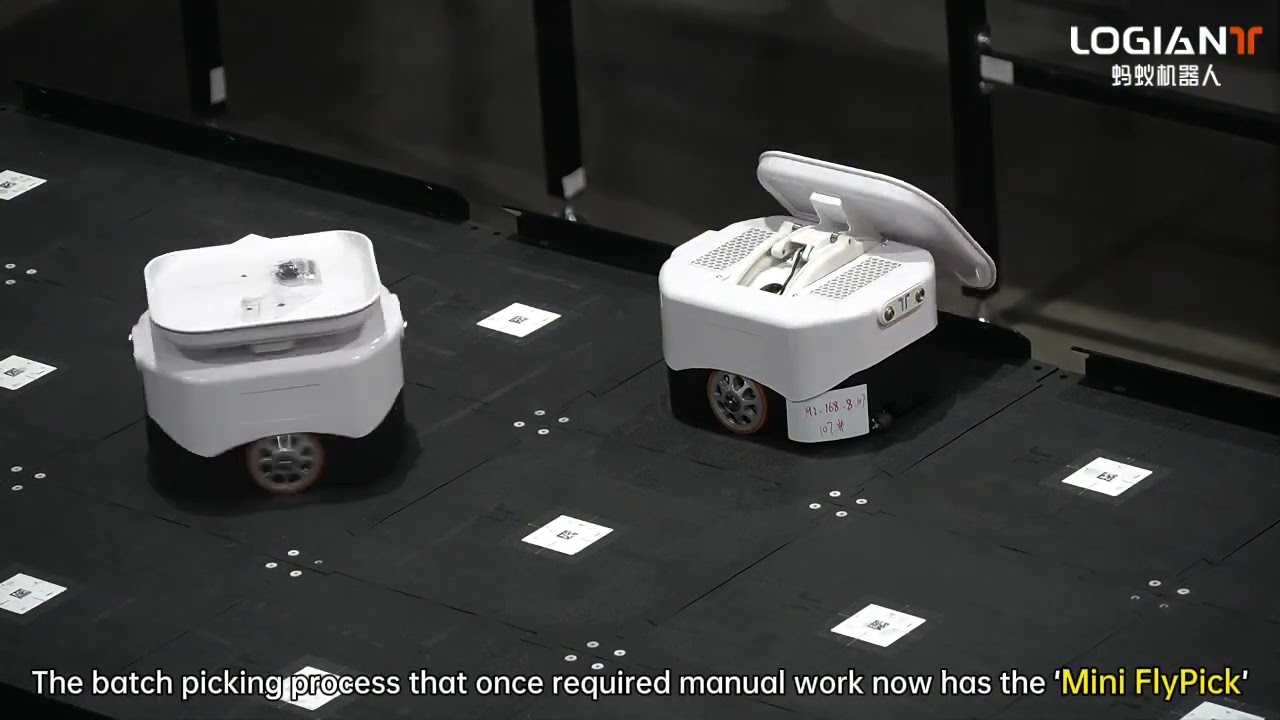
Mini FlyPick Robot: Compact High-Speed Sorting AMR
Others

Split Tray (Bomb Bay) Sorter Compilation: Versatile High-Speed Sortation
Others
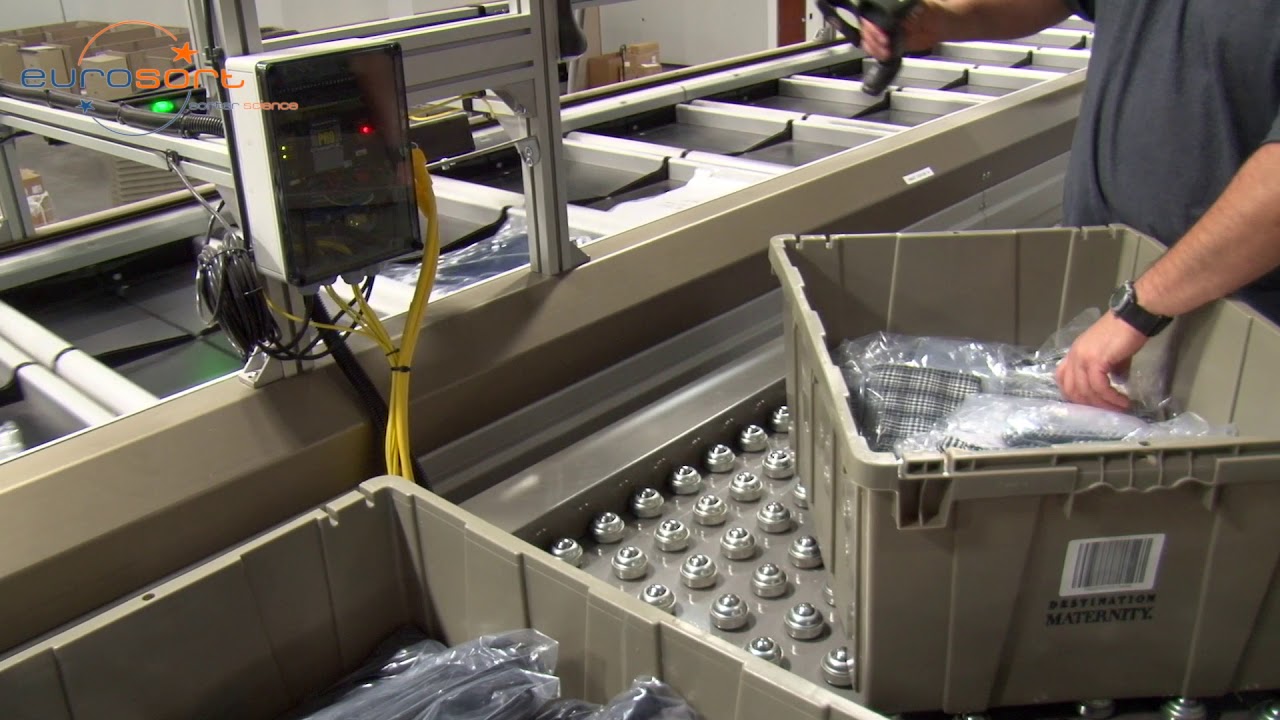
Patented Dual Split Tray (Bomb Bay) Sorter with Batch Induction
Others