Pallet Flow Racking: High-Density FIFO Storage System
Quick Facts
Technology Performance Metrics
⭐Key Features
Benefits
Applications
Detailed Information
Technology Overview
Pallet flow racking, commonly referred to as gravity flow racking, is a specialized high-density storage system designed to optimize space and ensure precise inventory rotation. It addresses the needs of warehouses with high-volume, fast-moving goods, particularly where First-In, First-Out (FIFO) stock management is essential, such as with perishable items. The system cleverly utilizes gravity on gently sloping roller lanes to move pallets from the loading point to the picking face. This design not only maximizes the number of pallets stored in a deep lane but also automates the stock rotation process, making it a highly efficient solution for operations characterized by large quantities of a limited range of products.
How It Works
Core Principles
The system operates on the principles of gravity-assisted movement and FIFO inventory control. Pallets are loaded into the back of a multi-deep storage lane. The inclined lane, equipped with low-friction rollers, allows the pallets to slowly and controllably slide forward towards the front pick face due to gravity.
Key Features & Capabilities
Gravity-Powered Flow is the core feature, eliminating the need for external power to move inventory within the lane. FIFO Automation is built into the system's design, guaranteeing that the oldest stock is always retrieved first. High-Depth Storage allows lanes to store pallets many deep (e.g., 5-10+), significantly increasing density compared to single-deep selective racking. Controlled Movement via brakes or rollers ensures pallets move safely and predictably without impacting each other.
Advantages & Benefits
The primary advantage is exceptional storage density combined with guaranteed FIFO rotation, making it perfect for perishable goods in food & beverage and cold storage. It dramatically reduces the footprint needed for high-volume storage. The system increases picking efficiency by presenting the next pallet automatically at the ideal pick position and separates loading and picking activities, reducing forklift congestion.
Implementation Considerations
This system is highly effective but specialized. It is not suitable for a wide variety of SKUs as each lane is typically dedicated to one product. Pallet quality, consistency, and weight are critical for reliable flow. The investment cost is higher than for static racking, and the layout requires careful planning of lane depth based on turnover rates to prevent old stock from being trapped at the back.
Use Cases & Applications
Ideal For
This system is ideal for warehouses with high-throughput, homogeneous products where space is at a premium and FIFO stock control is non-negotiable.
Conclusion
Pallet flow racking is a powerful and efficient storage technology for the right application. By marrying high-density storage with automated FIFO inventory management, it solves critical challenges in industries like food and beverage distribution. While its application is focused on high-volume, low-SKU scenarios, within that niche it delivers unparalleled benefits in space utilization, operational efficiency, and inventory control. For operations that match this profile, investing in a pallet flow system is a strategic decision that can significantly enhance logistics performance.
Related Knowledge
Storage
Storage is the warehouse process of holding inventory in organized locations until needed, balancing space utilization, accessibility, and inventory control to support efficient operations.
Cold Storage Strategy
Cold storage and temperature-controlled warehousing are critical for preserving perishable goods throughout the supply chain. From frozen foods to pharmaceuticals, these specialized facilities maintain precise temperature conditions while optimizing energy efficiency and operational performance.
Vendor
Atlantic RackRelated Technologies
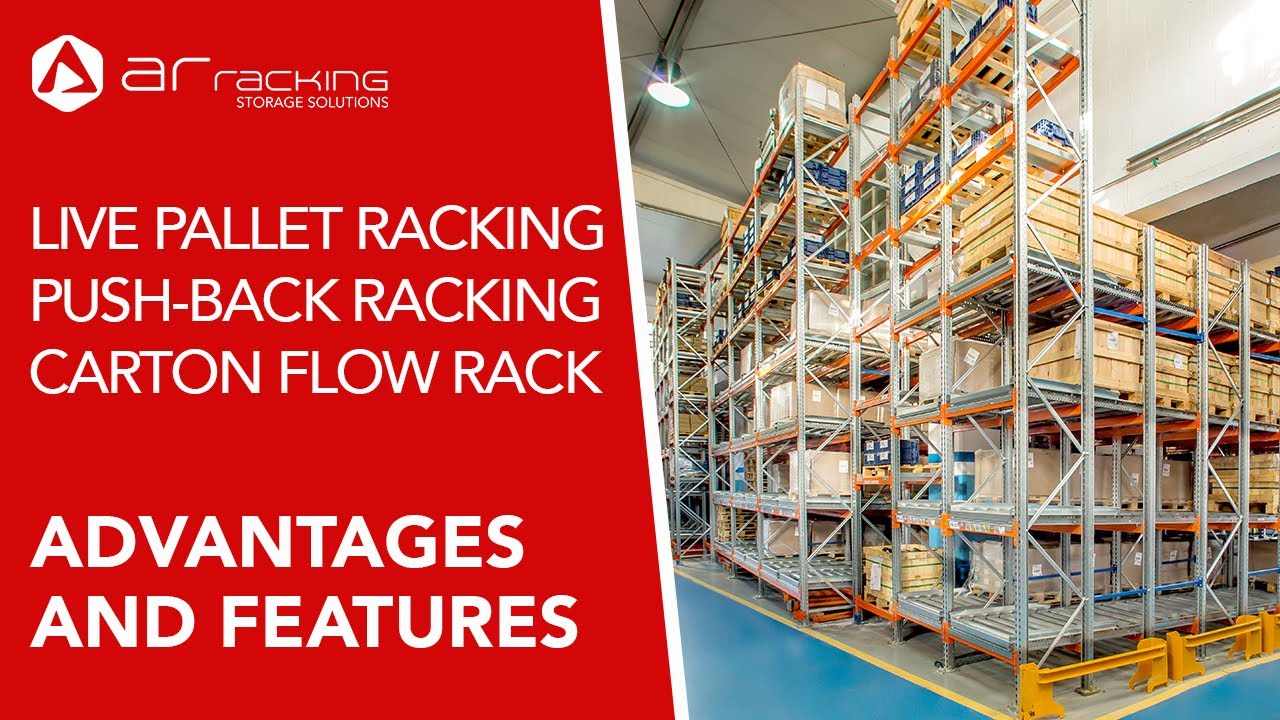
Live Storage Systems: Gravity-Flow High-Density Storage
AR Racking
Cantilever Racking Systems: Storage for Long, Bulky & Heavy Items
Atlantic Rack
Push-Back Racking: High-Density LIFO Storage Solution
Atlantic Rack