Mobile Picking Robot (MPR): Smart Logistics Automation
Quick Facts
Technology Performance Metrics
⭐Key Features
Benefits
Applications
Detailed Information
Technology Overview
The Mobile Picking Robot (MPR), developed by Hyundai Motor Group, represents an advanced convergence of mobility and manipulation in industrial automation. It is designed as a smart logistics solution specifically to address challenges in production environments, such as line-side congestion and the need for flexible, just-in-time part delivery. By integrating autonomous navigation with precise robotic picking, the MPR aims to create a seamless, automated flow of materials from storage to the point of use on the assembly line, reducing manual intervention and optimizing floor space.
How It Works
Core Principles
The core principle is the integration of two key robotic technologies: autonomous mobility and dexterous manipulation. The system uses the AMR for intelligent navigation and transport, and the robotic arm for precise identification and picking of individual parts, creating a unified "pick-and-carry" automation unit.
Key Features & Capabilities
The combined AMR and robotic arm design is the defining feature, enabling the robot to perform the complete cycle of travel, identification, picking, and delivery without human assistance. Its autonomous part identification and picking capability indicates the use of advanced computer vision and possibly machine learning to handle varied parts. The system is explicitly engineered to alleviate production line congestion by automating internal logistics, suggesting capabilities in dynamic routing and space-efficient operation in crowded environments.
Advantages & Benefits
The primary benefit is the creation of a flexible, automated material flow that decouparts delivery from fixed conveyor lines, allowing for dynamic routing and layout changes. This leads directly to reduced congestion and improved production line efficiency, as parts arrive just-in-time without manual cart traffic. The system also delivers increased picking precision and reduced errors through automated vision-guided picking, enhancing overall production quality and consistency.
Implementation Considerations
Implementing an MPR system requires a detailed analysis of the production environment, including floor layout, part variability, and docking/charging station placement. Robust integration with Manufacturing Execution Systems (MES) and inventory databases is crucial for task assignment and tracking. The complexity of the robotic picking cell demands careful consideration of part presentation, lighting, and gripper design to ensure reliable operation. The total cost, including robots, software, integration, and maintenance, must be justified by the gains in labor efficiency and production throughput.
Use Cases & Applications
Ideal For
This solution is ideal for discrete manufacturing environments, particularly automotive and electronics assembly, where a high variety of parts must be delivered accurately and efficiently to multiple points along a complex production line.
Conclusion
The Hyundai Mobile Picking Robot (MPR) exemplifies the next step in smart factory logistics: moving beyond simple transport to fully integrated, intelligent picking and delivery. It offers a powerful solution for manufacturers seeking to eliminate bottlenecks, increase flexibility, and reduce manual labor in their production material flow. While implementation requires careful planning and investment, the potential for significant improvements in operational efficiency, space utilization, and production agility makes it a compelling innovation for forward-thinking manufacturing and logistics operations.
Related Knowledge
Robotic Case Picking
Advanced robotic case picking systems that combine industrial robotics with intelligent vision systems to automate the handling of full cases and cartons, delivering exceptional speed, precision, and reliability in high-volume distribution operations.
Robotic Piece Picking
Advanced robotic systems that use AI and computer vision to automatically select and pick individual items from diverse inventory, revolutionizing warehouse fulfillment operations with human-like dexterity and intelligence.
Voice Picking Systems
Voice picking systems revolutionize warehouse operations by enabling hands-free, eyes-free order fulfillment through speech recognition technology. Workers receive spoken instructions through wireless headsets and confirm actions verbally, dramatically improving productivity, accuracy, and safety while reducing training time.
Vendor
HyundaiRelated Technologies
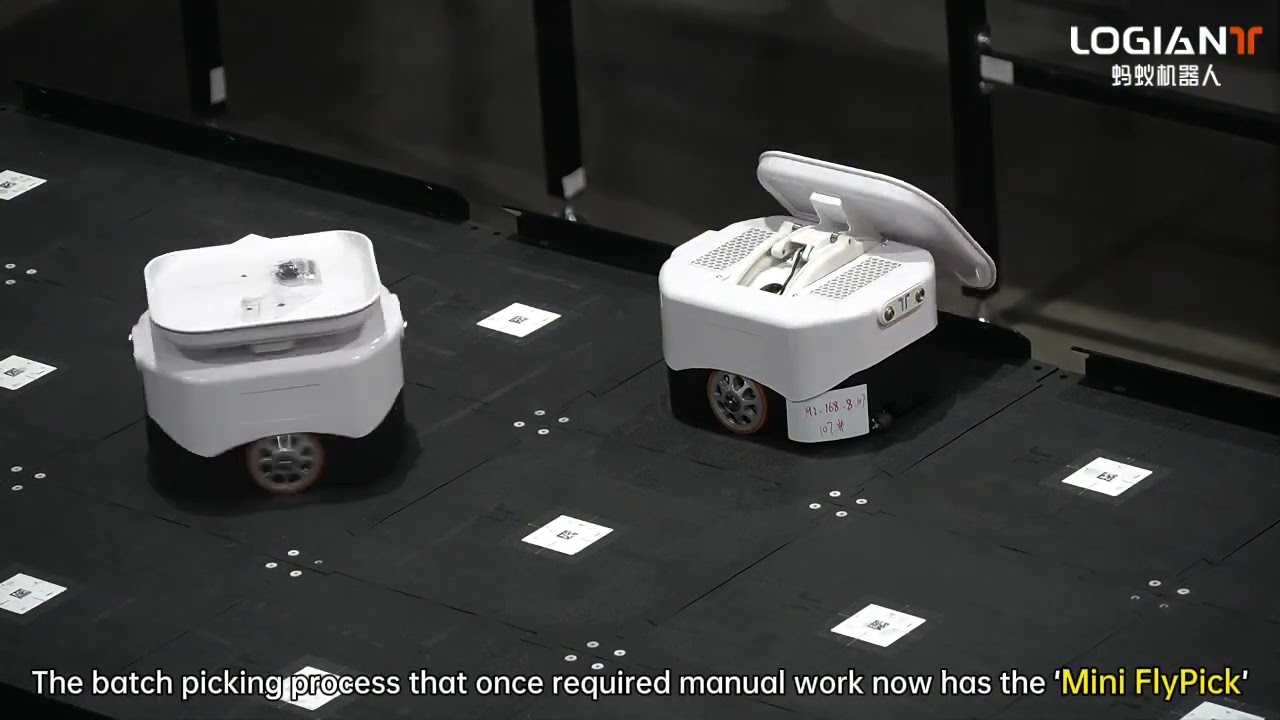
Mini FlyPick Robot: Compact High-Speed Sorting AMR
Others
Momentum WES: Next-Generation Warehouse Execution and Control
Honeywell Intelligrated
Helix System: AI-Powered Robotic Package Sorting
Figure AI