Compact High-Speed Sorting Robot for Small Items
Quick Facts
Technology Performance Metrics
⭐Key Features
Benefits
Applications
Detailed Information
Technology Overview
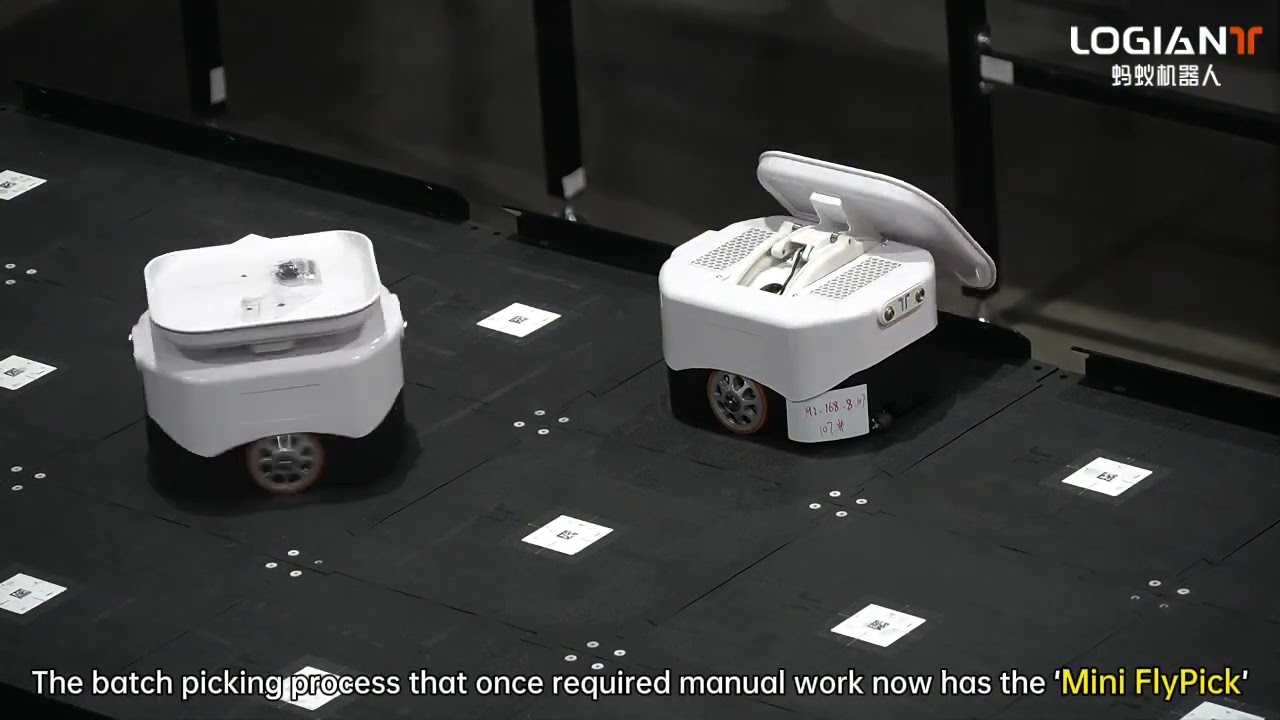
The LOGIANT Mini FlyPick robot represents a focused advancement in robotic automation for intralogistics, specifically targeting the critical challenge of small-item sorting and picking. Positioned as a "smarter, faster, and compact" solution, it is designed to bring high-speed, intelligent automation to warehouse operations that handle a high volume of small parts, pharmaceuticals, cosmetics, or e-commerce items. By combining a compact physical footprint with sophisticated software algorithms, the Mini FlyPick aims to maximize efficiency in spaces where floor area is limited. LOGIANT positions this technology as a key driver for the future of smart logistics, enabling businesses across e-commerce, pharmaceuticals, retail, and manufacturing to transform their operations through precise, rapid, and adaptable automation.
How It Works
Core Principles
The core principles are Compact, Algorithm-Driven Precision Sorting. The robot utilizes a compact mechanical design to operate in confined spaces. Its "brain" is a set of smart algorithms that likely combine computer vision for item identification, motion planning for precise grasping, and task optimization to sequence picks for maximum speed and accuracy. It functions as a highly focused workcell for sorting individual small items from a source (like a bin or conveyor) to a designated destination.
Key Features & Capabilities
Compact and Flexible Physical Design allows it to be deployed in existing warehouse layouts without requiring significant space redesign. This makes automation accessible for facilities that cannot accommodate larger robotic systems.
High-Speed Picking Driven by Smart Algorithms is the performance engine. The combination of fast mechanics (likely a high-speed arm) and intelligent software that minimizes wasted movement allows the system to achieve a high number of picks per hour, directly contributing to rapid order fulfillment.
Seamless Integration with Material Handling Systems ensures it acts as a cohesive automation island. The ability to work smoothly with conveyors and bins means it can be dropped into a current process flow, taking input from upstream systems and feeding output to downstream packing or shipping stations.
Broad Industry Applicability stems from its focus on small items. The fundamental task of accurately picking and placing small objects is universal across e-commerce (single-item picks), pharmaceuticals (vials, packages), retail (cosmetics, accessories), and manufacturing (components, kitting).
Advantages & Benefits
The primary benefit is Transformation of Manual, Error-Prone Tasks. Automating small-item picking with high precision eliminates tedious manual labor, significantly reduces picking errors, and increases overall process reliability, which is especially critical in industries like pharmaceuticals.
It delivers Space-Efficient Automation. The compact design means businesses can add robotic sorting capability without sacrificing valuable storage or operational floor space, offering a high return on automation per square foot.
The system provides Scalable Throughput and Adaptability. The high picking speed allows a single unit to handle substantial volume. Its flexible application means it can be reprogrammed or redeployed for different SKUs or order profiles as business needs change, protecting the automation investment.
It enables Seamless Process Integration and Data Intelligence. By integrating with existing systems, it creates a more connected and data-driven workflow. The smart algorithms not only control the robot but also generate data that can be used for further process optimization and insights.
Implementation Considerations
Item Characteristics and Presentation must be suitable. While versatile for "small items," the system will have limits regarding item size, weight, shape, and surface texture (for gripping). The consistency of how items are presented (e.g., loosely in a bin, singulated on a conveyor) will impact performance.
Integration Depth and Scope should be defined. "Seamless integration" requires planning. Decisions need to be made about how the robot receives task data (from WMS, manually), how it communicates status, and how the physical hand-off points with conveyors or bins are designed for reliability.
Algorithm Training and Optimization is an ongoing process. The "smart algorithms" may require initial training on the specific items to be handled and continuous tuning to maintain peak performance as new SKUs are introduced or order patterns shift.
Conclusion
The LOGIANT Mini FlyPick robot is a compelling and practical automation solution for warehouses and distribution centers struggling with the efficiency and accuracy of manual small-item sorting and picking. It is ideally suited for operations in e-commerce, pharmaceuticals, retail, and light manufacturing where SKUs are small, order profiles are complex, and space is at a premium. Its strengths lie in its focused design, intelligent software, and emphasis on easy integration. Potential adopters should carefully assess their item mix and material flow to ensure a good match with the robot's capabilities. For businesses looking to take a significant step towards "smart warehousing" by automating a critical, labor-intensive bottleneck, the Mini FlyPick offers a targeted, efficient, and future-ready path forward.
Related Knowledge
Robotic Case Picking
Advanced robotic case picking systems that combine industrial robotics with intelligent vision systems to automate the handling of full cases and cartons, delivering exceptional speed, precision, and reliability in high-volume distribution operations.
Robotic Piece Picking
Advanced robotic systems that use AI and computer vision to automatically select and pick individual items from diverse inventory, revolutionizing warehouse fulfillment operations with human-like dexterity and intelligence.
Voice Picking Systems
Voice picking systems revolutionize warehouse operations by enabling hands-free, eyes-free order fulfillment through speech recognition technology. Workers receive spoken instructions through wireless headsets and confirm actions verbally, dramatically improving productivity, accuracy, and safety while reducing training time.
Vendor
OthersRelated Technologies
Mini FlyPick Robot: Compact High-Speed Sorting AMR
Others

Split Tray (Bomb Bay) Sorter Compilation: Versatile High-Speed Sortation
Others
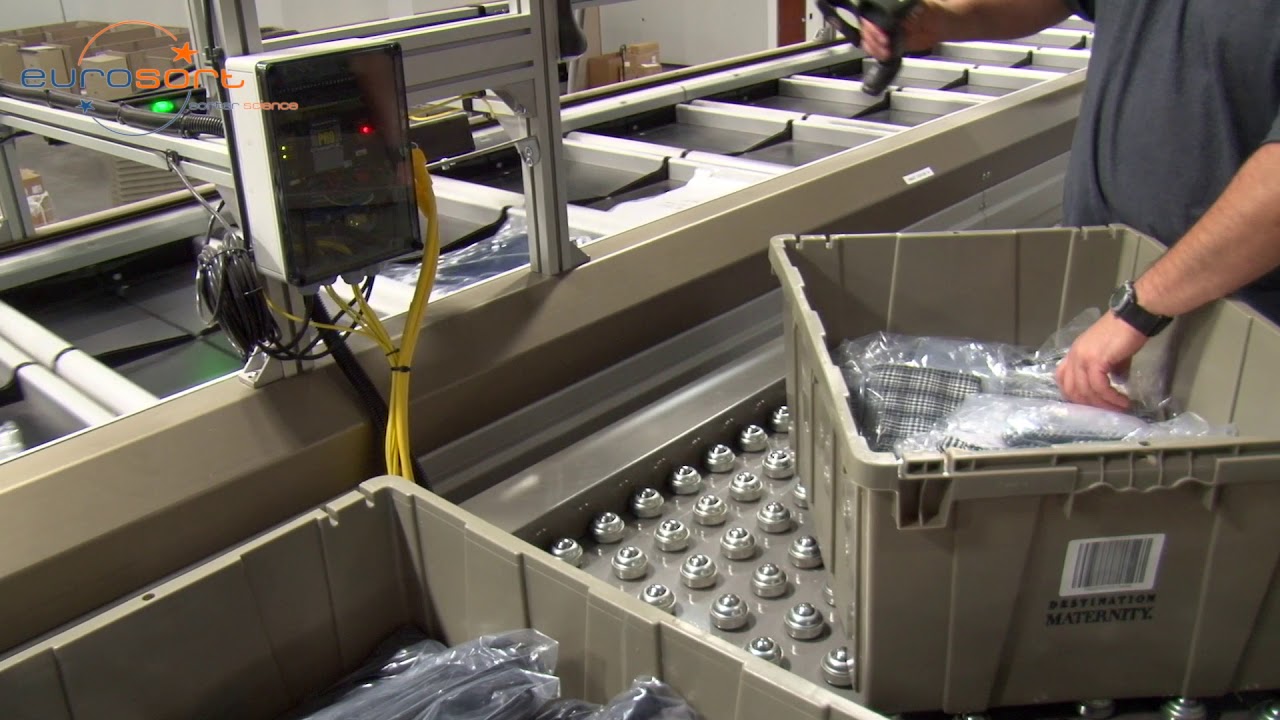
Patented Dual Split Tray (Bomb Bay) Sorter with Batch Induction
Others