Automated Forklift: Autonomous Trailer Unloading
Quick Facts
Technology Performance Metrics
⭐Key Features
Benefits
Applications
Detailed Information
Technology Overview
Fox Robotics pioneers a targeted automation solution for one of the most demanding and repetitive tasks in logistics: unloading pallets from shipping trailers. Their technology transforms a standard industrial forklift into a fully autonomous vehicle capable of navigating into a trailer, locating pallets, and transporting them to the receiving dock without human intervention. By focusing on this specific high-value application, Fox addresses a critical bottleneck where labor shortages, ergonomic challenges, and efficiency demands are acute. The system is engineered not just as a robot, but as a "human multiplier," designed to deliver immediate, tangible value by automating heavy, monotonous work, thereby allowing human workers to focus on more complex tasks and improving overall operational economics and safety.
How It Works
Core Principles
The system operates by combining the physical capabilities of a standard forklift with advanced autonomous driving and perception technology. Using onboard sensors and intelligent software, the vehicle perceives its environment (inside the trailer, on the dock), localizes itself, identifies pallets, and executes precise pick-up, transport, and placement maneuvers.
Key Features & Capabilities
Autonomous Trailer Unloading is the dedicated function, tackling the complex environment of a semi-trailer. High Throughput of over 25 pallets per hour demonstrates operational efficiency. Low Operator Attention requirement makes it a force multiplier rather than a replacement, needing only minutes of supervision per job. Standard Truck Base suggests potential benefits in parts commonality and serviceability.
Advantages & Benefits
The primary advantage is the automation of a notoriously difficult-to-staff and strenuous job, directly addressing labor challenges and improving worker well-being. It delivers consistent, high-speed unloading, which can accelerate dock turnaround times and increase facility throughput. The system is built with a clear focus on ROI and obvious value, aiming to pay for itself quickly through labor savings and productivity gains. By acting as a human multiplier, it allows companies to scale operations without proportionally increasing labor, contributing to economic and operational efficiency.
Implementation Considerations
Implementing this system requires the trailer environment to be compatible; pallets need to be reasonably well-placed and within the system's detection and handling parameters. Integration with warehouse workflows (e.g., where unloaded pallets go next) must be planned. While requiring minimal continuous attention, trained personnel are still needed for system oversight, exception handling, and maintenance. The initial investment is justified by the labor savings and efficiency gains in high-volume unloading scenarios.
Use Cases & Applications
Ideal For
This solution is ideal for distribution centers, manufacturing plants, and retail DCs with high volumes of inbound palletized goods where trailer unloading is a significant, recurring, and labor-intensive operation.
Conclusion
Fox Robotics delivers a highly focused and impactful automation solution by directly attacking the challenge of autonomous trailer unloading. By making a robot that "works" in the most practical sense—solving a clear pain point with measurable efficiency and requiring minimal human oversight—they offer a compelling entry into warehouse automation. For facilities burdened by the physical demands and labor costs of manual unloading, this technology represents a strategic investment that can improve safety, boost productivity, and provide a rapid return. It exemplifies how targeted automation can act as a powerful multiplier for human labor, enhancing capabilities and driving economic value in logistics operations.
Vendor
Fox RoboticsRelated Technologies
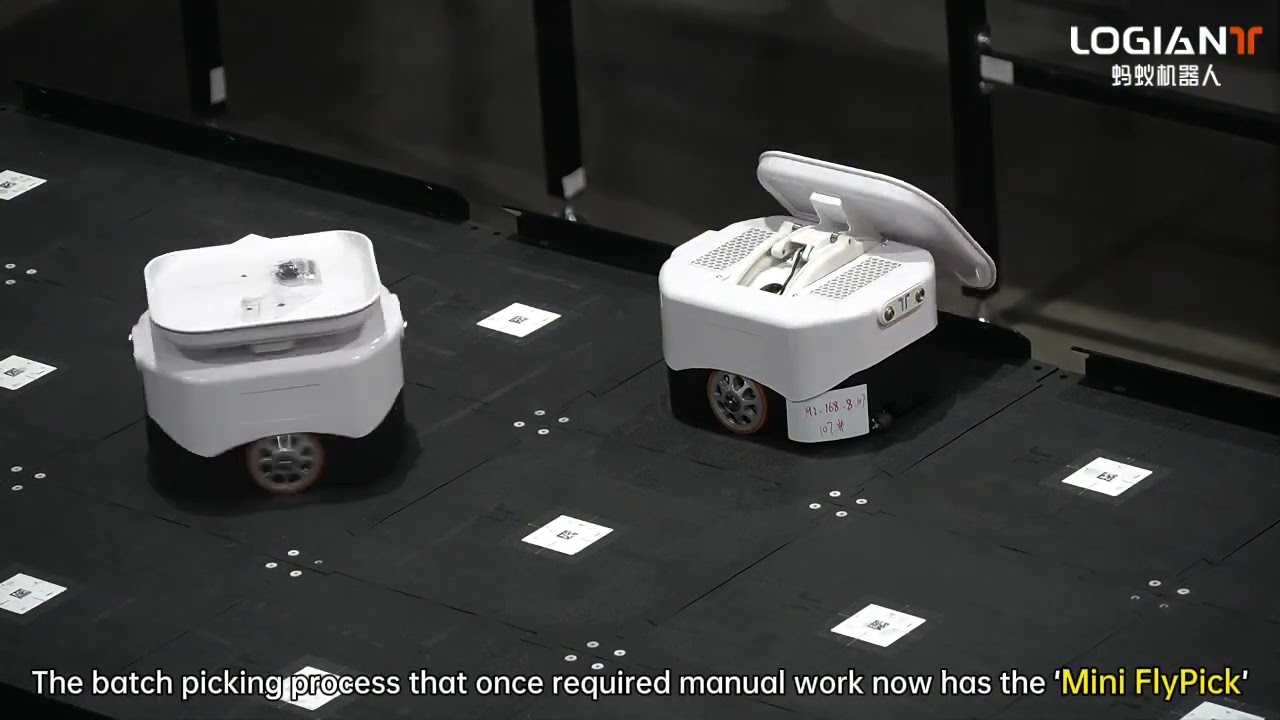
Mini FlyPick Robot: Compact High-Speed Sorting AMR
Others
AI-Powered Robotic Truck Loading System
Others

TiltSort-Bot: Autonomous Mobile Robot (AMR) for Sortation
Conveyco
Supplier Profile

Fox Robotics
Robots That Work.