AI-Powered Robotic Truck Loading System
Quick Facts
Technology Performance Metrics
⭐Key Features
Benefits
Applications
Detailed Information
Technology Overview
AI-Powered Robotic Truck Loading represents a frontier in warehouse and logistics automation, tackling one of the final and most physically demanding manual processes: loading outbound trailers. Traditionally, this task requires workers to manually lift, carry, and strategically place a continuous, randomized stream of boxes inside a confined trailer space to maximize density and ensure load stability for transport. Dexterity AI's technology, developed in collaboration with FedEx, applies advanced artificial intelligence and robotics to this challenge. It moves beyond simple pick-and-place by enabling robots to perceive a diverse mix of parcels, make intelligent stacking decisions in real-time, and execute precise, dexterous movements to build stable walls of boxes, mimicking and potentially exceeding human capability in a consistent, tireless manner.
How It Works
Core Principles
The core principle is integrating advanced perception, AI-based decision-making, and dexterous manipulation onto a mobile robotic platform. The system must "see" (perceive each box's dimensions and orientation), "think" (compute the optimal placement location within the growing load to maximize density and stability), and "move quickly" (physically pick and place the box with the required force and precision) in a dynamic, unstructured environment.
Key Features & Capabilities
Handling Extreme Variability: The system's standout feature is its designed capability to handle the "wide range of shipments" found in a major parcel network. This includes variability in size, shape, weight, and packaging material (e.g., corrugated boxes, polybags), which has stymied previous automation attempts.
Integrated AI Suite for Complex Decision-Making: The robot is endowed with a "suite of intelligence." This implies integrated capabilities for perception (vision), tactile feedback, real-time spatial reasoning ("think"), and high-speed, adaptive motion planning. This allows it to make the thousands of micro-decisions required to stack randomized items efficiently.
Mobile Dexterous Manipulation: Combining mobility with dexterous arm manipulation allows the robot to access the entire trailer floor space and build loads from the front to the back, adapting its position as the load progresses, unlike a fixed robotic cell.
Advantages & Benefits
The primary benefit is the automation of a notoriously difficult, labor-intensive, and injury-prone job, addressing workforce challenges and improving employee welfare. Automation can lead to more consistent and denser trailer packing than manual methods, optimizing transportation costs by fitting more parcels per trailer. It also enables continuous operation, potentially increasing dock door throughput. For a network like FedEx's, even marginal efficiency gains translate to significant operational savings.
Implementation Considerations
This is a highly complex system integrating cutting-edge AI and robotics. Its success in a live, high-volume parcel hub environment is a significant technical hurdle. The system must be incredibly robust and fast to keep up with parcel induction rates. The initial investment is likely substantial, and the ROI must be calculated based on labor savings, injury reduction, and transportation efficiency gains. Integration with upstream sortation systems and warehouse control software is essential.
Use Cases & Applications
Ideal For
This technology is ideal for large-scale parcel, postal, and less-than-truckload (LTL) carriers with high-volume hub operations where trailers are loaded directly from sortation systems with a randomized mix of packages.
Performance Metrics
While specific throughput numbers (parcels per hour) are not provided, the system aims to match or exceed human loading rates while achieving greater consistency and density. Key performance indicators would include load density (cubic feet utilized), load stability (reduction in load shifts), trailer turn-time, and system uptime/reliability in a 24/7 environment.
Conclusion
Dexterity AI's robotic truck loading system represents a ambitious leap in logistics automation, applying advanced AI to solve a problem defined by chaos and physical strain. The collaboration with FedEx, a leader in parcel logistics, underscores its potential real-world impact. If successfully deployed at scale, this technology could redefine outbound dock operations, delivering significant gains in efficiency, cost savings, and workplace safety. It stands as a prime example of how AI and robotics are moving beyond structured factory tasks to master the unpredictable challenges of modern supply chains.
Related Knowledge
Robotic Case Picking
Advanced robotic case picking systems that combine industrial robotics with intelligent vision systems to automate the handling of full cases and cartons, delivering exceptional speed, precision, and reliability in high-volume distribution operations.
Robotic Piece Picking
Advanced robotic systems that use AI and computer vision to automatically select and pick individual items from diverse inventory, revolutionizing warehouse fulfillment operations with human-like dexterity and intelligence.
Voice Picking Systems
Voice picking systems revolutionize warehouse operations by enabling hands-free, eyes-free order fulfillment through speech recognition technology. Workers receive spoken instructions through wireless headsets and confirm actions verbally, dramatically improving productivity, accuracy, and safety while reducing training time.
Vendor
OthersRelated Technologies
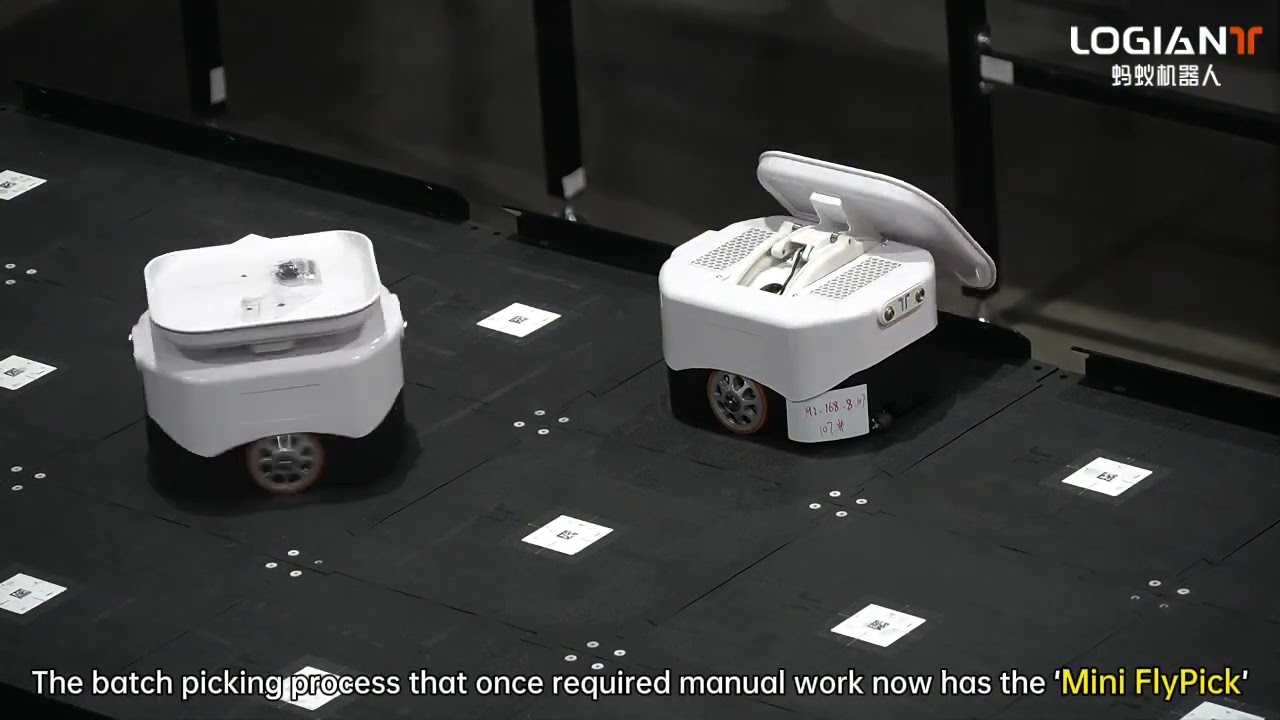
Mini FlyPick Robot: Compact High-Speed Sorting AMR
Others

Split Tray (Bomb Bay) Sorter Compilation: Versatile High-Speed Sortation
Others
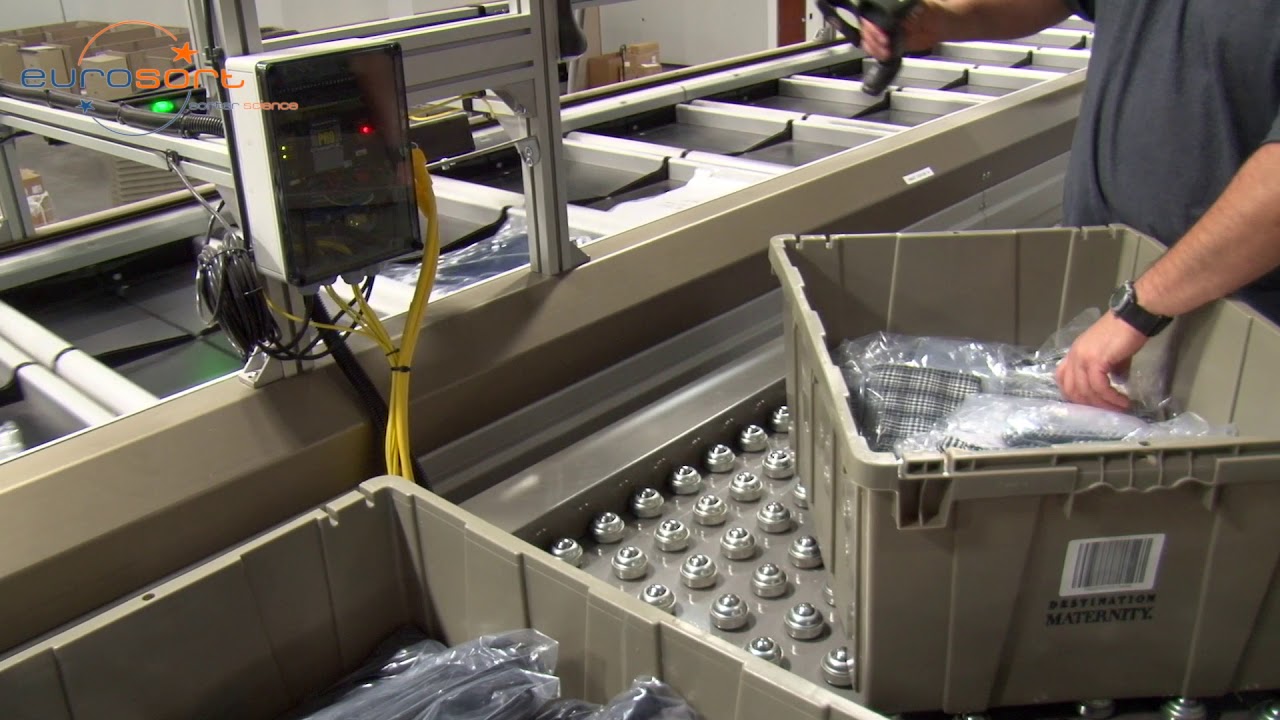
Patented Dual Split Tray (Bomb Bay) Sorter with Batch Induction
Others