TiltSort-Bot: Autonomous Mobile Robot (AMR) for Sortation
Quick Facts
Technology Performance Metrics
⭐Key Features
Benefits
Applications
Detailed Information
Technology Overview
The TiltSort-Bot represents a paradigm shift in sortation technology, moving away from large, fixed conveyor-based systems to a fleet of flexible, autonomous mobile robots (AMRs). This technology is designed to bring automated sortation to environments where traditional systems are too expensive, inflexible, or space-consuming. Each robot acts as an independent, mobile sorting destination. This approach is ideal for handling the dynamic and varied sortation needs of modern commerce, including e-commerce parcels, store replenishment orders, and manufacturing parts. Its core value lies in modularity, allowing operations to start small and scale precisely with demand.
How It Works
Core Principles
The core principle is decentralized sortation using a coordinated fleet of AMRs. Each TiltSort-Bot is an independent vehicle equipped with a sorting mechanism—either a cross-belt or a tilt tray. Instead of items traveling on a fixed conveyor past static chutes, the items remain relatively stationary at induction stations, and the mobile robots come to them, receive an item, and then transport it directly to its designated sortation destination (e.g., a put wall, a tote, a gaylord).
Key Features & Capabilities
Dual Sorting Mechanism Options: A key feature is the availability of both cross-belt and tilt-tray styles. Cross-belt bots are ideal for parcels and boxes, while tilt-tray bots may be better suited for flat items, envelopes, or irregular shapes, allowing the system to be tailored to the product mix.
Exceptional Modularity and Scalability: The system is inherently modular. Throughput is increased simply by adding more robots to the fleet. This allows for a "pay-as-you-grow" model where capital is invested in line with actual, near-term volume, not speculative future growth.
Application Agnostic Design: The system is designed to be highly flexible, capable of accommodating a wide spectrum of applications from e-commerce parcel sortation to store order consolidation (BOPIS), 3PL operations, and even manufacturing parts distribution, all within the same robotic platform.
Advantages & Benefits
The primary benefit is unmatched flexibility and reduced financial risk. Companies can start with a small system for a rapid ROI and scale incrementally. It saves significant floor space as it eliminates the need for extensive networks of fixed conveyors and sortation slides. The system can be quickly reconfigured for different workflows or product flows by simply reprogramming the software and potentially redefining sort locations. It also reduces reliance on fixed infrastructure, making it ideal for leased spaces or temporary peak-season operations.
Implementation Considerations
Implementing a TiltSort-Bot system requires adequate, relatively smooth floor space for the robots to navigate. The system's overall throughput is a function of the number of robots, their speed, and the efficiency of the induction process, so careful modeling is needed. While the robots are flexible, the induction and drop-off stations become fixed points that need to be ergonomically designed. Success depends heavily on the performance and reliability of the fleet management software.
Use Cases & Applications
Ideal For
This technology is ideal for operations with fluctuating or growing sortation volumes, multi-tenant facilities (like 3PLs), retail stores implementing ship-from-store or BOPIS, and companies seeking to automate sortation without a multi-year infrastructure commitment.
Performance Metrics
Key performance metrics include sorts per hour per robot and overall system throughput. The rapid ROI is a major claimed advantage, driven by lower initial capital outlay, space savings, and labor efficiency gains. Scalability is measured by the ease and speed of adding additional robots to increase capacity, often without significant downtime or reconfiguration of the physical facility.
Conclusion
The TiltSort-Bot AMR system represents a modern, agile approach to sortation that aligns with the needs of dynamic supply chains. By combining the autonomy of mobile robots with efficient sorting mechanisms, it delivers flexibility, scalability, and a favorable financial model that fixed systems struggle to match. For businesses looking to automate sortation without the constraints and high upfront cost of traditional systems, the TiltSort-Bot offers a compelling, future-proof solution that can evolve alongside their operations.
Related Knowledge
Transport
Transport is the warehouse process of moving materials, products, and equipment between locations within the facility to support receiving, storage, picking, and shipping operations.
AMR Sortation
AMR sortation systems use autonomous mobile robots to transport and sort items, providing flexible, scalable alternatives to traditional conveyor-based sortation infrastructure.
Vendor
ConveycoRelated Technologies
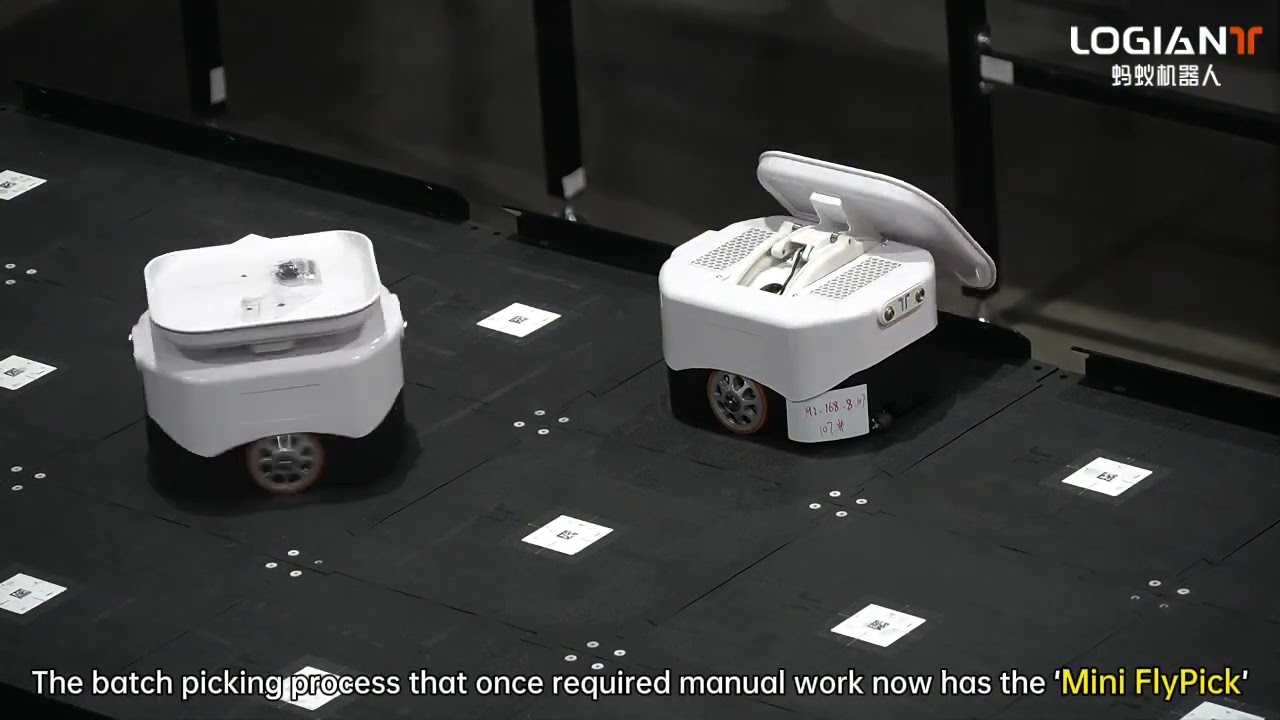
Mini FlyPick Robot: Compact High-Speed Sorting AMR
Others

Sorting Technology Demonstration and Testing
EuroSort

Split Tray (Bomb Bay) Sorter Compilation: Versatile High-Speed Sortation
Others