Four Way Shuttle System: Flexible High-Density AS/RS
Quick Facts
Technology Performance Metrics
⭐Key Features
Benefits
Applications
Detailed Information
Technology Overview
The Four Way Shuttle System represents an advanced evolution in automated storage and retrieval technology, moving beyond traditional fixed-aisle systems. It is designed to maximize storage density and operational flexibility within a warehouse footprint. By utilizing shuttles that can move in four directions (longitudinally and laterally) across a dense grid of storage locations, this solution breaks free from the constraints of dedicated aisles. This allows for highly efficient use of vertical space and enables dynamic, intelligent movement of goods for both storage and retrieval, making it suitable for modern supply chains that demand adaptability and high throughput.
How It Works
Core Principles
The core principle is the use of autonomous, four-directional shuttles that operate on rails within a multi-level racking structure. These shuttles can move horizontally along X and Y axes within a single tier and are transferred between different vertical levels by lifts, allowing them to access any storage location in the three-dimensional grid.
Key Features & Capabilities
True Four-Directional Movement: The defining feature is the shuttle's ability to travel not just forward/backward along a single aisle, but also side-to-side, allowing it to switch aisles autonomously. This eliminates the need for dedicated transfer cars or complex conveyor networks for shuttle repositioning.
Unrestricted Access and Flexibility: Shuttles can reach any storage position in the three-dimensional grid, enabling cross-aisle and cross-layer transportation. This allows for highly flexible storage assignment and retrieval sequencing, independent of fixed lane restrictions.
Optimized Space Utilization: The racking system is custom-designed to match the specific height of the building, maximizing the use of available cubic air space. Combined with the dense storage grid enabled by the shuttle technology, this results in exceptionally high storage density.
Advantages & Benefits
Superior Storage Density and Space Savings: By utilizing nearly the entire building volume and minimizing non-storage aisles, the system delivers significantly higher storage capacity per square meter compared to many other AS/RS solutions.
Enhanced Operational Efficiency and Flexibility: The intelligent dispatching system optimizes shuttle travel routes and task sequencing in real-time, minimizing empty travel and wait times. The ability to dynamically assign storage and retrieval tasks to any available shuttle anywhere in the grid leads to high system throughput and resilience.
Integrated and Automated Data Flow: The seamless connection between the WMS and the enterprise ERP system automates data exchange, ensuring inventory accuracy, eliminating manual data entry errors, and providing real-time visibility into warehouse operations.
Implementation Considerations
Implementing a Four Way Shuttle System is a complex undertaking. It requires significant upfront engineering for the racking structure and system layout. The performance is critically dependent on the robustness and intelligence of the WCS and scheduling software. The initial capital expenditure for the integrated system of racks, shuttles, lifts, and software is substantial, necessitating a clear business case based on throughput and space savings.
Use Cases & Applications
Ideal For
This system is ideal for operations with high-SKU inventories requiring dense storage and high throughput, such as in the food & beverage, consumer goods, or manufacturing sectors. It is particularly beneficial in facilities where building height can be leveraged.
Conclusion
The Four Way Shuttle System offers a powerful and flexible solution for achieving high-density, high-throughput automation in modern warehouses. Its ability to combine massive storage capacity with intelligent, flexible material handling addresses key challenges of space constraints and operational agility. While the implementation is complex, the benefits in terms of space utilization, operational efficiency, and automated data management make it a compelling choice for industries looking to transform their intralogistics as part of a Supply Chain Transformation or Industry 4.0 initiative.
Related Knowledge
Robotic Case Picking
Advanced robotic case picking systems that combine industrial robotics with intelligent vision systems to automate the handling of full cases and cartons, delivering exceptional speed, precision, and reliability in high-volume distribution operations.
Robotic Piece Picking
Advanced robotic systems that use AI and computer vision to automatically select and pick individual items from diverse inventory, revolutionizing warehouse fulfillment operations with human-like dexterity and intelligence.
Voice Picking Systems
Voice picking systems revolutionize warehouse operations by enabling hands-free, eyes-free order fulfillment through speech recognition technology. Workers receive spoken instructions through wireless headsets and confirm actions verbally, dramatically improving productivity, accuracy, and safety while reducing training time.
Related Technologies
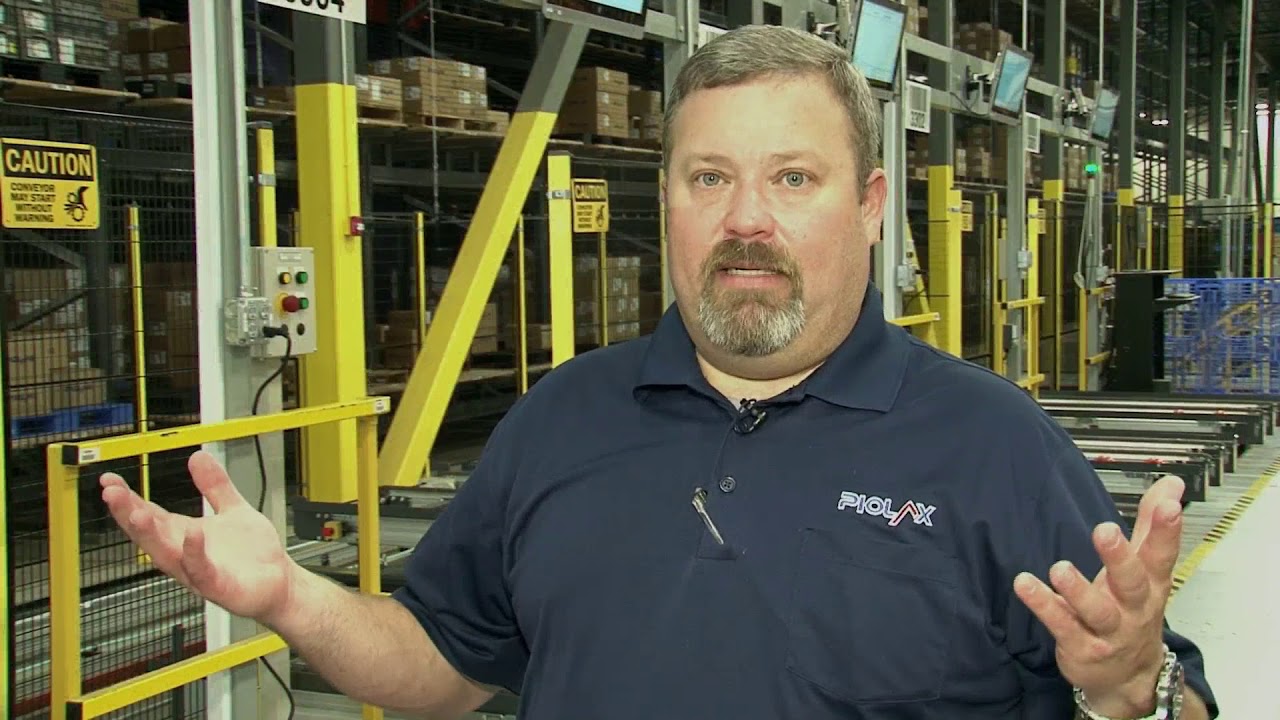
Piolax Canton Georgia Automotive Parts Distribution Center
Daifuku
Meyer Corporation USA Cookware Distribution Center
Daifuku
Intralogistics Innovation Center: Integrated Solutions Showcase
Daifuku