Collaborative AMR System with Vision-Guided Robotic Arm for Part Transfer
Quick Facts
Technology Performance Metrics
⭐Key Features
Benefits
Applications
Detailed Information
Technology Overview
This collaborative Autonomous Mobile Robot (AMR) system is the result of a partnership between Simplimatic Automation and the Commonwealth Center for Advanced Manufacturing (CCAM). It represents a turnkey solution for automating part transfer and material handling tasks in dynamic manufacturing environments. The system combines the mobility of an AMR with the dexterity of a 6-axis robotic arm and the intelligence of machine vision, creating a versatile "mobile manipulator." Designed from the ground up to be collaborative, it meets stringent safety standards to operate safely alongside human workers without the need for restrictive fencing. Its core value proposition is flexibility: it can be easily programmed and reconfigured for different parts, routes, and applications, offering a scalable alternative to fixed conveyor lines or manual cart-based transport.
How It Works
Core Principles
The core principle is Mobile, Vision-Enabled Manipulation. The system uses autonomous navigation to move between predefined or dynamically assigned points. At each pickup and drop-off location, it employs integrated 3D vision to identify and precisely locate parts, guiding the robotic arm to perform accurate pick and place operations, even allowing for on-board buffering during transport.
Key Features & Capabilities
Fully Collaborative Safety Design is paramount. The system incorporates layered safety: LiDAR scanners at foot and waist height on the MiR, 3D cameras for obstacle detection in the direction of travel, and inherent safety features of the UR collaborative arm. It is designed and tested to meet industry standards like ANSI B56.5 and UL3100.
Integrated Vision Guidance for Flexibility allows the system to handle variance. The RVT cVF software enables the robot to locate parts without requiring extremely precise fixturing at every station, making the system adaptable to different parts and minor changes in presentation.
On-Board Buffering and Configurable Workflow enables complex material flow. The ability to pick a part, store it onboard, travel, and then place it allows for decoupled operations and efficient multi-stop missions. The sequence of pick, travel, and place actions is highly configurable.
Turnkey System with Fleet Management offers scalability. The system is sold as a complete, integrated solution. Multiple units can be deployed as a coordinated fleet using MiRFleet software, and Simplimatic provides middleware for deeper integration into factory control systems.
Advantages & Benefits
The primary benefit is Unprecedented Flexibility in Material Flow. Unlike fixed automation, this mobile system can have its routes and tasks reprogrammed to accommodate production line changes, new products, or layout reconfigurations with minimal physical redesign.
It enhances Safety and Enables True Human-Robot Collaboration. By meeting collaborative safety standards, it can operate in spaces shared with people, allowing it to take over repetitive transport tasks while workers focus on value-added assembly or inspection.
The system Reduces Dependency on Fixed Infrastructure and Manual Labor. It eliminates the need for conveyor networks for part transfer and reduces the manual effort of moving carts or parts between stations, freeing up skilled labor.
It provides a Scalable and Future-Proof Automation Investment. Starting with a single vehicle for a critical route, operations can scale up by adding more AMRs to the fleet. The software-based programmability ensures the system can adapt to future needs.
Implementation Considerations
Application-Specific Programming and Tooling is required. While the platform is customizable, each new part type or gripping application may require configuring the vision system, programming the arm's path, and potentially selecting or designing a suitable end-effector (gripper).
Factory Environment and Infrastructure Readiness must be assessed. The AMRs require clear navigable pathways, likely defined via facility mapping. Charging stations need to be strategically placed. Network coverage for fleet communication is also essential.
Total Cost of Ownership and Integration Depth should be evaluated. Beyond the vehicle(s), costs include initial programming, potential custom middleware development for integration (Simplimatic Frontend), and ongoing maintenance/support for both the AMR and robotic arm subsystems.
Conclusion
This collaborative AMR system from Simplimatic Automation is a powerful solution for manufacturers seeking to introduce flexible, safe, and intelligent automation into their material handling processes. It is ideally suited for environments with moderate-volume, high-mix production, frequent line changeovers, or a need to bridge islands of automation without fixed conveyors. Its strength lies in its integrated design, combining best-in-class components into a coherent, safe, and programmable whole. Companies considering this solution should have a clear understanding of the specific parts and processes to be automated and be prepared for the software configuration and integration work involved. When applied to the right use case, it can significantly boost operational flexibility, improve safety, and reduce manual transport labor.
Related Knowledge
Robotic Case Picking
Advanced robotic case picking systems that combine industrial robotics with intelligent vision systems to automate the handling of full cases and cartons, delivering exceptional speed, precision, and reliability in high-volume distribution operations.
Robotic Piece Picking
Advanced robotic systems that use AI and computer vision to automatically select and pick individual items from diverse inventory, revolutionizing warehouse fulfillment operations with human-like dexterity and intelligence.
Voice Picking Systems
Voice picking systems revolutionize warehouse operations by enabling hands-free, eyes-free order fulfillment through speech recognition technology. Workers receive spoken instructions through wireless headsets and confirm actions verbally, dramatically improving productivity, accuracy, and safety while reducing training time.
Vendor
OthersRelated Technologies
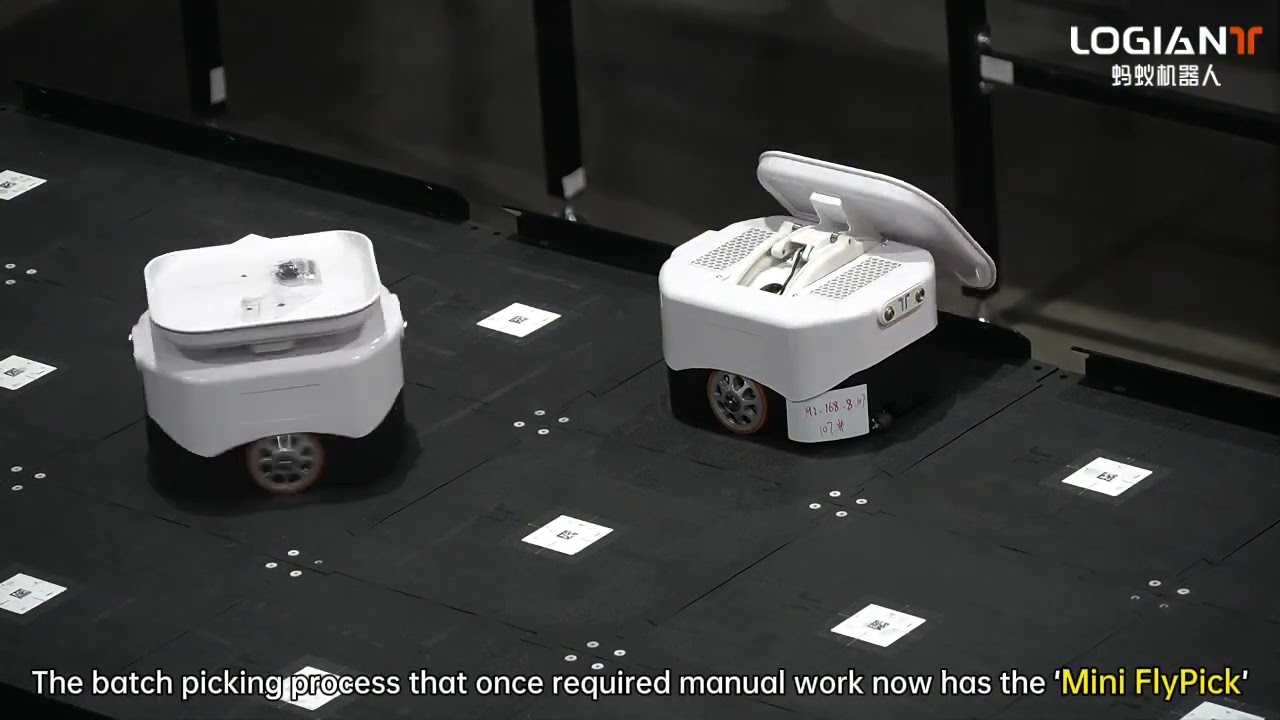
Mini FlyPick Robot: Compact High-Speed Sorting AMR
Others

Split Tray (Bomb Bay) Sorter Compilation: Versatile High-Speed Sortation
Others
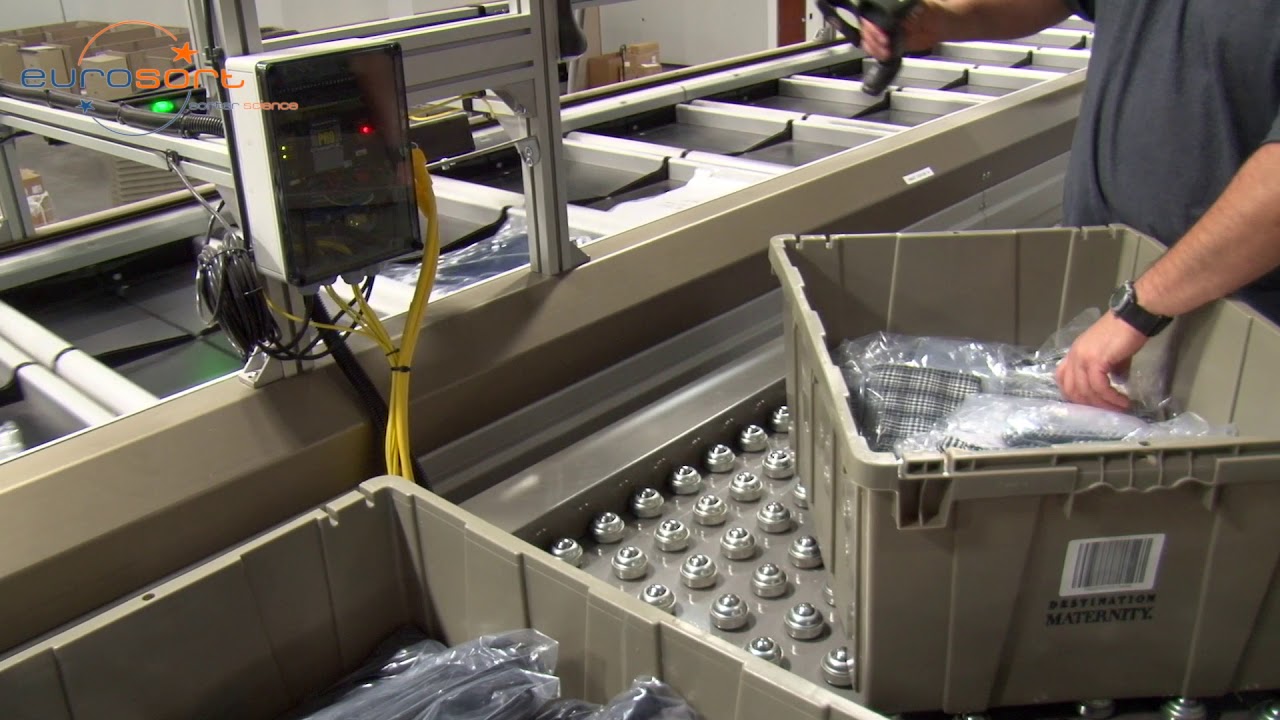
Patented Dual Split Tray (Bomb Bay) Sorter with Batch Induction
Others