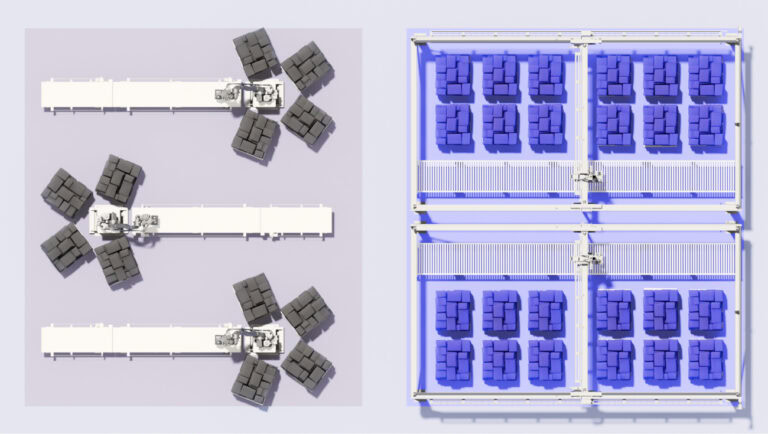
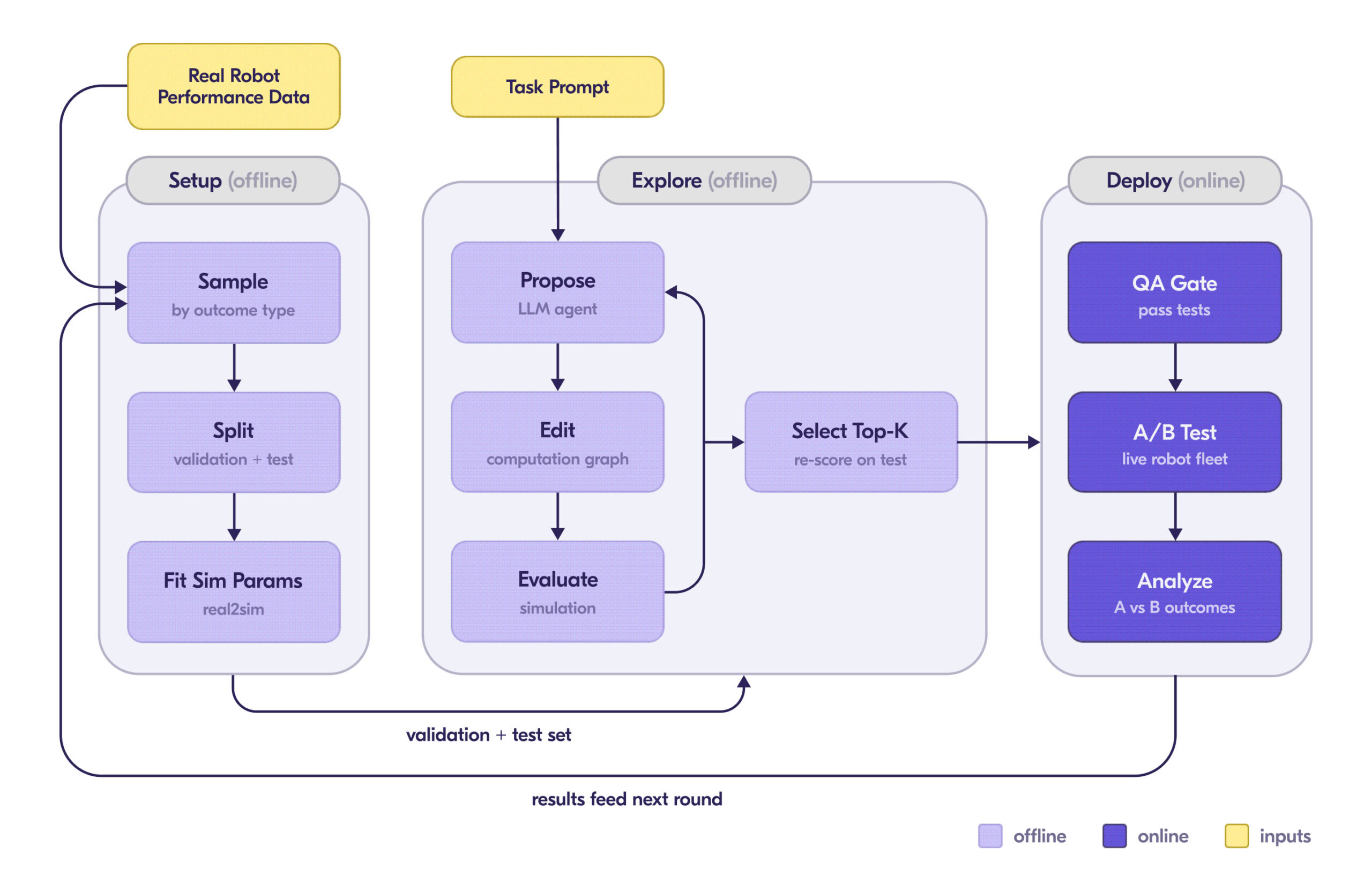

Ambi Robotics described an agentic robotics experiment in which AI agents running inside AmbiOS solved a live package-placement problem on production sortation robots in about ten hours, a task the company says would have taken engineers weeks. The resulting policy was then deployed across a reported 30 percent of the U.S. fleet, including systems used by a large parcel shipper. The underlying work uses a graph-as-policy harness so agents can propose changes, test them, and keep only those that raise sorts per year.
A/B comparisons on real robots showed one hypothesis producing a large estimated annual throughput gain while others reduced performance, underscoring that agent-generated ideas still need production measurement. The claim is positioned as one of the first times agentic robotics closed a real industrial production issue rather than a simulation or lab demo. For warehouse automation, the significance is software iteration speed on existing arms and gantries: instead of waiting for a new gripper or a full recommission, operators might retune placement logic continuously.
Risks remain familiar—sim-to-real gaps, safety interlocks, and the need for human approval before a policy touches every robot. Still, the story fits the same 2026 theme as Gartner’s higher AI tiers: intelligence is moving from dashboards into closed-loop control of physical sortation and pallet-build cells.