Electronics Manufacturing Warehousing
Electronics manufacturing warehousing handles thousands of small, high-value components requiring ESD protection, cleanroom environments, and precise traceability, supporting high-mix production with rapid component obsolescence cycles.
Electronics Manufacturing Logistics
Operations Profile
- •High-value components
- •ESD-protected environment
- •Cleanroom requirements
- •Rapid product lifecycles
Key Challenges
- •Component obsolescence
- •Counterfeit prevention
- •Moisture sensitivity
- •Small part handling
Storage Technologies
- •Mini-load AS/RS
- •Vertical lift modules
- •Carousel systems
- •Dry cabinets (moisture control)
Handling Systems
- •ESD-safe AMRs
- •Cleanroom conveyors
- •Precision picking robots
- •Reel/tray handling
Quality Control
- •Serial number tracking
- •Lot traceability
- •Vision inspection
- •Authenticity verification
Software Integration
- •MES-WMS integration
- •BOM management
- •Shelf-life tracking
- •Supplier portal integration
🌐 Industry Overview
Electronics manufacturing warehousing manages the complex component supply chains that feed surface mount technology (SMT) assembly lines, through-hole assembly, and final product testing and packaging. These facilities handle 10,000-100,000+ component types—microchips, resistors, capacitors, connectors, and countless other parts—many smaller than a fingernail yet worth hundreds or thousands of dollars. The defining characteristics are extreme SKU proliferation, stringent handling requirements, and rapid product obsolescence.
Component sensitivity creates unique operational requirements. Electrostatic discharge (ESD) can destroy microelectronics instantly, requiring comprehensive grounding and ESD-safe materials throughout the facility. Moisture-sensitive devices (MSDs) degrade when exposed to humidity, demanding climate-controlled storage and careful shelf-life management. Cleanroom environments prevent contamination of sensitive products. These requirements make electronics warehousing fundamentally different from general manufacturing support.
🏭 Warehouse Operations Characteristics
Electronics warehouses are organized around component types and handling requirements. Dry storage cabinets maintain low humidity for MSDs, with automated monitoring of exposure time and shelf life. ESD-protected areas use grounded flooring, ionizers, and ESD-safe materials for all surfaces and containers. Cleanroom zones maintain controlled particle counts for sensitive assembly operations. Standard storage areas handle less sensitive components like connectors and mechanical parts.
Kitting and line feeding are critical functions. SMT assembly requires precise component presentation—reels and trays must be prepared and staged for pick-and-place machines. Component sequencing ensures the right parts arrive at assembly stations in the right order. Feeder preparation involves loading component reels into feeders that mount on SMT machines. Work-in-progress buffers manage partially assembled products moving between process steps.
Traceability is mandatory. Every component must be tracked by lot number, date code, and supplier. This genealogy enables quality investigations when defects are discovered and facilitates recalls if necessary. Serial number tracking of finished products links each unit to the specific components used in its assembly. This traceability extends from incoming components through final product shipment.
⚠️ Key Challenges
Component obsolescence is a constant challenge. Electronics components have short lifecycles—6-18 months is typical before manufacturers discontinue parts or introduce new versions. This creates difficult decisions: purchase lifetime buys of components for products with longer lifecycles, redesign products to use available components, or accept supply risk. Excess inventory of obsolete components ties up capital and eventually becomes worthless.
Counterfeit components are a serious concern. The global electronics supply chain includes unauthorized distributors and counterfeit parts that can cause product failures or safety issues. Authentication procedures, supplier verification, and careful sourcing are essential. This is particularly critical for high-reliability applications like aerospace, medical devices, and automotive electronics.
Moisture sensitivity management requires discipline. MSDs must be stored in dry conditions (typically <10% relative humidity) and have limited exposure time once removed from dry storage. Tracking exposure time for thousands of components across multiple work orders is complex. Expired components must be baked to remove moisture before use, adding time and cost. Failures in MSD management lead to latent defects that appear after product shipment.
🤖 Suitable Technologies
Storage Solutions: Vertical lift modules (VLMs) provide high-density storage for small components with rapid retrieval and integrated inventory management. Automated carousels bring parts to ergonomic picking positions. Mini-load AS/RS systems handle totes and trays of components with high throughput. Dry storage cabinets with automated humidity control protect MSDs while tracking exposure time. All systems must use ESD-safe materials and grounding.
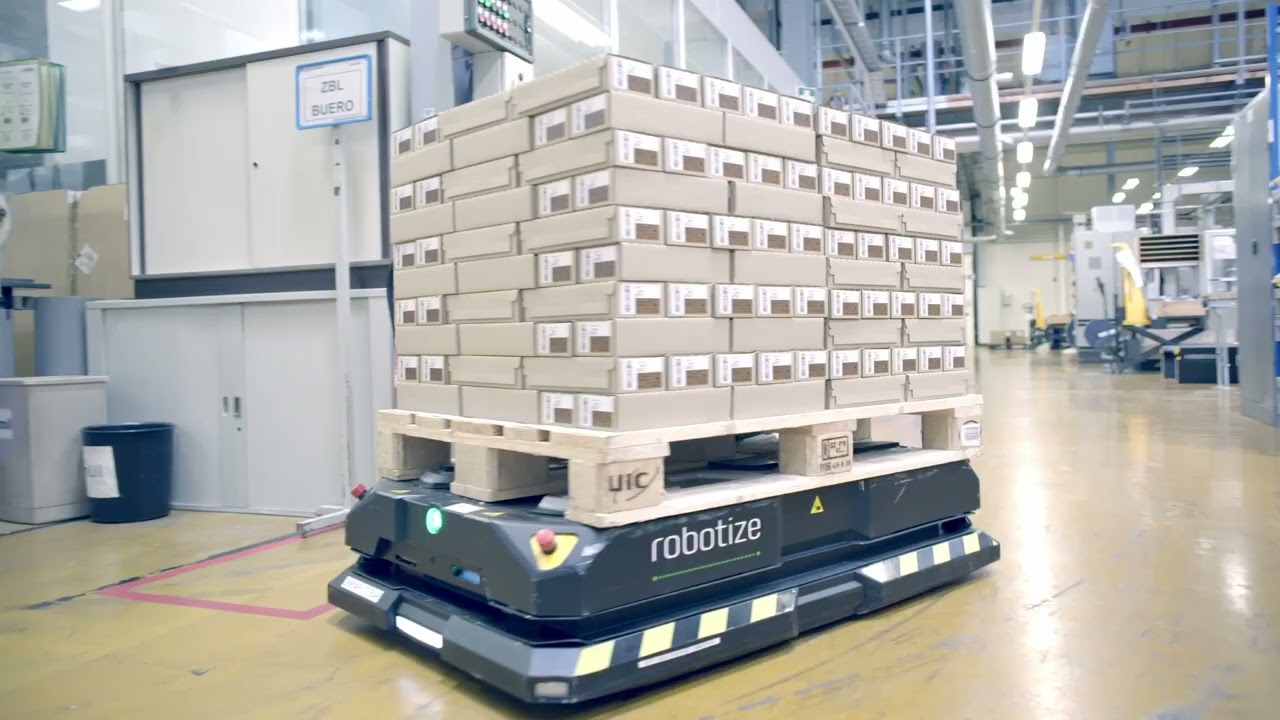
Transport Systems: AMRs transport components in ESD-safe containers between storage, kitting, and assembly areas. Conveyor systems designed for cleanroom compatibility move products through assembly and test processes. Robotic picking systems with vision guidance select small components accurately. Automated kitting systems prepare component sets for assembly work orders, reducing manual handling and improving accuracy.
Quality and Tracking: Vision inspection systems verify component markings, orientation, and condition automatically. RFID and barcode systems track components and products throughout the facility in real-time. Moisture indicators monitor MSD shelf life and trigger alerts when exposure limits approach. Traceability systems maintain genealogy records linking finished products to component lots.
Software Systems: WMS with electronics-specific functionality manages lot tracking, FEFO rotation for MSDs, and component allocation across work orders. MES integration synchronizes warehouse operations with production schedules and work order releases. Quality management systems track defects, manage non-conforming material, and support root cause analysis. Supplier portals provide visibility into component availability and lead times.
🎯 Technology Selection Criteria
ESD protection must be comprehensive. All automation equipment, containers, and work surfaces must be ESD-safe with proper grounding. Verify that automation vendors understand ESD requirements—general warehouse equipment is not suitable for electronics applications. Test ESD protection effectiveness before full deployment.
Cleanroom compatibility is required for sensitive products. Automation must not generate particles or outgas contaminants. Materials must be cleanroom-rated. Equipment should be designed for easy cleaning and maintenance without introducing contamination. Consider modular cleanroom designs that can be expanded as production grows.
Traceability and lot tracking are non-negotiable. Systems must capture and maintain component lot numbers, date codes, and supplier information. Finished product serial numbers must link to component genealogy. This data must be retained for years to support quality investigations and regulatory requirements. Integration with quality management systems is essential.
💡 Implementation Considerations
Start with high-volume, less sensitive components before tackling MSDs and cleanroom operations. Standard components like connectors and mechanical parts are more forgiving and provide learning opportunities. Prove automation reliability with simpler operations before implementing critical MSD storage and handling where errors cause expensive scrap.
Implement robust component authentication procedures before scaling operations. Establish approved supplier lists and verification processes. Train staff to recognize counterfeit indicators. Consider partnering with authentication services for high-risk components. The cost of counterfeit components—in product failures, recalls, and reputation damage—far exceeds authentication costs.
Plan for component obsolescence management from day one. Implement systems to track component lifecycle status and identify at-risk parts early. Establish relationships with authorized distributors who can source hard-to-find components. Consider component standardization across product lines to reduce obsolescence risk. Build flexibility to accommodate component substitutions when necessary.
Design for future product changes. Electronics products evolve rapidly, with new models and variants introduced frequently. Automation should accommodate different component types, package sizes, and handling requirements. Modular systems that can be reconfigured are preferable to highly specialized solutions that become obsolete with product changes.
Change management emphasizes precision and quality. Electronics manufacturing demands careful attention to detail—small errors in component selection or handling can cause expensive failures. Workers need training on ESD protocols, cleanroom procedures, and component handling. Plan for 9-12 months from project start to operation for significant automation, with extensive testing using actual components and products.
Related Technologies (6)
Sliding Shoe Sorter: High-Capacity, Versatile Sortation
byOthers
OmniPick Sorter System: Zero-Touch End-to-End Pocket Sortation
byTGW Logistics
CVP Impack: Automated Packaging Solution for E-commerce
bySparck Technologies
Exacta Put Wall: Modular and Scalable Order Consolidation
byBastian Solutions
Autopicker: AI-Powered Mobile Picking Robot
byBrightpick
Brightpick Autopicker: AI-Powered Robotic Picking AMR
byBrightpick
Related Topics
Automotive Warehousing
Automotive warehousing supports manufacturing with just-in-sequence delivery, heavy component handling, and complex supply chain coordination, managing thousands of parts per vehicle across multiple variants and supplier networks.
Industrial Warehousing
Industrial warehousing supports heavy equipment manufacturing and distribution, handling bulk materials, project-based logistics, and B2B fulfillment with specialized equipment for heavy loads, hazardous materials, and custom orders.
Manufacturing & Industrial Warehousing
Manufacturing warehousing supports production operations with just-in-time material delivery, requiring tight integration with production systems and flexible automation that adapts to changing manufacturing schedules.
Manufacturing & Industrial Segment Comparison
Understanding the differences between manufacturing and industrial segments helps in selecting the right production support technologies and material handling strategies for your specific operation.
| Aspect | Manufacturing | Automotive | Electronics | Industrial |
|---|---|---|---|---|
| Primary Focus | Production line support, JIT delivery | Just-in-sequence assembly support | Component management, high-mix production | Project-based logistics, heavy equipment |
| Material Type | Raw materials, components, WIP | Heavy parts, engines, body panels | Small components, microchips, PCBs | Heavy equipment, bulk materials, machinery |
| SKU Complexity | Medium (1,000-10,000) | Very High (10,000-50,000+ per model) | Extremely High (10,000-100,000+) | Medium-High (5,000-20,000) |
| Handling Requirements | Mixed: Light to heavy | Heavy-duty, specialized equipment | ESD-safe, cleanroom, delicate | Heavy-duty cranes, forklifts |
| Storage Density | Medium-high density | Low-medium (heavy items) | Very high (small components) | Low (large equipment) |
| Delivery Method | JIT to production lines | JIS (just-in-sequence) | Kitting, SMT feeder prep | Project kitting, job site delivery |
| Inventory Turns | 12-20x per year | 20-30x per year (JIS) | 8-15x per year | 4-8x per year |
| Lead Time | Hours to days | Minutes to hours (JIS) | Days to weeks | Weeks to months |
| Special Requirements | MES integration, flexibility | Sequencing accuracy, heavy handling | ESD protection, humidity control | Hazmat compliance, outdoor storage |
| Automation Level | Medium-High (50-70%) | High (60-80%) | Very High (70-90%) | Medium (40-60%) |
| Key Technologies | AGV, AS/RS, WMS, MES | Sequencing systems, tugger trains, RFID | VLM, carousels, vision systems, dry storage | Cranes, heavy AGV, yard management |
| Quality Control | In-process inspection | Zero-defect, supplier audits | Vision inspection, counterfeit detection | Certification verification |
| Traceability | Batch and lot tracking | Serial number, VIN tracking | Component genealogy, serial tracking | Project allocation, asset tracking |
| Primary Challenge | Production schedule changes | Sequencing accuracy, model mix | Component obsolescence, ESD | Heavy material safety, project coordination |
| Investment Priority | MES integration, AGV | Sequencing automation, heavy handling | High-density storage, vision systems | Heavy-duty equipment, yard management |
Manufacturing
Automotive
Electronics
Industrial
Key Insights
Manufacturing warehouses serve as the backbone of production operations, providing just-in-time material delivery to assembly lines. The focus is on flexibility and tight integration with MES systems to respond rapidly to production schedule changes.
Automotive operations demand the highest precision with just-in-sequence delivery, where parts must arrive in exact assembly order. Heavy material handling and zero-defect quality requirements make this one of the most demanding warehouse environments.
Electronics warehousing manages the highest SKU complexity with tens of thousands of small components requiring ESD protection and humidity control. Component obsolescence and counterfeit prevention are critical challenges in this fast-paced industry.
Industrial operations handle the heaviest materials and equipment, often supporting project-based logistics with custom kitting and job site delivery. Hazmat compliance and specialized transport requirements add complexity to these B2B-focused operations.
Quick Navigation
Overview
Related Projects(2)

Related Suppliers(3)

ABB Robotics
Global leader in industrial robotics and automation technology with comprehensive solutions for warehouse and logistics applications.

Cognex Corporation
The World's Leader in Machine Vision

MiR (Mobile Industrial Robots)
Leading Autonomous Mobile Robot Solutions