Overhead Conveyors
Overhead conveyors suspend products from tracks mounted above the work area, freeing floor space while transporting items through manufacturing, finishing, storage, and distribution processes.
Overhead Conveyors Overview
System Types
- •Power & FreeIndependent carriers
- •Enclosed TrackProtected system
- •I-Beam TrolleyHeavy-duty loads
- •Monorail SystemsSingle track design
Key Benefits
- •Space EfficiencyUtilizes ceiling space
- •Flexible RoutingMultiple destinations
- •High Capacity500-5,000 lbs per carrier
- •Continuous Flow24/7 operation
Components
- •Track SystemRails and supports
- •Carriers/TrolleysLoad bearing units
- •Drive SystemsChain or cable drives
- •Control SystemsPLC and sensors
Applications
- •AutomotiveAssembly lines
- •Garment HandlingHanging systems
- •Paint/FinishingProcess lines
- •WarehousingStorage & retrieval
Features
- •Variable SpeedAdjustable rates
- •Accumulation ZonesBuffer areas
- •Switches & TransfersRoute selection
- •Load/Unload StationsAccess points
Future Trends
- •Smart ControlsIoT integration
- •Predictive MaintenanceAI monitoring
- •Energy EfficiencyGreen technology
- •Modular DesignFlexible expansion
How Overhead Conveyors Work
The fundamental design consists of an overhead track (typically I-beam or enclosed track) mounted from the ceiling or supported by floor-mounted columns, with carriers or trolleys that travel along the track suspended by wheels or rollers. Chain-driven systems use a continuous chain running in the track that engages with carriers, pulling them along at a fixed speed determined by the drive motor. The chain typically runs at 10-60 feet per minute for manufacturing applications or up to 400+ feet per minute for distribution systems, with speed selected based on process requirements and product characteristics.
Power-and-free systems represent a more sophisticated approach, using two separate tracks—a powered track with a continuously moving chain and a free track where carriers coast independently. Carriers engage with the powered track when movement is needed and disengage to stop or accumulate at workstations, providing flexibility for variable process times and buffering between operations. Switching mechanisms at track junctions enable carriers to be routed to different destinations based on product type, process requirements, or system logic, creating flexible material flow through complex facility layouts.
Load carriers vary based on the products being transported and operational requirements. Hooks provide simple, low-cost suspension for items with hanging points like garments, parts with holes, or products in bags. Trolleys with fixtures support products that require specific orientation or protection, such as automotive parts, appliances, or painted components. Basket carriers hold multiple small items or loose parts, while specialized fixtures accommodate unique product shapes or handling requirements. The carriers are designed to support typical loads of 50-500 pounds each, though heavy-duty systems can handle 1,000+ pounds per carrier.
Track layouts can be simple straight runs, complex networks with multiple branches and loops, or combinations that match facility requirements and process flows. Horizontal curves enable tracks to navigate around obstacles or follow building contours, while vertical curves allow elevation changes to move products between floors or over obstructions. Switches and transfers at junctions enable carriers to be routed to different destinations, creating flexible material flow. The modular track design allows systems to be expanded or reconfigured as operational needs evolve, providing long-term adaptability.
Key Benefits
The primary advantage of overhead conveyors is floor space liberation, as the system operates entirely above the work area without consuming valuable floor space needed for personnel, equipment, or other operations. This vertical space utilization is particularly valuable in facilities with limited floor area or high real estate costs, enabling operations to maximize productivity within existing footprints. The freed floor space can be used for additional workstations, equipment, storage, or improved traffic flow, often delivering significant operational improvements beyond the material handling benefits.
Continuous product flow through multiple processes eliminates the need for intermediate handling, staging, or transportation between operations. Products move automatically from one workstation to the next, reducing labor requirements for material handling while improving throughput and cycle time. The continuous flow also supports lean manufacturing principles by minimizing work-in-process inventory and enabling smooth, predictable production flow. Operations can achieve just-in-time delivery of products to workstations without manual coordination or material handling equipment.
Process integration capabilities enable overhead conveyors to serve as both transportation and process equipment. Products can undergo drying, curing, cooling, or aging while traveling on the conveyor, with residence time controlled by conveyor speed and path length. Painting and finishing operations particularly benefit from overhead conveyors that transport products through spray booths, ovens, and cooling zones while maintaining proper orientation and spacing. The ability to combine transportation with processing reduces equipment requirements and facility footprint while improving process control.
Ergonomic benefits result from presenting products at comfortable working heights for assembly, inspection, or finishing operations. Workers can access products without bending, reaching, or handling heavy items, reducing fatigue and injury risks while improving productivity and quality. The consistent product presentation at each workstation also supports standardized work and quality control by ensuring that products are always positioned identically for each operation.
Common Applications
Automotive manufacturing and finishing represents a major application for overhead conveyors, transporting vehicle bodies, components, and assemblies through painting, assembly, and inspection processes. The paint finishing systems use overhead conveyors to move bodies through cleaning, primer, paint, and clear coat applications, then through ovens for curing, maintaining precise spacing and orientation throughout the process. Assembly operations use overhead conveyors to present components at ergonomic heights for workers installing parts, with power-and-free systems providing accumulation and buffering between stations with different cycle times.
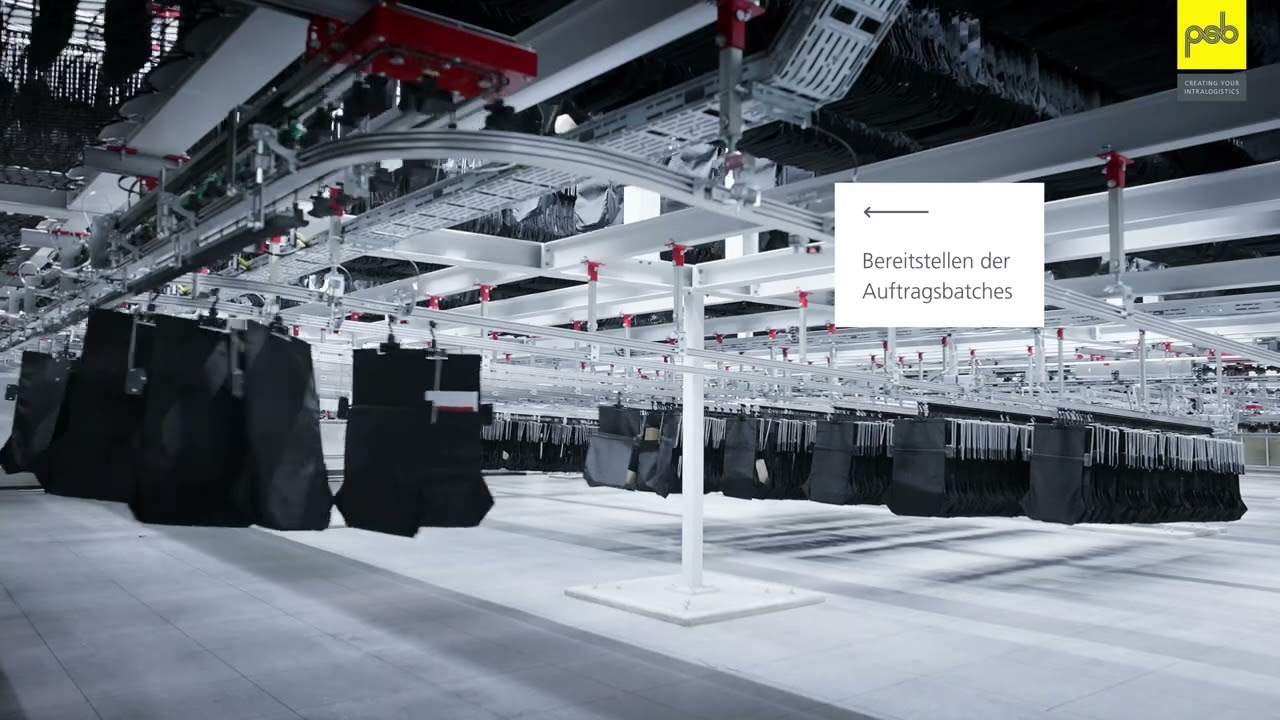
Garment and textile operations leverage overhead conveyors for transporting clothing through manufacturing, finishing, and distribution processes. Garment-on-hanger (GOH) systems move finished clothing through facilities, supporting sorting, storage, and order fulfillment operations in distribution centers. Manufacturing operations use overhead conveyors to transport garments between sewing, pressing, inspection, and packaging stations, maintaining product quality while improving throughput. The hanging storage capability enables facilities to store thousands of garments in minimal floor space while maintaining easy access.
Food processing and packaging facilities use overhead conveyors for transporting products through processing, cooling, and packaging operations. Meat processing plants hang carcasses and cuts on overhead conveyors for aging, processing, and distribution, with temperature-controlled environments and sanitary design supporting food safety requirements. Bakery operations use overhead conveyors to transport products through cooling tunnels after baking, with controlled residence time ensuring proper cooling before packaging.
Industrial finishing operations including powder coating, plating, and heat treating use overhead conveyors to transport parts through multi-stage processes. The continuous flow through cleaning, treatment, rinsing, and drying stages improves process consistency while reducing handling and contamination risks. Batch processing is supported by power-and-free systems that accumulate carriers at process stations, then release them when treatment is complete, optimizing equipment utilization and process efficiency.
Implementation Considerations
Successful overhead conveyor implementation requires careful building structure assessment to verify that the facility can support the loads imposed by the track system, carriers, and products. The ceiling or roof structure must have adequate capacity for the suspended loads plus the weight of the track and drive components, typically requiring structural engineering analysis. Older facilities or those with lightweight roof structures may require reinforcement or column-supported track to safely support the system. The ceiling height must provide adequate clearance for the track system (typically 8-20 feet) while maintaining safe clearances above personnel and equipment.
Track layout planning should optimize material flow while accommodating facility constraints and operational requirements. The layout must navigate around building columns, utilities, lighting, and other overhead obstructions while maintaining proper clearances and avoiding interference with other operations. Curve radii must accommodate the carrier dimensions and product overhang, typically requiring minimum radii of 3-10 feet depending on system design. Vertical curves for elevation changes must have gradual slopes (typically 15-30 degrees maximum) to prevent products from swinging or carriers from binding.
Load capacity analysis must account for the weight of products, carriers, and any fixtures or tooling, ensuring that the track, chain, and drive components can safely handle the loads. The maximum load per carrier should be clearly specified and enforced through operational procedures and carrier design. The total system load including all carriers must be within the capacity of the drive system and track structure. Dynamic loads from starting, stopping, and cornering must be considered, particularly for high-speed systems or heavy products.
Safety considerations include protecting personnel from overhead hazards, preventing carrier derailment, and ensuring safe access for maintenance. Guardrails or barriers should prevent personnel from walking under areas where products could fall, while netting or screens can catch items that become dislodged. Emergency stop systems must be accessible throughout the system, with clear procedures for safely stopping and restarting operations. Maintenance access including catwalks, ladders, or lifts must be provided for safe inspection, lubrication, and repair of overhead components.
Best Practices
Carrier design optimization should balance load capacity, product protection, and operational efficiency. Carriers should be lightweight to minimize system loads while providing adequate strength and durability for the application. Quick-release mechanisms enable rapid product loading and unloading, improving throughput and reducing labor requirements. Standardized carriers simplify maintenance and reduce spare parts inventory, while modular designs allow carriers to be reconfigured for different products without complete replacement.
Preventive maintenance programs are essential for ensuring reliable operation and long system lifespan. Monthly inspections should check chain tension, track alignment, carrier condition, and drive system operation. Quarterly lubrication of chains, bearings, and moving parts prevents premature wear and reduces energy consumption. Annual professional inspections by qualified technicians provide comprehensive assessments and identify potential issues before they cause failures. Well-maintained overhead conveyor systems can operate reliably for 20-30 years with proper care.
Speed optimization should balance throughput requirements against product stability and process needs. Higher speeds (100-400 FPM) improve throughput for distribution applications but may cause product swinging or instability. Lower speeds (10-60 FPM) provide better control for manufacturing processes and reduce dynamic loads on the system. Variable speed drives enable operators to adjust speeds based on operational conditions, optimizing performance for different products or processes.
Integration with facility systems including building management, fire suppression, and process controls ensures safe, efficient operation. The conveyor control system should interface with fire alarm systems to automatically stop and evacuate products during emergencies. Process equipment should be interlocked with the conveyor to prevent operation when products are not properly positioned. Warehouse management systems can track product locations and control routing in power-and-free systems, optimizing material flow and inventory management.
Measuring Success
Key performance indicators for overhead conveyors include system uptime (target 95%+), throughput (products moved per hour), carrier utilization (percentage of carriers in use), and maintenance costs per operating hour. These metrics help operations evaluate whether the system is delivering expected productivity benefits while maintaining reliable operation. Tracking downtime causes and failure modes identifies opportunities for improvement in maintenance practices or system design.
Return on investment typically materializes over 3-7 years through reduced labor costs, improved floor space utilization, increased throughput, and better product quality. The floor space freed by overhead conveyors often enables facilities to increase production capacity, add equipment, or improve workflow without facility expansion. The labor savings from automated material handling and improved ergonomics reduce operating costs while improving worker satisfaction and retention.
Product quality improvements should show reduced damage, contamination, or defects compared to floor-based handling methods. The controlled environment and reduced handling minimize opportunities for damage or contamination, particularly important for painted products, food items, or sensitive components. Process consistency improves as products move through operations at controlled speeds and spacing, supporting quality control and reducing variation.
By implementing overhead conveyors with careful attention to building structure, layout optimization, and safety management, facilities can achieve efficient material flow while freeing valuable floor space for productive operations. The proven technology and significant operational benefits make overhead conveyors a valuable tool for manufacturing, finishing, and distribution operations where vertical space utilization and continuous product flow are priorities.
Related Technologies (6)
Dematic Pouch Sorter System: Flexible Omnichannel Fulfillment
byDematic
Pouch Sorter: Overhead Handling for Flat-Packed Items
bypsb intralogistics GmbH
Crossbelt Sorter: High-Availability Multifunctional Sorting
byInterroll
Monorail Systems for High-Volume Commercial Laundry
byOthers
Overhead Electrified Monorail System (OEMS): Ceiling-Mounted Material Transport
byOthers
Electrified Monorail Systems (EMS): Overhead Assembly Line Conveyors
byOthers
Related Transport Topics
Box Conveyor Systems
Box conveyor systems transport cartons and cases through distribution centers using belt, roller, or chain conveyors optimized for the consistent dimensions and weights of boxed products.
Monorail Systems
Monorail systems use overhead tracks with powered trolleys to transport products through facilities, combining the space efficiency of overhead conveyors with flexible routing and independent carrier control.
Pallet Conveyors
Pallet conveyors transport palletized loads through warehouses and manufacturing facilities using powered rollers, chains, or belts, enabling automated material flow between storage, production, and shipping areas.
Small Load Conveyors
Small load conveyors transport individual items, totes, cartons, and packages through warehouses and distribution centers using belt, roller, or slat systems optimized for lightweight products.
Vertical Conveyors
Vertical conveyors transport products between different floor levels using continuous lifts, spiral systems, or reciprocating platforms, enabling multi-level material flow in warehouses and manufacturing facilities.
About This Topic
Related Projects(6)
Bastian Solutions Corporate Profile: Toyota Advanced Logistics
Bastian Solutions
PUMA Indianapolis East Coast Distribution Center
Bastian Solutions
Alza Prague High-Throughput Fulfillment Center
Element Logic
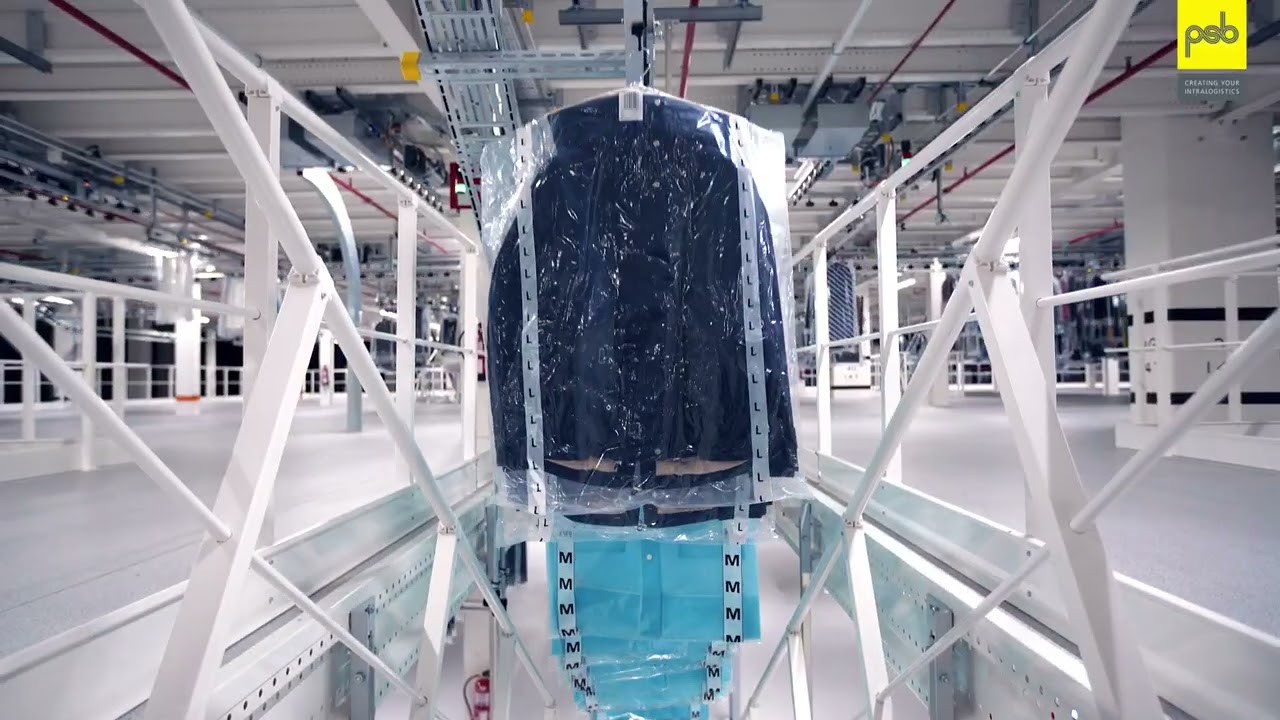
Fashion Retail Automated Hanging Garment Warehouse
psb intralogistics GmbH
CEWE Stiftung - Oldenburg Production & Distribution Center Automation
psb intralogistics GmbH
Element Logic Ireland Warehouse Automation Solutions
Element Logic
Related Suppliers(3)

Addverb
Warehouse Automation that delivers value!

Ancra Systems
Efficient Loading
Atlantic Rack
Space Solutions