Sorting Robot: AI-Powered High-Efficiency Parcel Sortation
Quick Facts
Technology Performance Metrics
⭐Key Features
Benefits
Applications
Detailed Information
Technology Overview
Against the backdrop of the explosive growth of online retail, the global express delivery industry has been facing unprecedented pressure of high-volume parcel handling. From 2012 to 2016 alone, China's online retail sales surged from 1.3 trillion to 5.2 trillion yuan, driving the annual parcel delivery volume to exceed 31.28 billion pieces, accounting for 40% of the world's total. Traditional manual sorting methods are no longer able to meet the demands of efficiency, accuracy and cost control, which has become a key bottleneck restricting the development of the express delivery industry.
In this context, the integration of AI and logistics has given birth to sorting robot systems, which have gradually become the core equipment of smart logistics. The core principle of sorting robots lies in using AI technology to automatically identify parcel information, then complete precise and efficient sortation operations through preset procedures, realizing a fully automated sorting process that replaces manual work. This technology is mainly applied in large-scale transit warehouses and express delivery hubs, effectively solving the pain points of high labor intensity, low efficiency and high error rate in traditional sorting links, and promoting the transformation of the logistics industry into the smart era.
How It Works
Core Principles
The core working principle of sorting robots is based on AI-powered intelligent identification and automated sortation. First, the robot uses image recognition and data processing algorithms to automatically identify and extract key information on each parcel, such as waybill numbers, destination addresses and recipient information. Then, combined with the preset sortation rules and destination database, the system quickly matches the optimal sortation path for each parcel. Finally, through the robot's mechanical execution structure, the parcels are accurately transported to the corresponding sorting chutes or areas, completing the entire sortation process without manual intervention. The fully automated operation mode ensures the consistency and stability of sorting efficiency and accuracy, and fundamentally improves the operational security of the sorting link.
Key Features & Capabilities
The AI-powered intelligent identification capability is the most core feature of sorting robots, which is the fundamental difference between them and traditional mechanical sorting equipment. Unlike the traditional sorting methods that rely on manual scanning or fixed barcode positions, the sorting robot can automatically identify and extract parcel information from different angles and positions, adapting to various types of parcels such as envelopes, cartons and irregular packages. This intelligent identification capability ensures the accuracy of sortation, greatly reduces the mis-sort rate caused by manual operation errors, and also improves the adaptability of the system to different parcel types, enhancing the overall flexibility of the sorting link.
Another key feature is the high throughput capacity of 18,000 parcels per hour, which is a quantitative leap compared with manual sorting efficiency. In large-scale transit warehouses covering an area of 1.3 square kilometers, a cluster of sorting robots can process tens of thousands of parcels in parallel, maintaining a stable and high-efficiency operation state for a long time. This high-throughput capability enables the express delivery hub to handle the peak parcel volume during shopping festivals and holidays, effectively avoiding the backlog of parcels and ensuring the timeliness of express delivery. At the same time, the continuous operation capability of robots also breaks the time limit of manual work, realizing 24-hour uninterrupted sorting operations and further improving the overall operational efficiency of the logistics network.
The 70% reduction in manual labor demand is a prominent feature that directly reflects the cost-saving effect of sorting robots. The traditional sorting link requires a large number of manual workers to carry, scan and sort parcels, which not only has high labor intensity but also brings huge labor cost pressure to logistics enterprises. The application of sorting robots replaces most manual work, only requiring a small number of technical personnel for system monitoring and maintenance, thus reducing the labor demand by 70%. This feature not only significantly reduces the labor costs of enterprises but also avoids the operational risks caused by labor shortages and personnel turnover, improving the stability of the sorting link.
The sorting robot system also has the capability of improving operational security. In the manual sorting process, parcels are prone to damage due to rough handling, and there are also potential safety hazards such as collisions and falls during the handling process. The sorting robot uses a standardized and gentle operation mode to handle parcels, minimizing the risk of parcel damage. At the same time, the automated operation reduces the contact between personnel and parcels, avoiding safety accidents caused by manual operation, and also reducing the risk of information leakage of parcels, thus improving the overall security of the sorting process.
Advantages & Benefits
The most direct advantage of sorting robots is the dramatic 70% reduction in manual labor costs. For the express delivery industry, which has a large number of employees and high labor costs, this cost reduction effect is particularly significant. Taking a transit warehouse with an annual parcel handling volume of 100 million pieces as an example, the application of sorting robots can reduce hundreds of sorting positions, saving millions of yuan in labor costs every year. In addition to direct wage costs, it also reduces the additional costs such as social security, accommodation and management for employees, bringing substantial economic benefits to logistics enterprises.
The improvement of sorting accuracy is another core advantage that brings indirect benefits to enterprises. Manual sorting is prone to errors such as mis-sorting and missed sorting due to factors such as fatigue and negligence, which will lead to parcel delays, returns and re-sorts, and even cause customer complaints and reputation losses. The sorting robot based on AI identification technology can achieve a sortation accuracy rate of over 99.9%, which is far higher than the manual sortation level. This high accuracy not only reduces the cost of rework and compensation caused by mis-sorts but also improves customer satisfaction with express delivery services, enhancing the market competitiveness of logistics enterprises.
Sorting robots also bring the advantage of enhanced operational stability. The efficiency of manual sorting is easily affected by factors such as personnel status, working environment and management level, which leads to fluctuations in the sorting capacity of the warehouse. The sorting robot system operates according to preset procedures, and its efficiency and accuracy are stable and controllable, not affected by human factors. This stability ensures that the express delivery hub can maintain a consistent sorting capacity regardless of peak and off-peak periods, ensuring the smooth operation of the entire logistics network. At the same time, the scalability of the robot cluster also allows enterprises to flexibly adjust the number of robots according to business development needs, realizing the flexible expansion of sorting capacity.
The application of sorting robots promotes the transformation and upgrading of the logistics industry to smart logistics. As a typical application of the "AI and logistics" model, sorting robots are not only a single piece of equipment but also an important part of the smart logistics system. Its application drives the integration of technologies such as big data, the Internet of Things and cloud computing in the logistics industry, promoting the digitization and intelligence of the entire logistics process from parcel collection, transportation to delivery. This transformation not only improves the operational efficiency of individual enterprises but also promotes the overall development of the logistics industry, helping the industry to enter a new stage of high-quality development.
Implementation Considerations
The training and maintenance of AI models is a key consideration in the implementation of sorting robot systems. The AI identification module of the sorting robot needs to be trained with a large amount of parcel image data to accurately recognize various types of waybills and parcel information. For logistics enterprises with diverse parcel types, it is necessary to conduct targeted model training according to their own business characteristics, which requires a certain amount of time and technical investment. In addition, with the update of waybill formats and the emergence of new parcel types, the AI model needs to be continuously optimized and upgraded, which requires enterprises to have professional technical teams or cooperate with technical suppliers to ensure the stable operation of the system.
The high initial investment cost is another important factor that enterprises need to consider. The deployment of sorting robot systems includes the purchase of robot equipment, the construction of supporting infrastructure, system integration and debugging, etc., which requires a large one-time investment. For small and medium-sized logistics enterprises with limited funds, this initial investment may be a certain financial burden. Therefore, enterprises need to conduct a comprehensive cost-benefit analysis before implementation, evaluate the payback period of the investment, and choose the appropriate robot type and deployment scale according to their own business volume and development plan, so as to avoid the waste of resources caused by blind investment.
The demand for dedicated workspace and infrastructure is also a practical consideration in the implementation process. Sorting robots need a flat, clean and obstacle-free operation space, and the layout of sorting chutes and conveyor belts needs to be reasonably planned according to the working characteristics of the robots. For existing transit warehouses, it may be necessary to carry out renovation work such as ground leveling and space optimization, which will increase the implementation cycle and cost. In addition, the robot system also has high requirements for power supply, network and other infrastructure, which needs to be matched and upgraded to ensure the stable operation of the system.
The demand for technical personnel is a long-term consideration for enterprises after the implementation of the system. Unlike traditional equipment that can be operated by ordinary workers, sorting robot systems require professional technical personnel for daily operation monitoring, fault troubleshooting and system maintenance. At present, the shortage of professional talents in the field of smart logistics is a common problem faced by the industry. Therefore, enterprises need to carry out talent training or introduce professional technical teams before the deployment of the system to ensure that they have the ability to operate and maintain the robot system, so as to give full play to the efficiency of the equipment.
Use Cases & Applications
Ideal For
Sorting robots are ideal for large-scale transit warehouses and express delivery hubs with high parcel handling volumes, especially those facing the pressure of rising labor costs and labor shortages. They are also suitable for logistics enterprises that need to improve sorting accuracy and operational stability, as well as smart logistics parks that integrate AI, big data and other technologies to build an integrated intelligent logistics system.
Performance Metrics
- Maximum Throughput: 18,000 parcels per hour
- Labor Cost Reduction: 70%
- Applicable Scale: Suitable for 1.3 square kilometer large transit warehouses
- Industry Status: Account for 40% of global parcel handling volume in the Chinese market applying this technology
Future Trends
With the continuous development of AI and robotics technology, sorting robots will tend to be more intelligent and flexible in the future. On the one hand, the AI identification module will have stronger adaptability, which can accurately recognize more complex parcel information and even realize the automatic classification of parcel types. On the other hand, sorting robots will be more closely integrated with other smart logistics equipment such as AGVs, drones and unmanned delivery vehicles, forming a fully automated logistics chain from warehousing, sorting to delivery. In addition, the application scope of sorting robots will also expand from the express delivery industry to other fields such as e-commerce, manufacturing and healthcare, promoting the comprehensive intelligent transformation of the entire logistics industry.
Conclusion
Sorting robots, as a core application of the "AI and logistics" model, have brought revolutionary changes to the express delivery industry. With their high efficiency, high accuracy and cost-saving advantages, they effectively solve the bottleneck problems faced by traditional sorting links, and promote the transformation of the logistics industry into the smart era. The 18,000 parcels per hour throughput and 70% labor cost reduction make it an indispensable core equipment for large-scale transit warehouses and express delivery hubs. Although there are certain challenges in initial investment, technical maintenance and infrastructure construction, the long-term economic and operational benefits brought by sorting robots far outweigh the costs. With the continuous progress of technology, sorting robots will play a more important role in the smart logistics system, helping the logistics industry to achieve high-quality development.
Vendor
OthersRelated Technologies
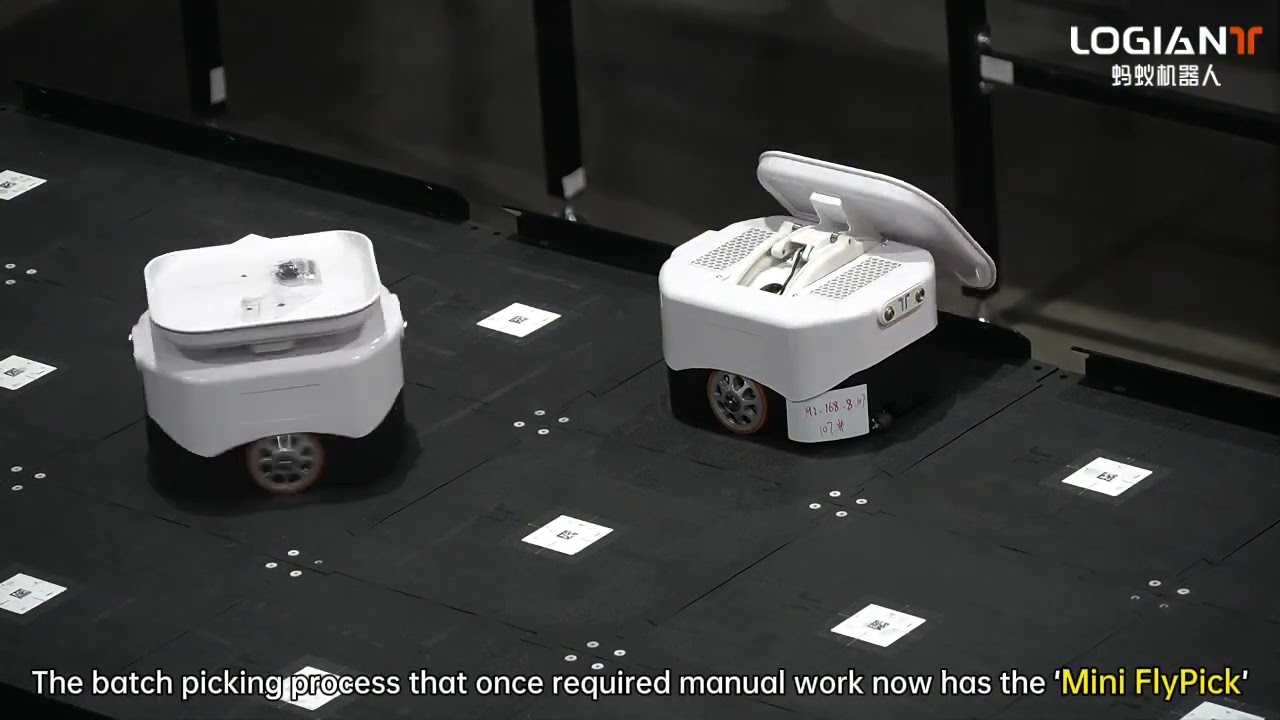
Mini FlyPick Robot: Compact High-Speed Sorting AMR
Others

Split Tray (Bomb Bay) Sorter Compilation: Versatile High-Speed Sortation
Others
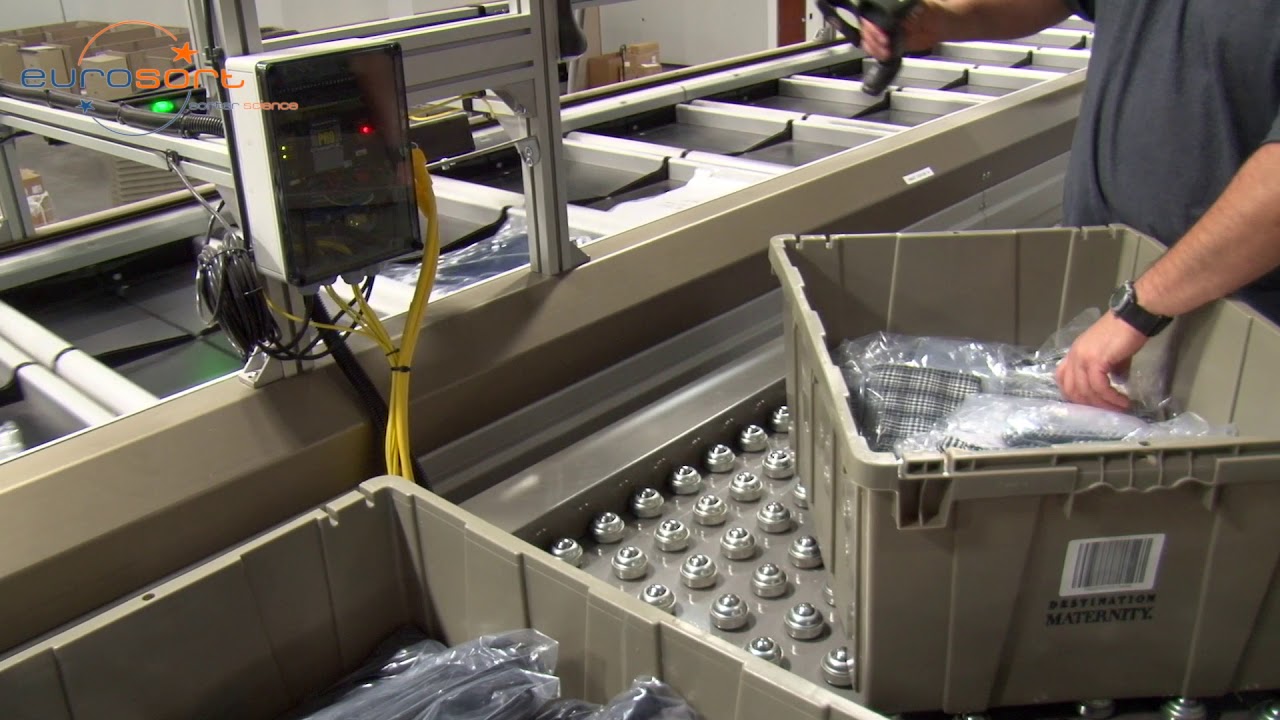
Patented Dual Split Tray (Bomb Bay) Sorter with Batch Induction
Others