overhead conveyor
Quick Facts
Technology Performance Metrics
⭐Key Features
Benefits
Applications
Detailed Information
Technology Overview
Power and Free conveyors are a fundamental and widely used type of overhead conveyor system. Their design is centered around providing controlled movement and positioning of carriers (trolleys) along a fixed track. Unlike continuous movement conveyors, Power and Free systems separate the propulsion mechanism from the carrier itself, which is the key to their flexibility. This technology is a cornerstone in many manufacturing, assembly, and distribution environments where processes require pauses, work-in-progress buffering, or branching paths.
How It Works
Core Principles
The core principle of a Power and Free conveyor is the separation of the power (propulsion) element from the free (carrier) element. A continuously moving chain or belt (the "power" track) provides the driving force. Independently, trolleys with special dogs or pins (the "free" carriers) run on a separate track. These trolleys can engage with or disengage from the moving power chain, allowing them to be propelled or stopped independently.
Key Features & Capabilities
The simple but elegant mechanical system is a hallmark, ensuring reliability and ease of maintenance. The core capability to enable trolleys to stop and start independently allows for asynchronous operations, where workstations can operate at their own pace without halting the entire line. Furthermore, the system's design inherently provides accumulation (buffering) capability at different points, smoothing workflow and preventing bottlenecks by creating queues before busy stations or processes.
Advantages & Benefits
The primary benefit is the simplicity of operation and design, leading to robust systems with lower long-term maintenance complexity. This contributes to strong cost-effectiveness. The system offers high versatility for different assembly and process line needs, as it can be adapted to complex layouts with merges, diverges, and multiple stop points. By enabling flexible workflow with stop/start and buffering, it increases overall line efficiency and allows for variable cycle times at different stations.
Implementation Considerations
Considerations include the initial layout design to optimize the location of accumulation zones and engagement points. The system's fixed track requires careful planning for future layout changes. While mechanically simple, integrating switches and controls for complex routing adds to the system's sophistication and cost.
Use Cases & Applications
Ideal For
Power and Free conveyors are ideal for paced assembly lines, paint finishing lines, and any process where products must pause for variable periods without disrupting the flow of other items.
Conclusion
Power and Free conveyor systems remain a prevalent and effective solution for overhead material handling where controlled movement, accumulation, and process flexibility are required. Their mechanical simplicity, proven reliability, and operational versatility make them a go-to choice for a wide range of industrial applications, from simple buffering to complex multi-branch assembly processes.
Vendor
OthersRelated Technologies
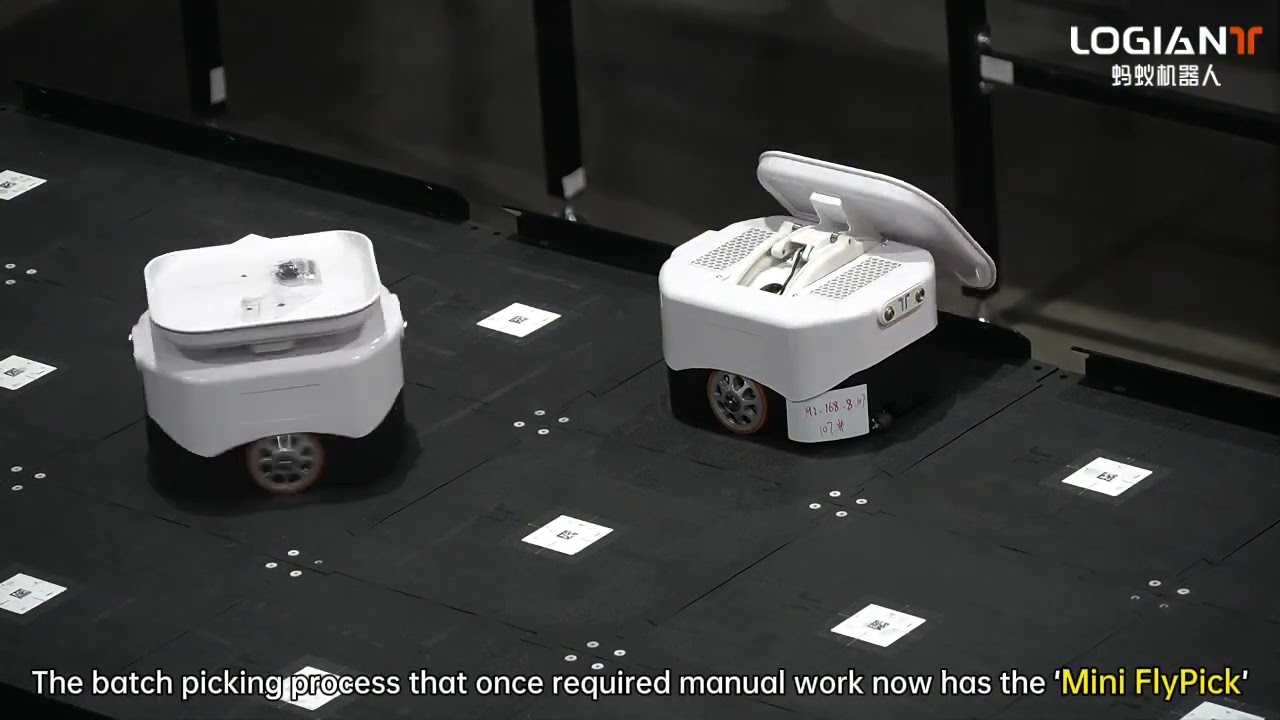
Mini FlyPick Robot: Compact High-Speed Sorting AMR
Others

Split Tray (Bomb Bay) Sorter Compilation: Versatile High-Speed Sortation
Others
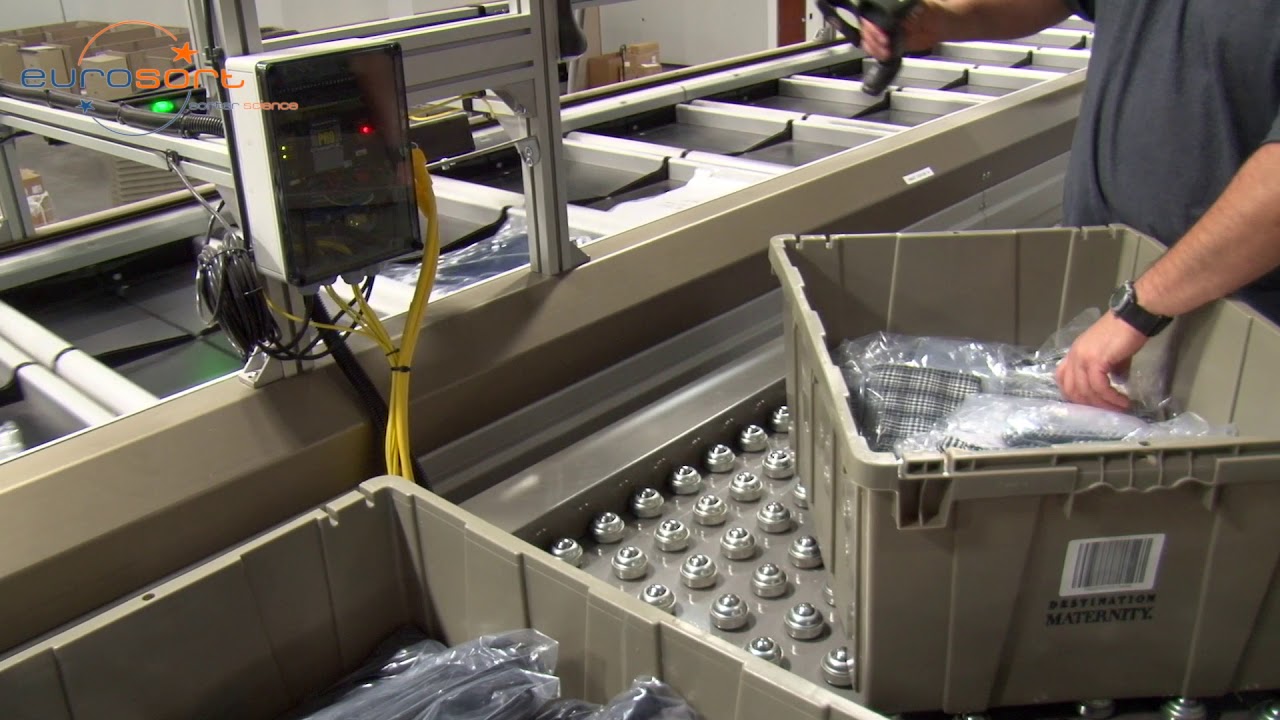
Patented Dual Split Tray (Bomb Bay) Sorter with Batch Induction
Others