Drive-In Racking Systems: Maximizing Storage Density for Large Production Runs
Quick Facts
Technology Performance Metrics
⭐Key Features
Benefits
Applications
Detailed Information
Technology Overview
Drive-in racking systems are a specialized form of high-density storage designed to solve the challenge of storing large volumes of palletized goods in space-constrained warehouses. By allowing forklifts to drive directly into the rack structure to store pallets multiple deep in a single lane, these systems significantly reduce the aisle space required compared to conventional selective racking. This design is particularly advantageous for operations characterized by large production runs, where substantial quantities of identical products need to be stored efficiently. Operating on a Last-In, First-Out (LIFO) principle, they are a strategic solution for maximizing storage density for specific inventory profiles.
How It Works
Core Principles
The system is based on deep-lane storage accessed from a single aisle. Forklifts enter the lane to place pallets on continuous rails. The last pallet loaded into a lane is the first one to be retrieved (LIFO).
Key Features & Capabilities
Enhanced Storage Density is the primary feature, achieved by consolidating storage into deep lanes and minimizing aisle space. LIFO Inventory Management is built into the operational design of the standard drive-in configuration. The system is optimized for large-volume storage of a single SKU per lane.
Advantages & Benefits
The most significant benefit is the dramatic increase in storage capacity within the same warehouse footprint, which can defer costly expansions. It is exceptionally beneficial for warehouses receiving large, homogeneous production runs, as it allows efficient storage of many pallets of the same product. The system optimizes valuable cubic space by making use of depth in addition to height.
Implementation Considerations
Implementing drive-in racking requires a commitment to storing large quantities of the same SKU together. The LIFO access method must align with the product's characteristics; it is not ideal for perishable goods requiring FIFO rotation. The system offers less flexibility and immediate access to all pallets compared to selective racking, making it a specialized rather than a general-purpose solution.
Use Cases & Applications
Ideal For
This system is ideal for manufacturing plants, bottling facilities, or any warehouse that regularly receives and stores large, uniform production batches of palletized goods.
Conclusion
Drive-in racking systems offer a powerful and efficient solution for warehouses grappling with the storage of massive, homogeneous product runs. By prioritizing storage density over selective access, they can dramatically increase a facility's effective capacity. However, their success is contingent on a perfect match with the inventory profile—high volume, low SKU variety, and compatibility with LIFO stock rotation. For facilities that meet these criteria, implementing a drive-in system is a strategic move that maximizes space utilization and operational efficiency for bulk storage.
Related Knowledge
Storage
Storage is the warehouse process of holding inventory in organized locations until needed, balancing space utilization, accessibility, and inventory control to support efficient operations.
Cold Storage Strategy
Cold storage and temperature-controlled warehousing are critical for preserving perishable goods throughout the supply chain. From frozen foods to pharmaceuticals, these specialized facilities maintain precise temperature conditions while optimizing energy efficiency and operational performance.
Vendor
OthersRelated Technologies
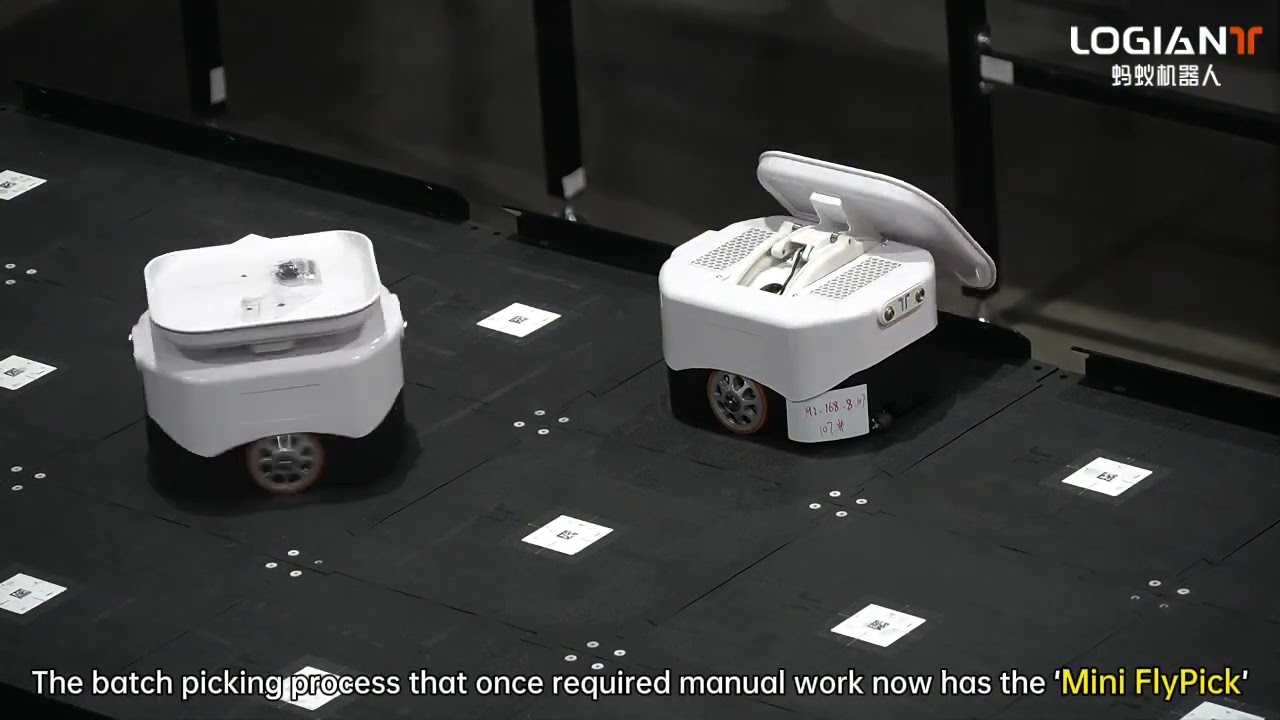
Mini FlyPick Robot: Compact High-Speed Sorting AMR
Others

Split Tray (Bomb Bay) Sorter Compilation: Versatile High-Speed Sortation
Others
Patented Dual Split Tray (Bomb Bay) Sorter with Batch Induction
Others